National Museum of the Przemyśl Region
An 8-year-old girl, an ordinary pebble, and a discovery that rewrote history.
Full story unlocks in the tour
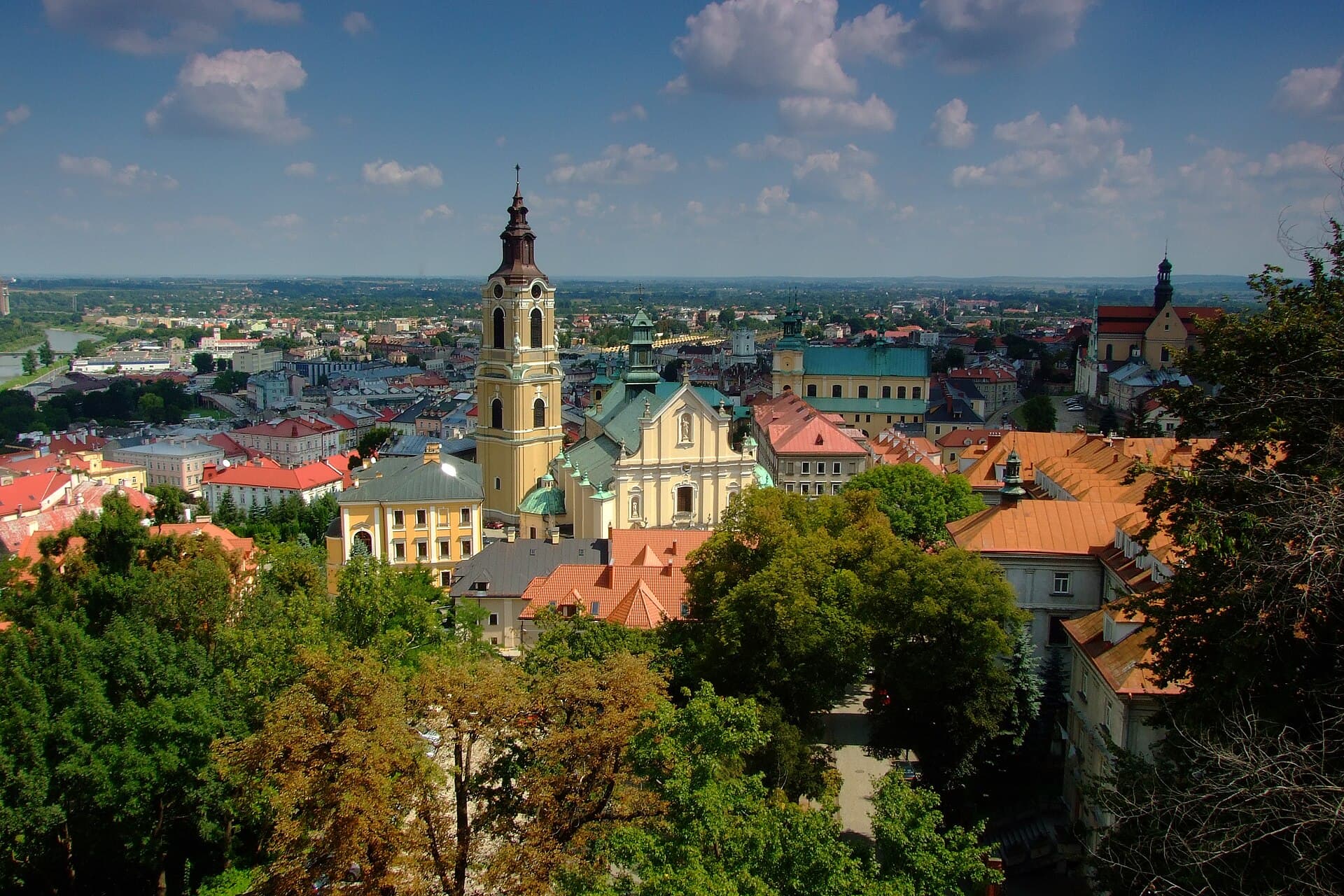 Ferdziu / CC BY-SA 3.0 pl, via Wikimedia Commons
“Where history echoes and bronze bears roam.”
Not the postcards. The stories even locals don't know — whispered in your ear, right where they happened.
An 8-year-old girl, an ordinary pebble, and a discovery that rewrote history.
The city's beloved bronze bears aren't just for show; they have very particular tastes.
A singular museum in a historic tower tells the story of two unexpected local specialties.
Discover every secret of Przemyśl
Every address, every reveal in full — in your ear, right where it happened.
You pick your stops. You walk. The voice reveals what the others miss.
No tours available yet. Check back soon — we're preparing them.
Przemyśl, in southeastern Poland, is a city where layers of history are visible at every turn, from its ancient origins in the 8th century to its strategic role as a formidable fortress. Situated on the San River, where mountains meet lowlands, the city has long been a crossroads of cultures and trade, earning it the moniker 'little Lviv.' Its Old Town, a designated Historic Monument of Poland, invites exploration with its sloping streets, lively cafes, and a relaxed pace of life.
Beyond its historical significance, Przemyśl offers a singular blend of Polish and Ukrainian influences, reflected in its diverse religious sites and local character. It serves as a calm pause for travelers, a gateway to the Carpathian hiking routes, and a place where you're more likely to encounter locals than large tourist groups. Whether you're drawn to its architectural beauty, intriguing museums, or the peaceful atmosphere, Przemyśl provides an authentic Polish experience without the usual rush.
Przemyśl's story begins in the 8th century as a fortified settlement of the Lendians, a West Slavic tribe, making it the second-oldest city in southern Poland after Kraków. Its strategic location at the 'Przemyśl Gate,' connecting mountains and lowlands along the navigable San River, made it a coveted territory. The city was first mentioned in Nestor's Chronicle in 981, when it was taken by Kievan Prince Włodzimierz.
Throughout the 10th to 14th centuries, Przemyśl was a point of contention between Poland, Ruthenia, and Hungary. It was reunited with Poland by King Casimir the Great in 1340, who ordered the construction of a Gothic castle. The city received civic rights and trading privileges in 1389, flourishing as a significant trade and cultural center, becoming one of the wealthiest cities between Kraków and Lviv in the 16th and 17th centuries.
In 1772, with the First Partition of Poland, Przemyśl became part of the Austrian Empire, incorporated into the Kingdom of Galicia and Lodomeria. This period saw the city transform into a major military stronghold. Between 1888 and 1914, it was developed into a first-class fortress, the third-largest in Europe, with 44 forts built in a 45 km circumference to defend against potential conflicts with Russia. During World War I, the Przemyśl Fortress played a crucial role, enduring sieges and changing hands multiple times between Austrian and Russian forces. The city also experienced a brief division between Soviet and Nazi German occupation between September 1939 and June 1941, with the San River serving as the demarcation line.
After World War I, Przemyśl returned to Poland. Despite extensive damage from the wars, the city has retained many of its historic buildings and its unique multicultural heritage, with a blend of Polish, Ukrainian, and Jewish influences evident in its architecture and cultural sites.
Begin your exploration in the Old Town Square, a sloping expanse surrounded by historic buildings, where you can sit beside the monument of the Good Soldier Švejk. From here, venture into the Underground Tourist Route, a network of medieval cellars that once stored wine and salt, now offering holographic displays that illuminate Przemyśl's past.
Ascend to Przemyśl Castle, a 14th-century structure offering wide views of the Old Town and the San River. Continue to the Monument to Pope John Paul II for another elevated perspective of the city, especially striking at sunset. Delve into the city's unique crafts at the Museum of Tobacco Pipes and Bells, housed in the historic Clock Tower, which also provides views through its clock faces.
For a deeper dive into local history and culture, visit the National Museum of the Przemyśl Region, home to over 200,000 exhibits, including a rare Byzantine amulet. Explore the architectural diversity of Przemyśl by visiting its numerous religious sites, such as the Franciscan Monastery, the Cathedral of St. John the Baptist (the main Ukrainian Greek Catholic church), and the Carmelite Church.
Finally, seek out the twelve bronze Przemyśl Bears scattered throughout the Old Town, each engaged in a different activity, and don't miss the Mama Bear fountain in the Town Square.
Przemyśl offers a distinct charm in every season. For the most comfortable sightseeing and outdoor activities, plan your visit between May and September, when temperatures are mild to warm, ranging from 20°C to 25°C (68°F to 77°F). These months also feature lively outdoor cafes and longer evenings. Autumn, from September to November, is particularly recommended for its golden foliage, quieter streets, and picturesque views. While winters are cold and snowy, the city maintains a cozy atmosphere.
Przemyśl is located in southeastern Poland, approximately 10 km from the Ukrainian border. It is well-connected by train and bus, with frequent services from cities like Rzeszów, Kraków, and Warsaw, as well as direct connections to Ukraine, the Czech Republic, and Austria. The city center is highly walkable, allowing easy access to most attractions on foot.
While many establishments accept cards, it's advisable to carry some Polish złoty for smaller purchases, market stalls, or local transport. Accommodation options include small-scale hostels and cozy guesthouses, offering a welcoming stay at reasonable prices. For those interested in day trips, nearby attractions include Krasiczyn Castle and the city of Jarosław.