Cerro Rico
The mountain that looms over Potosí holds a secret about its true height.
Full story unlocks in the tour
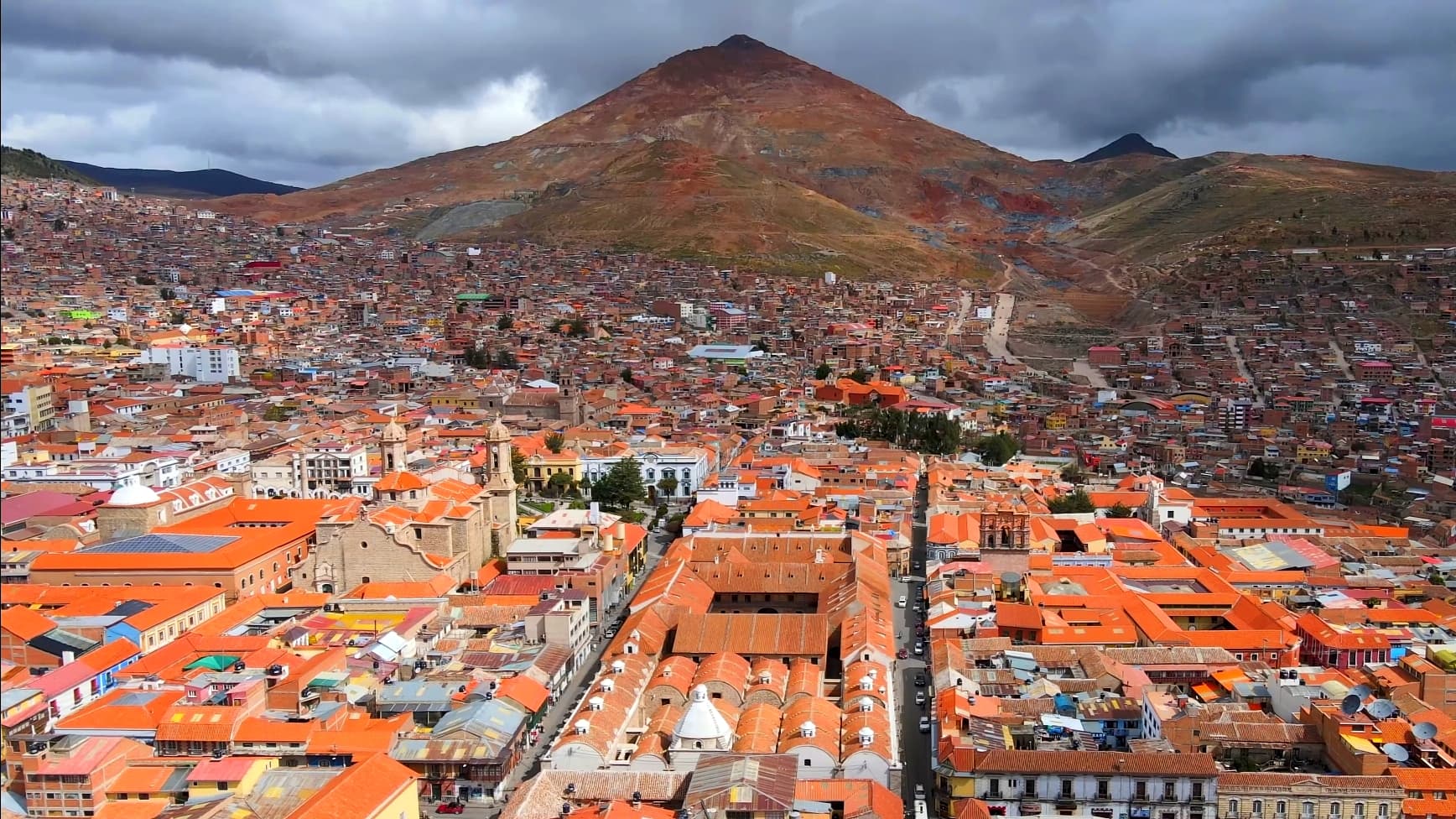 Parallelepiped09 / CC BY-SA 4.0, via Wikimedia Commons
“Potosí: Where the mountain bleeds silver, and history echoes in the thin air.”
Not the postcards. The stories even locals don't know — whispered in your ear, right where they happened.
The mountain that looms over Potosí holds a secret about its true height.
Within the walls of the Royal Mint, a peculiar artistic detail reveals a message from colonial times.
Beyond the busy stalls of Potosí's main market, a specific type of vendor carries on a tradition that dates back to the city's mining boom.
Discover every secret of Potosí
Every address, every reveal in full — in your ear, right where it happened.
You pick your stops. You walk. The voice reveals what the others miss.
No tours available yet. Check back soon — we're preparing them.
At an astonishing elevation of over 4,000 meters (13,000 feet) in the Bolivian Andes, Potosí is a city forged from silver and ambition. Its very existence is inextricably linked to the Cerro Rico, or 'Rich Mountain,' which for centuries yielded an unimaginable bounty of silver, making Potosí one of the wealthiest and most populous cities in the world during the Spanish colonial era. Today, the city's UNESCO World Heritage status reflects its profound historical significance and the enduring legacy of its mining past.
Walking through Potosí is like stepping back in time. Its narrow, winding streets, grand colonial architecture, and the omnipresent silhouette of Cerro Rico create an atmosphere unlike anywhere else. The air is thin, the history is palpable, and the echoes of fortunes made and lost resonate through its every corner. It's a place that demands a certain reverence, a testament to human endeavor, exploitation, and the raw power of natural resources.
The story of Potosí begins in 1545 with the discovery of an immense silver lode in the Cerro Rico. This discovery transformed a desolate Andean outpost into a global economic powerhouse. The Spanish Crown quickly established a vast mining complex, and Potosí became the primary source of silver for the Spanish Empire, funding its wars and fueling its expansion.
By the early 17th century, Potosí's population swelled to over 160,000, surpassing even London and Paris at the time, making it one of the largest cities in the world. This rapid growth, however, came at a devastating human cost. Indigenous laborers, forced into servitude through the 'mita' system, and enslaved Africans toiled in brutal conditions within the mines. The sheer volume of silver extracted was staggering, but so too were the lives lost to dangerous work, disease, and exploitation.
The Casa Nacional de la Moneda, or Royal Mint, was established in Potosí to process the vast quantities of silver extracted from Cerro Rico. It was here that the iconic 'Potosí mint mark' was stamped onto coins that circulated throughout the Spanish Empire and beyond. The mint itself is a monumental structure, a symbol of Spanish colonial power and the industrial scale of the silver operation. Its massive machinery, including wooden gears and presses, offers a glimpse into the complex process of coin production in the colonial era.
As the silver veins in Cerro Rico began to deplete in the 18th century, Potosí's fortunes waned. The city experienced a gradual decline, though mining continued on a smaller scale, shifting to tin and other minerals in later centuries. Despite its economic downturn, Potosí's historical significance remained. Its well-preserved colonial architecture and the enduring presence of Cerro Rico led to its designation as a UNESCO World Heritage site in 1987, recognizing its unique cultural and historical value as a testament to a pivotal period in world history.
Begin your exploration at the Plaza 10 de Noviembre, the city's main square, where you can admire the colonial architecture and observe daily life. The imposing Cathedral Basilica of Potosí dominates one side of the plaza, offering a glimpse into religious art and architecture. A visit to the Casa Nacional de la Moneda (Royal Mint) is essential; this sprawling museum details the history of silver mining and coin production, showcasing original machinery and colonial art. For a profound experience, consider a guided tour of the Cerro Rico mines. While challenging, these tours offer a stark insight into the lives of the miners and the conditions they face. Explore the Mercado Central for local goods, textiles, and a taste of authentic Potosí. Don't miss the wide views of the city and Cerro Rico from various viewpoints, such as the Convento de San Francisco or the Torre de la Compañía de Jesús.
The best time to visit Potosí is during the dry season, from May to October. The weather is generally sunny and clear, though temperatures can still be cool due to the high altitude. This period offers the most comfortable conditions for exploring the city and its surroundings. The rainy season, from November to April, can bring heavy downpours and make some roads less accessible.
Potosí's high altitude requires acclimatization. Plan to spend your first day taking it easy, staying hydrated, and avoiding strenuous activity to prevent altitude sickness. Sorojchi pills, available locally, can help alleviate symptoms. The currency is the Bolivian Boliviano (BOB). ATMs are available, but it's wise to carry some cash, especially for smaller purchases and market vendors. Taxis are common and affordable for getting around the city. When visiting the mines, wear old clothes and sturdy shoes, as conditions can be dirty and uneven. Always book mine tours through reputable agencies.