Byron's Grotto
Lord Byron, the Romantic poet, discovered more than mere inspiration amidst Portovenere's dramatic cliffs.
Full story unlocks in the tour
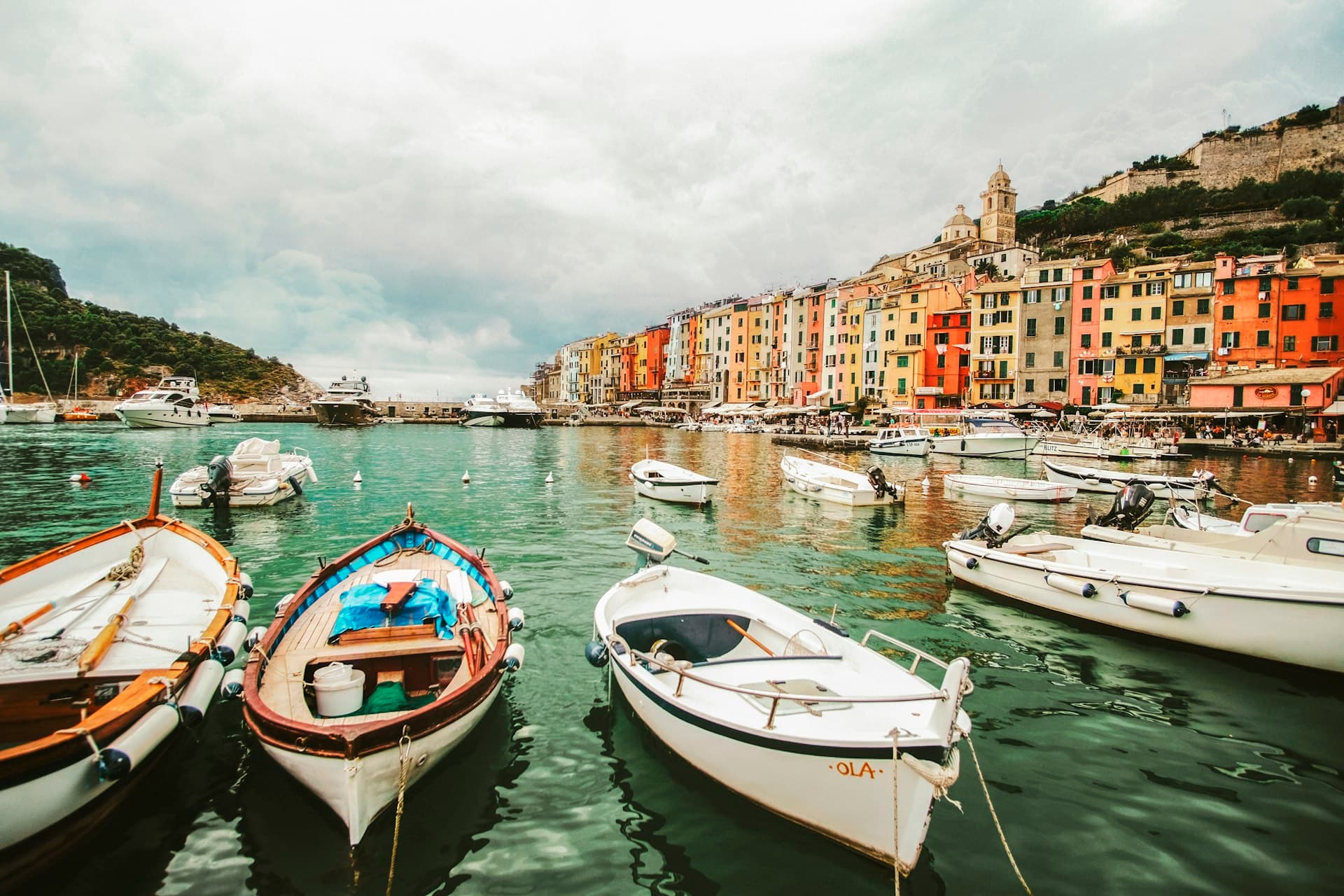 Photo: Cristina Gottardi / Unsplash
“Where the Ligurian Sea murmurs to ancient stone.”
Not the postcards. The stories even locals don't know — whispered in your ear, right where they happened.
Lord Byron, the Romantic poet, discovered more than mere inspiration amidst Portovenere's dramatic cliffs.
This distinguished church, standing as a sentinel on the promontory, guards a secret beneath its striking black and white facade.
A brief boat journey from Portovenere, the largest island in the Gulf of Poets conceals a distinctive geological treasure.
Discover every secret of Portovenere
Every address, every reveal in full — in your ear, right where it happened.
You pick your stops. You walk. The voice reveals what the others miss.
No tours available yet. Check back soon — we're preparing them.
Portovenere, a town on the Ligurian coast of Italy, holds the distinction of being a UNESCO World Heritage Site, recognized alongside the Cinque Terre and the islands of Palmaria, Tino, and Tinetto. Often considered the 'sixth town' of the Cinque Terre, it offers a distinct, romantic atmosphere with fewer crowds than its more famous neighbors. The town is situated at the southern tip of a peninsula within the Gulf of La Spezia, also known as the Gulf of Poets, a name inspired by the numerous writers and artists, including Lord Byron, who were drawn to its beauty.
With its colorful houses lining the harbor, narrow medieval passages, and churches rising from clifftops, Portovenere presents a captivating blend of history and natural grandeur. The town's unique appeal lies in its ability to offer a tranquil escape while still providing easy access to the lively Cinque Terre villages and the pristine nature of the Portovenere Regional Natural Park. Whether seeking historic exploration, scenic walks, or simply a leisurely aperitivo beside the sea, Portovenere provides a memorable Italian Riviera experience.
The origins of Portovenere, or Portus Veneris as it was known in Latin, extend back to at least the middle of the 1st century BC. It is believed the town's name originates from a temple dedicated to the goddess Venus, which once stood on the promontory now occupied by the Church of San Pietro. During Roman times, Portovenere functioned primarily as a fishing community. Following the fall of the Western Roman Empire, it became a significant base for the Byzantine fleet in the northern Tyrrhenian Sea, until its destruction by the Lombards in 643 AD. The town was also a frequent target of Saracen raids in subsequent centuries.
By the early 12th century, Portovenere came under the dominion of the Republic of Genoa, which recognized its strategic importance. To defend against rivals like Pisa and safeguard the Ligurian coast, Genoa began fortifying the village. The first indications of a castle date from 1113, with city walls erected in 1161. The Doria Castle, a prominent example of Genoese military architecture, was rebuilt around 1160 on a more commanding site near the Church of San Pietro and underwent significant renovations between the 15th and 17th centuries to adapt to evolving warfare. The town's medieval core, with its narrow passages and the 12th-century Porta del Borgo, reflects this period of fortification.
Religious structures also flourished during this time. The Romanesque Church of San Lorenzo was consecrated in 1130, and the Gothic Church of San Pietro, with its distinctive black and white striped facade, was consecrated in 1198. In 1494, Portovenere endured a devastating bombardment by the Aragonese fleet during a conflict with Genoa, leading to a decline in the old town's importance and the development of the Borgo Nuovo, or "New District."
During Napoleon Bonaparte's French domination in the early 19th century, Portovenere became part of the Department of the Gulf of Venus and the Doria Castle was used as a prison. The coastal road, known as "Route Napoleon," was constructed during this period, connecting Portovenere with La Spezia. After a brief period under the Kingdom of Sardinia, Portovenere was incorporated into the newly formed Kingdom of Italy in 1861. The town gained recognition as a destination for elite tourism in the 19th and 20th centuries, drawing figures like Lord Byron and Eugenio Montale. In 1997, Portovenere, along with the Cinque Terre and the islands of Palmaria, Tino, and Tinetto, was designated a UNESCO World Heritage Site for its architectural heritage and natural beauty.
Begin your exploration at the colorful harbor, where a line of tall, pastel-hued houses, known as the Palazzata, once served as a defensive barrier. From here, step through the 12th-century Porta del Borgo, a stone gateway leading into the medieval heart of the town. Wander along Via Giovanni Capellini, the main street, a narrow passage filled with local artisan shops and eateries.
Ascend to the dramatic promontory to visit the Church of San Pietro. This Gothic church, with its distinctive black and white striped facade, stands on the site of an ancient Roman temple and offers sweeping views of the Gulf of Poets. Nearby, explore Byron's Grotto, a cave said to have been a favored meditation spot for Lord Byron. Further uphill, the Doria Castle, a formidable Genoese fortress dating back to the 12th century, provides expansive vistas of the town and sea.
Do not overlook the Church of San Lorenzo, a Romanesque church consecrated in 1130, which also features black and white stripes and holds a local legend of the Madonna Bianca. For a change of scenery, take a short ferry ride to Palmaria Island, the largest of the three islands in the Gulf. Palmaria offers walking trails, secluded grottoes like the Grotta Azzurra (Blue Grotto), and quiet beaches, providing a tranquil escape with views back towards Portovenere.
The best time to visit Portovenere is from April to October. The summer months of July and August are the busiest, offering warm weather ideal for swimming and boat tours. For fewer crowds and pleasant temperatures, consider visiting in June or September to early October. During these shoulder seasons, most attractions and services remain open, and the weather is still enjoyable for exploring.
Portovenere is accessible by car, bus, or ferry. While there is no train station in Portovenere, the nearest railway station is La Spezia Centrale. From La Spezia, you can take the number 11 bus, which offers a quicker and more economical option, or a scenic ferry ride to Portovenere. Ferries typically operate from late March to early November.
Driving to Portovenere is possible, unlike many of the Cinque Terre villages, and some hotels offer private parking. However, parking can be limited, especially during peak season. The town itself is best explored on foot, with many narrow passages and staircases. While the seafront promenade is stroller-friendly, the uphill climbs to the castle and churches are better navigated with a baby carrier if traveling with infants. Consider purchasing bus tickets in advance from kiosks or tobacco shops, as they may be more expensive if bought directly from the driver.