Hercules Hall
Beyond its striking turquoise exterior and domed roof, the Hercules Hall holds a celestial secret on its ceiling.
Full story unlocks in the tour
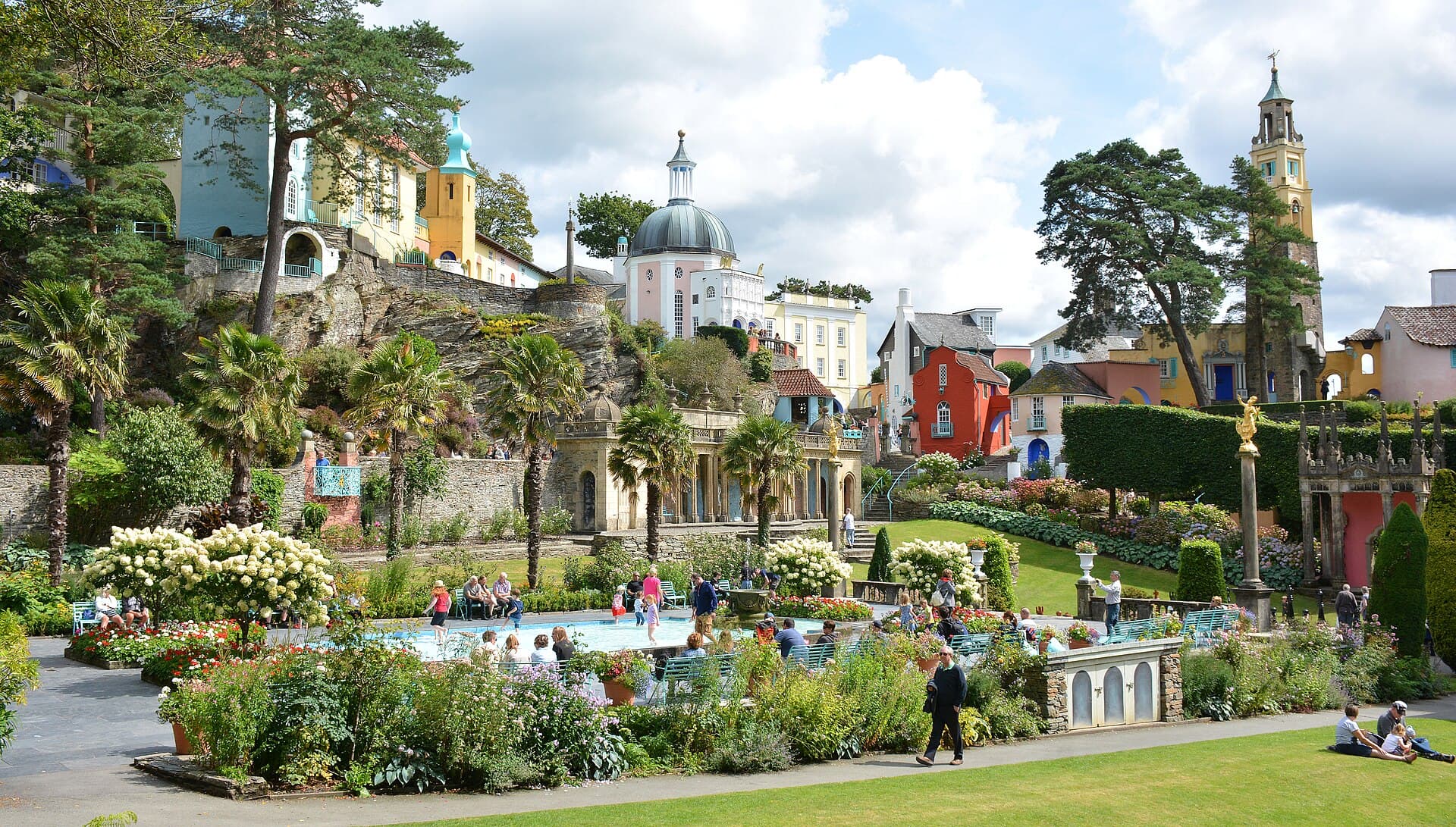 Mike McBey / CC BY 2.0, via Wikimedia Commons
“A Mediterranean fantasy on the Welsh coast, where architecture dances with nature.”
Not the postcards. The stories even locals don't know — whispered in your ear, right where they happened.
Beyond its striking turquoise exterior and domed roof, the Hercules Hall holds a celestial secret on its ceiling.
The main hotel building, once a grand Victorian mansion, suffered a devastating fire in the 1980s, destroying more than just its structure.
The name 'Portmeirion' wasn't its original designation, and its current form is a clever nod to its location and history.
Discover every secret of Portmeirion
Every address, every reveal in full — in your ear, right where it happened.
You pick your stops. You walk. The voice reveals what the others miss.
No tours available yet. Check back soon — we're preparing them.
Portmeirion, a village of lively structures and verdant gardens, rises from the rugged coast of North Wales. Conceived by architect Sir Clough Williams-Ellis, this architectural experiment was built between 1925 and 1975, a testament to his vision of how a beautiful site could be developed without spoiling it. The village's Italianate design, with its pastel-colored buildings, grand piazza, and exotic planting, creates an atmosphere of whimsical escapism, a place where the ordinary is left behind and imagination takes flight.
Walking through Portmeirion feels like stepping into a dreamscape. Every corner reveals a new visual delight: a campanile reaching for the sky, a statue gazing out to sea, a hidden grotto inviting quiet contemplation. The village is not merely a collection of buildings; it is a meticulously crafted environment, where every detail, from the placement of a terracotta pot to the curve of a pathway, contributes to an overarching sense of harmony and playful elegance. It is a place that invites exploration and rewards curiosity, a truly unique destination where art and nature intertwine.
## The Visionary Behind the Village Sir Clough Williams-Ellis, a Welsh architect with a profound love for beauty and a strong belief in the power of good design, began constructing Portmeirion in 1925. His ambition was to demonstrate how a naturally beautiful site could be developed without desecrating its inherent charm. He acquired the Aber Iâ estate, a secluded peninsula with sweeping views of the Dwyryd Estuary, and set about transforming it into his architectural fantasy. He envisioned a place that would uplift the spirit, a counterpoint to the growing sprawl of urban development.
## A Half-Century of Creation The construction of Portmeirion spanned half a century, a testament to Williams-Ellis's enduring dedication and evolving vision. He incorporated salvaged architectural elements from demolished buildings, giving new life to discarded fragments of history. This eclectic approach resulted in a village that feels both ancient and utterly unique, a mosaic of styles and eras. The village was not built to a rigid master plan but grew organically, with each new addition responding to and enhancing its surroundings. This iterative process allowed for constant refinement and adaptation, resulting in a place that feels alive and ever-unfolding.
## A Legacy of Inspiration Beyond its architectural significance, Portmeirion gained international recognition as the setting for the cult 1960s television series, 'The Prisoner.' This association further cemented its status as a place of intrigue and unconventional beauty. Today, Portmeirion stands as a powerful example of sustainable development and the enduring appeal of imaginative architecture. It is a place that continues to inspire artists, architects, and visitors alike, a lively testament to one man's lifelong pursuit of beauty and his unwavering belief in the power of the built environment to enrich human experience.
Wander through the Central Piazza, a kaleidoscope of Italianate architecture, where pastel buildings frame a tranquil fountain. Ascend the campanile for sweeping views of the Dwyryd Estuary and the surrounding woodlands. Explore the Gwyllt, 70 acres of exotic forest gardens with winding paths that lead to secluded coves and unexpected follies. Discover the Hercules Hall, with its striking turquoise dome and astrological ceiling. Take a moment at the Pantheon, a grand open-air rotunda offering panoramic vistas. Seek out the various statues and architectural curiosities scattered throughout the village, each with its own story. Visit the Battery, a collection of cottages offering views of the estuary and the distant mountains.
Portmeirion offers a distinct charm in every season. Spring brings blooming rhododendrons and azaleas to the Gwyllt, painting the gardens with lively hues. Summer provides warm, extended daylight for leisurely exploration. Autumn transforms the surrounding woodlands into a canvas of fiery colors, while winter, though cooler, offers a serene and contemplative atmosphere, often with fewer crowds and a unique, ethereal beauty.
Portmeirion is a pedestrian-friendly village, with parking available at the entrance. Entry requires a ticket, which can be purchased online in advance or upon arrival. The village offers a range of dining options, from casual cafes to more formal restaurants. Accommodation is available within the village at the Hotel Portmeirion and in various self-catering cottages. Wear comfortable shoes, as there are many paths and steps. Facilities include restrooms, gift shops, and information points. The village is generally accessible, though some paths may be steep.