Euphrasian Basilica
The glittering mosaics of Poreč's most famous landmark tell a story beyond their artistic beauty.
Full story unlocks in the tour
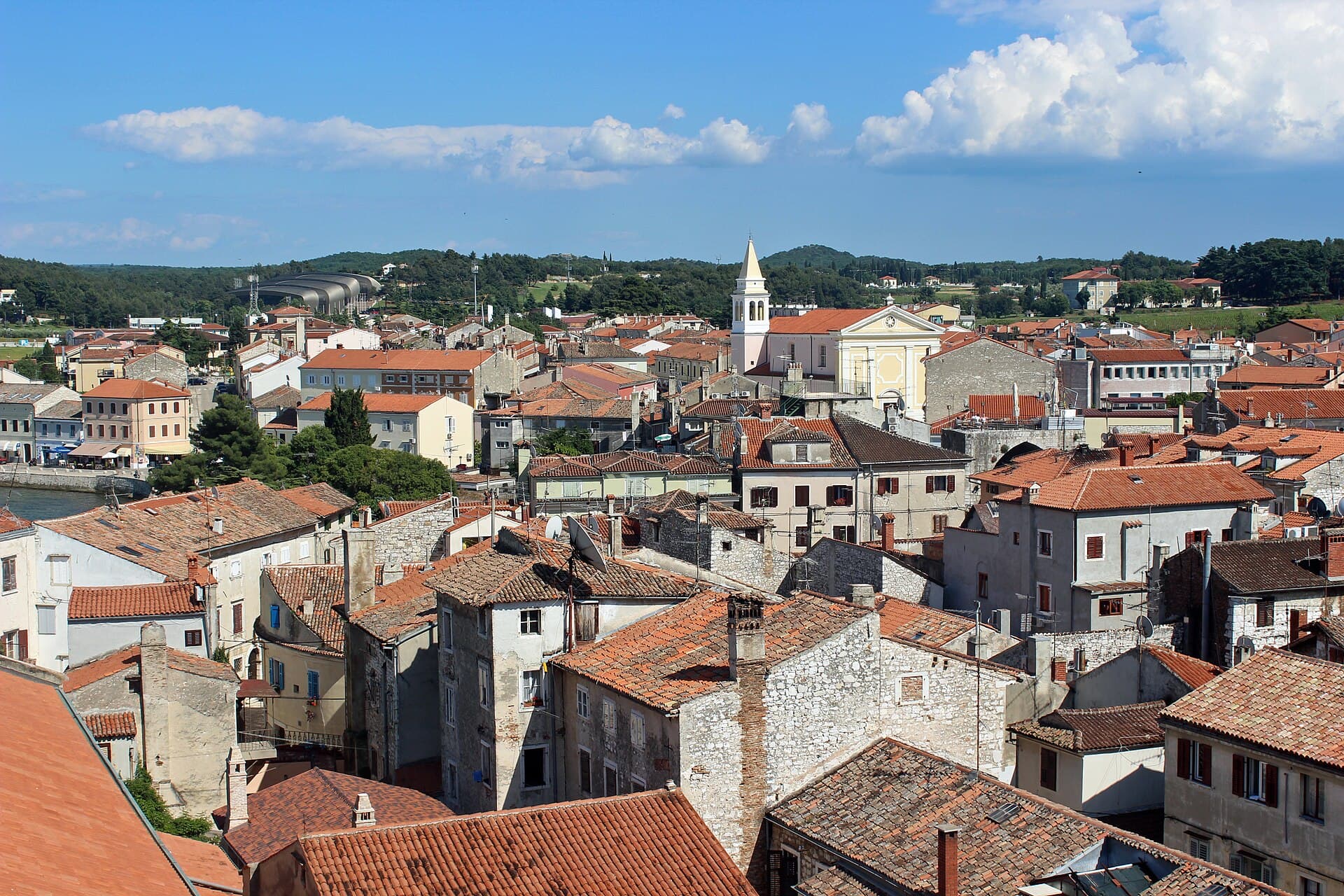 Maesi64 / CC0, via Wikimedia Commons
“Where Roman echoes meet Adriatic sparkle.”
Not the postcards. The stories even locals don't know — whispered in your ear, right where they happened.
The glittering mosaics of Poreč's most famous landmark tell a story beyond their artistic beauty.
Beneath the modern cafes and bustling activity of Poreč's main square lies a direct link to its Roman past.
Wandering the narrow streets of Poreč's Old Town feels like stepping back in time, and there's a good reason for that.
Discover every secret of Poreč
Every address, every reveal in full — in your ear, right where it happened.
You pick your stops. You walk. The voice reveals what the others miss.
No tours available yet. Check back soon — we're preparing them.
Poreč, known in Italian as Parenzo, is a coastal town on the western side of Croatia's Istrian peninsula. This settlement, almost 2,000 years old, is built around a harbor, naturally protected by the small island of Sveti Nikola. With a population of around 16,000 residents, Poreč balances its appeal as a popular tourist destination with a more balanced atmosphere than some of Istria's busier spots.
The town offers a blend of historical depth, natural beauty, and modern amenities, making it a versatile destination for different travelers. From exploring ancient Roman street plans to relaxing on its many Blue Flag beaches, Poreč provides a compelling experience. It's a place where the past is visibly woven into the present, inviting visitors to uncover its many layers.
## From Illyrians to Roman Colony The history of Poreč stretches back to prehistoric times, with the Illyrian tribe of Histri inhabiting the area. In the 2nd century BC, the Romans conquered Poreč, recognizing its strategic importance on a naturally protected peninsula. It quickly developed into a significant port and trade center, known as 'Colonia Iulia Parentium' during the reign of Emperor Augustus in the 1st century BC. The city was meticulously planned with a forum as its central hub and the main streets, Decumanus and Cardo Maximus, still evident today.
## Byzantine Influence and Venetian Rule Following the fall of the Roman Empire, Poreč experienced a succession of rulers, including the Ostrogoths, before becoming part of the Byzantine Empire in 539 AD. It was during this Byzantine period, in the 6th century, that Bishop Euphrasius commissioned the construction of the magnificent Euphrasian Basilica, a UNESCO World Heritage site and a prime example of early Byzantine architecture. Slavs began settling in the area in the 7th century. In 1267, Poreč became the first Istrian city to join the Republic of Venice, a rule that lasted for over five centuries and left a lasting architectural legacy of Venetian-style palaces and squares.
## Austrian, Napoleonic, and Modern Eras With the fall of Venice, Poreč came under Austrian rule, then briefly under Napoleonic administration, before returning to Austrian control in 1815. In the 19th century, it became the capital of Istria and the seat of the Istrian Parliament, leading to further development. After World War I, Poreč became part of the Kingdom of Italy, and during World War II, it suffered significant damage from Allied bombings. In 1947, Poreč and Istria were assigned to Yugoslavia, and upon Croatia's independence in 1991, it became part of the new state. The city's Italian name, Parenzo, is still used officially alongside Poreč.
The most significant landmark in Poreč is the Euphrasian Basilica, a UNESCO World Heritage site. This 6th-century basilica is renowned for its well-preserved early Christian architecture and Byzantine mosaics that adorn the apse, depicting biblical scenes and saints. Visitors can also climb the bell tower for panoramic views of Poreč and the Adriatic Sea.
Stroll through the Old Town, where the ancient Roman street plan, with its main streets Decumanus and Cardo Maximus, is still visible. Explore Marafor Square, the site of the ancient Roman Forum, where remnants of Roman temples, including the Temple of Neptune, can be found. The Old Town also features Romanesque houses and Venetian Gothic palaces, reflecting centuries of diverse influences.
Beyond historical sites, Poreč offers a 37 km coastline with over 20 Blue Flag beaches, ideal for swimming and water sports. Popular options include the Town Beach Poreč, Public Beach in Peskera Bay, and beaches in Plava Laguna and Zelena Laguna. For a change of scenery, consider a trip to Baredine Cave, less than 20 minutes away, to see stalagmites, stalactites, and the endemic human fish.
Poreč enjoys a warm temperate climate with pleasant summers and mild winters. The ideal time to visit is between May and September, when temperatures are comfortable, rainfall is low, and conditions are perfect for outdoor activities and enjoying the coast. July and August are the hottest months, with average daily highs around 30°C and sea temperatures up to 28°C, making them popular for beach lovers and water sports. However, these are also the busiest months. For a more relaxed experience with fewer crowds, consider visiting in May, early June, or September, when the weather is still warm enough for swimming and exploring.
Poreč is a walkable town, especially the Old Town, which is largely car-free. Bicycles are also a popular way to get around, with over 250 km of marked cycling trails in the area. A tourist train connects the town center with resorts like Brulo, Plava, and Zelena Laguna, offering an affordable alternative to taxis. Regular boat lines also operate between the center and resorts like Zelena & Plava Laguna. The nearest airport is Pula Airport (PUY), less than 20 minutes away by car. While there are some fine dining establishments, Poreč also offers many affordable local taverns where you can enjoy traditional Croatian cuisine. Many hotels in Poreč offer buffet breakfast and dinner included in the room rate, which can be a cost-effective option.