Phewa Lake
The calm surface of Phewa Lake often mirrors the grand Machhapuchhre, yet a small island at its heart holds a secret connecting the earthly to the divine.
Full story unlocks in the tour
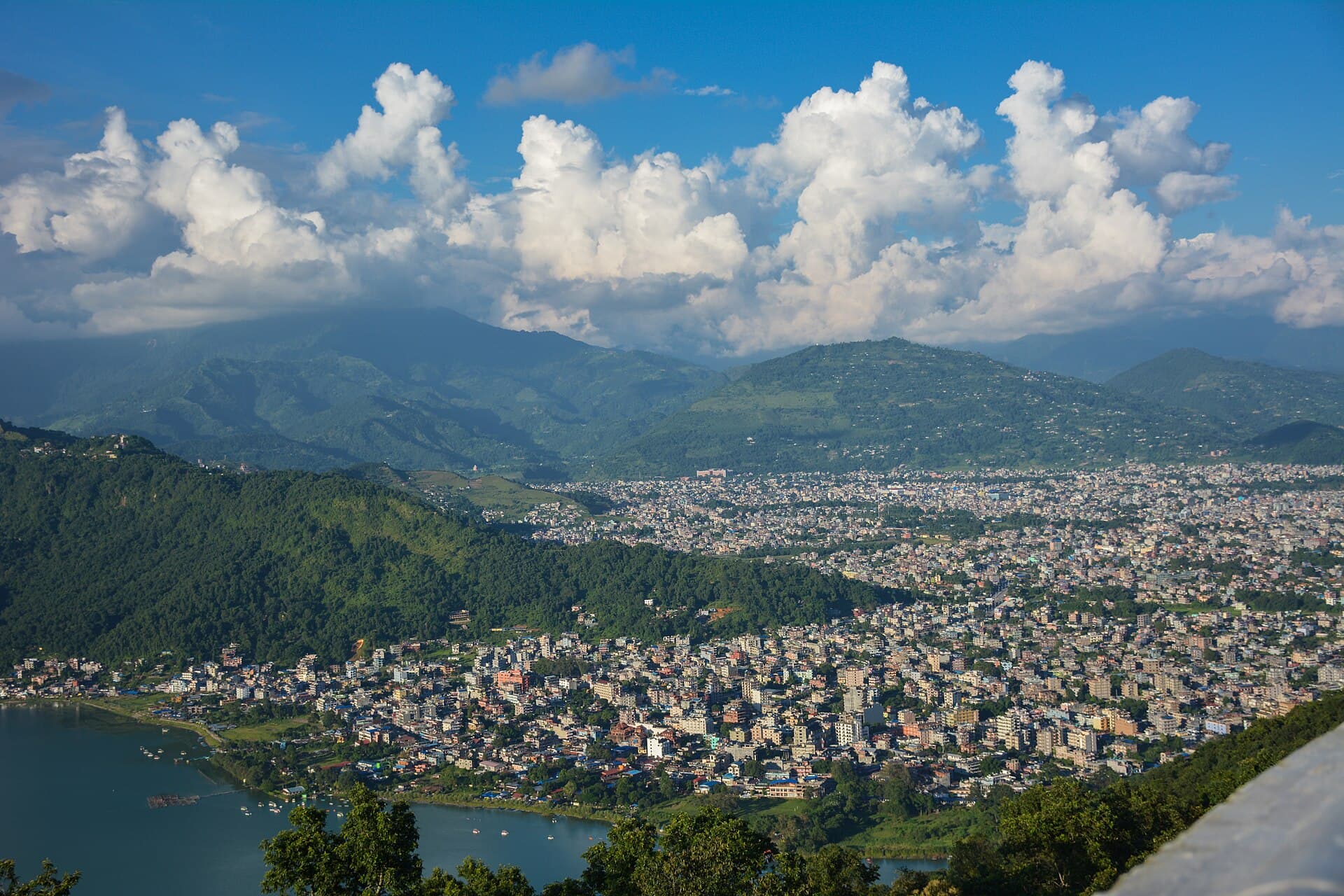 Utsab Raj Giri / CC BY-SA 4.0, via Wikimedia Commons
“Where Himalayan giants meet tranquil lakes, Pokhara invites adventure and serenity.”
Not the postcards. The stories even locals don't know — whispered in your ear, right where they happened.
The calm surface of Phewa Lake often mirrors the grand Machhapuchhre, yet a small island at its heart holds a secret connecting the earthly to the divine.
A striking waterfall in Pokhara carries a local name that hints at a dramatic disappearance.
This distinguished white stupa offers sweeping views, but its construction carries a message born from global conflict.
Discover every secret of Pokhara
Every address, every reveal in full — in your ear, right where it happened.
You pick your stops. You walk. The voice reveals what the others miss.
No tours available yet. Check back soon — we're preparing them.
Pokhara, Nepal's second-largest city by population, is a compelling destination set against the dramatic Annapurna mountain range. Recognized as Nepal's tourism capital, it offers a distinct contrast to the active streets of Kathmandu, with its calm atmosphere and clean air.
The city is defined by the shimmering expanse of Phewa Lake, Nepal's second-largest lake, which reflects the impressive peaks of Dhaulagiri, Annapurna I, and the distinctive Machhapuchhre (Fishtail Mountain). This particular setting, where mountains rising from 1,000 to 7,500 meters are visible within a 30-kilometer radius, makes Pokhara a natural amphitheater of expansive vistas. Beyond its visual appeal, Pokhara serves as the primary gateway for treks into the Annapurna region, drawing adventurers and those seeking tranquility alike.
Pokhara's appeal extends to its Lakeside district, a lively area dotted with cafes, restaurants, and shops, offering a relaxed base for exploring the city and its surrounding natural wonders. Whether it is boating on the lake, paragliding over the valley, or simply enjoying the reflection of snow-capped peaks, Pokhara provides a blend of natural beauty, cultural experiences, and adventure.
The history of Pokhara is deeply rooted in its strategic location along an ancient trade route that connected China and India. During the 17th century, the area was part of the Kingdom of Kaski, one of the 24 small principalities that existed before the unification of Nepal. Evidence of this medieval period, including ruins of forts and temples, can still be found scattered throughout the surrounding hills.
A significant turning point in Pokhara's development occurred around 1752, when King Siddhi Narayan Shah of Kaski invited experienced Newar merchants and artisans from Bhaktapur to establish a permanent market and foster commerce. This initiative laid the groundwork for the city's urban architecture and trade. In 1786, Prithvi Narayan Shah, the first monarch of the unified Kingdom of Nepal, incorporated Pokhara into his growing domain, recognizing its importance as a trading post on routes extending to Kathmandu, Jumla, India, and Tibet.
For centuries, Pokhara remained a relatively secluded place, accessible primarily on foot until the completion of the Siddhartha Highway in 1968. This road opened the city to the wider world, marking the beginning of its transformation into a major tourism destination. The 1950s were particularly pivotal, with the first successful ascent of Annapurna I by French climber Maurice Herzog in 1950 and the introduction of commercial trekking tourism by Colonel Jimmy Roberts. These events, coupled with Pokhara becoming a popular stop on the "Hippie Trail" in the 1960s and 1970s, cemented its global recognition and spurred the development of its tourism infrastructure, particularly around Phewa Lake.
Another significant demographic shift occurred in 1959 with the arrival of numerous Tibetan exiles fleeing Chinese occupation. While many continued to India, some established settlements nearby, which still exist today, complete with their own Gompas (monasteries). Today, Pokhara is recognized as Nepal's tourism capital, drawing hundreds of thousands of visitors annually and contributing significantly to the country's tourism income.
Pokhara offers a diverse range of attractions, from calm lakes to adventure sports and cultural sites. Phewa Lake, the city's centerpiece, is ideal for boating, with colorful paddle boats available for rent. A short boat ride takes you to the island temple of Tal Barahi. For expansive views of the Annapurna range, including Machhapuchhre, consider a sunrise visit to Sarangkot Hill. The World Peace Pagoda (Shanti Stupa), situated on a hilltop, also offers far-reaching vistas of the lake, city, and mountains, and can be reached by a boat ride across Phewa Lake followed by a hike.
Beyond the views, explore Devi's Fall, a unique waterfall where the Pardi Khola river disappears underground. Directly across from Devi's Fall is Gupteshwor Mahadev Cave, a sacred Hindu site. For a glimpse into the region's cultural heritage, visit the Old Bazaar, with its traditional Newari architecture and the Bindhyabasini Temple. The International Mountain Museum provides insights into mountaineering history and Himalayan cultures. For those seeking adventure, Pokhara is a hub for paragliding, ultra-light aircraft flights, zip-lining, and even bungee jumping.
The most favorable time to visit Pokhara is during the autumn months, from October to November. During this period, the weather is clear, temperatures are moderate (ranging between 10-25°C), and visibility of the mountains is excellent, making it ideal for trekking, paragliding, and sightseeing. Spring, from March to May, is also a good option, with temperatures between 14-27°C and landscapes in full bloom, particularly the rhododendron forests. While accommodation rates might be higher during peak seasons, the pleasant weather and clear skies make it worthwhile. The winter months (December to February) offer cooler, quieter conditions with clear skies, while the monsoon season (June to August) brings heavy rainfall and high humidity, which can limit outdoor activities.
Pokhara is generally considered one of Nepal's safer and more relaxed cities for travelers, particularly around the main tourist areas near Phewa Lake. While serious violent crime is uncommon, visitors should be mindful of petty theft, inflated taxi fares, and the need to vet trekking and transport arrangements. The Lakeside district is especially safe and walkable, offering a lively atmosphere both day and night.
Getting around Pokhara is relatively easy. Taxis are readily available and convenient, though it's advisable to negotiate fares before starting your journey as meters are not typically used. Ride-sharing apps like inDrive and Pathao can offer more affordable, fixed-price options. Motorbike and bicycle rentals are popular for exploring at your own pace, especially for reaching sites like Sarangkot. Public buses and minivans are the most economical, connecting various parts of the city, though they may be less comfortable due to irregular schedules and crowded conditions.
Accommodation options in Pokhara range from budget-friendly guesthouses to luxury resorts, with many located around Phewa Lake. The city's culinary scene is diverse, offering traditional Nepali dishes like Dal Bhat and momos, as well as international cuisine. Cooking classes are also available for those interested in learning Nepali culinary traditions.