Phú Quốc Ridgeback dogs
On Phú Quốc, you might encounter a distinctive canine companion, quite unlike any other breed.
Full story unlocks in the tour
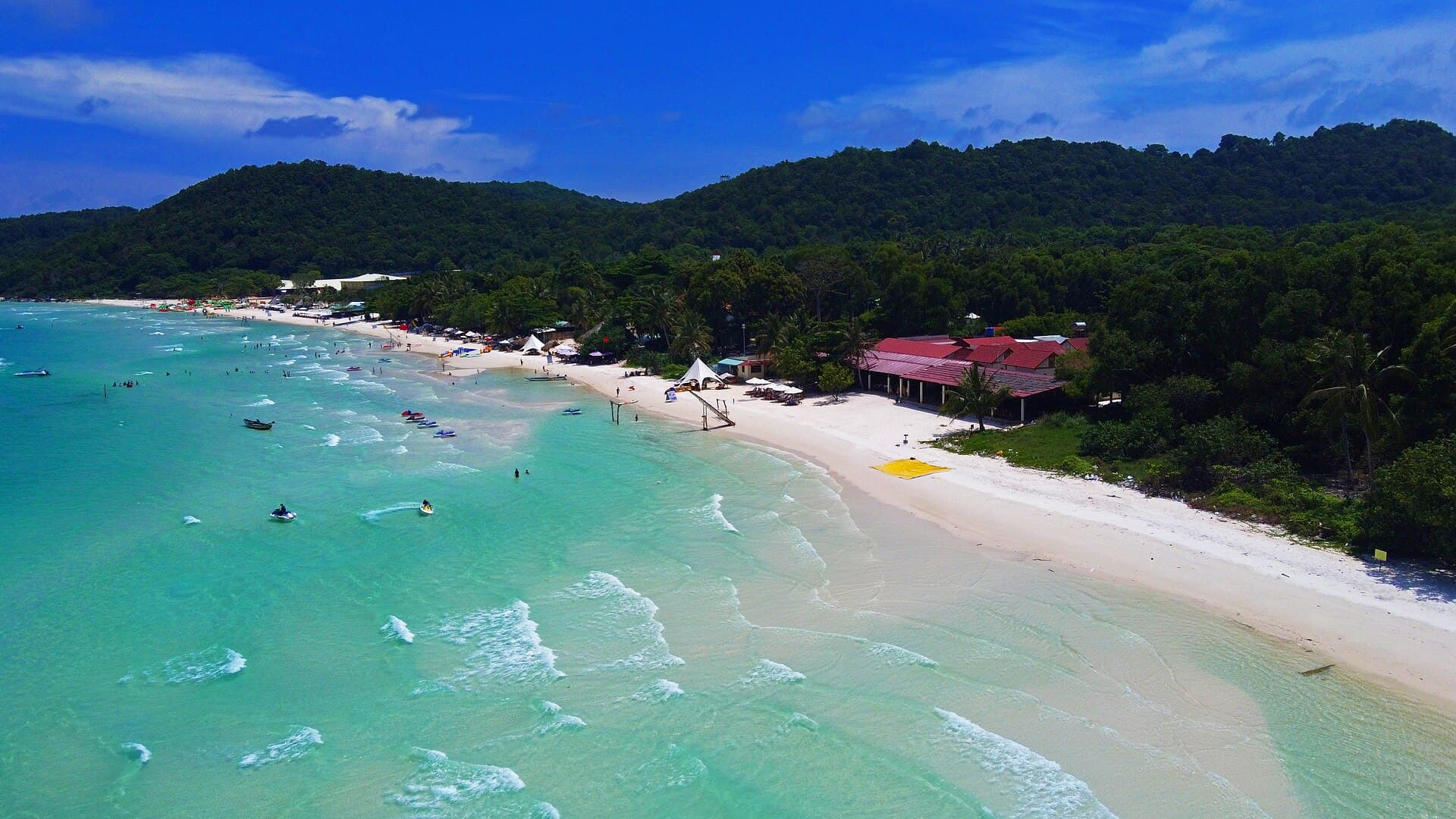 [//commons.wikimedia.org/wiki/User:Trantuonglam Trantuonglam] / CC BY-SA 4.0, via Wikimedia Commons
“Phú Quốc: Where the jungle embraces the sea, and tradition breathes beneath swaying palms.”
Not the postcards. The stories even locals don't know — whispered in your ear, right where they happened.
On Phú Quốc, you might encounter a distinctive canine companion, quite unlike any other breed.
The traditional fishing village of Hàm Ninh offers more than just fresh seafood; it holds a key to experiencing the island's true rhythm.
Starfish Beach is a popular spot, but the vivid red starfish you observe might not be entirely there by chance.
Discover every secret of Phú Quốc
Every address, every reveal in full — in your ear, right where it happened.
You pick your stops. You walk. The voice reveals what the others miss.
No tours available yet. Check back soon — we're preparing them.
Phú Quốc, often called Vietnam's "Pearl Island," is the country's largest island, a tropical sanctuary in the Gulf of Thailand. It is a place where expanses of white sand meet clear, turquoise waters, and a significant portion of the island remains protected within a UNESCO Biosphere Reserve. Beyond its scenic beaches, Phú Quốc offers a blend of authentic Vietnamese culture, enduring fishing traditions, and verdant natural landscapes.
The island's diverse offerings cater to various travelers, from those seeking serene relaxation on secluded shores to adventurers keen on exploring dense national parks and lively local markets. With its unique local products like fish sauce and black pepper, and a relaxed island rhythm, Phú Quốc presents a compelling escape from the ordinary.
Phú Quốc's recorded history traces back to the 17th century. Early Cambodian royal documents referred to the island as Koh Trai. In 1680, a Chinese explorer and merchant named Mạc Cửu established Hà Tiên, a domain that included a village on Phú Quốc, and became its first ruler. Though initially supported by the King of Cambodia, Mạc Cửu later shifted his allegiance to Vietnam's Nguyễn Lords, solidifying the island's connection to Vietnam.
The island played a role in Vietnamese history during the late 18th century when the French missionary Pigneau de Behaine used it as a base to shelter Nguyễn Ánh, who was being pursued by the Tây Sơn army. Nguyễn Ánh, later Emperor Gia Long, found refuge on Phú Quốc multiple times between 1782 and 1786. Legends suggest that locals aided his fleet, leading to special patronage for the island from the imperial court.
In the mid-19th century, King Ang Duong of Cambodia expressed an intention to cede Phú Quốc to France, aiming for a military alliance against the threat from Vietnam. However, by 1862, Phú Quốc was occupied by the French as part of their colonization of Vietnam, falling under the administration of the Governor of Cochinchina. In 1867, Vietnamese authorities on Phú Quốc pledged allegiance to French troops. A 1939 directive by the Governor-general of French Indochina, Jules Brévié, drew a line to delineate administrative boundaries, placing islands south of the line, including Phú Quốc, under the management of Cochinchina.
After mainland China came under Communist Party control in 1949, over 33,000 Republic of China Army soldiers were stationed on Phú Quốc before moving to Taiwan in 1953. During the Vietnam War, the island housed South Vietnam's largest prisoner camp, known as Phú Quốc Prison, which held up to 40,000 prisoners in 1973. In May 1975, Cambodian Khmer Rouge soldiers briefly took Phú Quốc Island, a precursor to the escalating tensions that led to the Cambodia-Vietnam War in 1979.
In more recent times, Phú Quốc has seen significant development as a tourist destination. In 2006, along with the coastal and island biosphere reserve of Kiên Giang, Phú Quốc was recognized by UNESCO as a world biosphere reserve. In 2025, Phú Quốc became one of Vietnam's newly established and reorganized special administrative zones.
Phú Quốc offers a diverse range of sights, from natural wonders to cultural landmarks and modern attractions. For beach enthusiasts, the island offers nearly two dozen beaches. Long Beach (Bãi Trường) stretches for 20 kilometers along the west coast, providing expansive views for sunsets. In the southeast, Sao Beach (Bãi Sao) is known for its soft white sand and clear, light blue water, though it can get crowded with tour groups. Nearby, Khem Beach (Bãi Khem) offers a quieter experience.
Nature lovers can explore Phú Quốc National Park, a UNESCO Biosphere Reserve covering over half the island. Here, you can hike through evergreen forests, observe diverse flora and fauna, and discover waterfalls like Tranh Stream, especially lively during the rainy season. For a glimpse into local life and culture, visit the Dinh Cau Temple (Dinh Cậu Shrine), situated on a rocky outcrop overlooking Dương Đông Beach, a spiritual landmark dedicated to the Sea Goddess. The Phú Quốc Night Market in Dương Đông is a lively spot to sample fresh seafood and local street food. You can also visit pepper farms and fish sauce factories to learn about the island's celebrated products. For family entertainment, VinWonders Phú Quốc offers an amusement park experience, accessible via the Hon Thom Cable Car, which provides expansive ocean views.
Phú Quốc experiences a tropical monsoon climate with two distinct seasons: a dry season and a rainy season. The ideal time to visit is during the dry season, which runs from November to April. During these months, the island enjoys sunny skies, calm seas, and low humidity, with average temperatures around 27–28°C, making it perfect for beach activities and water sports. December to February are considered peak season, offering the most reliable beach conditions but also higher prices and more tourists. The shoulder months of November and March offer similar good weather with potentially fewer crowds and better rates. The rainy season, from May to October, brings frequent and sometimes heavy rainfall, though often interspersed with sunny spells. While less crowded and more budget-friendly, some boat trips may be canceled during this time due to rougher seas.
Getting to Phú Quốc is convenient, with direct flights to Phú Quốc International Airport (PQC) from major cities in Vietnam and some international destinations. Alternatively, ferries operate daily from the Vietnamese mainland ports of Hà Tiên and Rạch Giá.
Once on the island, transportation options include taxis and ride-hailing apps like Grab and XanhSM for shorter distances. For more freedom to explore, renting a motorbike is a popular choice, especially for navigating less-trafficked areas. If you're traveling in a group or prefer not to drive, hiring a driver for the day is a viable and often affordable option.
When visiting temples or pagodas, it is respectful to dress modestly, covering your shoulders and knees, and to remove your shoes before entering sacred spaces. While Phú Quốc is generally affordable, especially when dining at local eateries, booking accommodations and tours in advance during peak season is advisable to secure better deals and availability.