Papago Park
A geological formation in Phoenix features a literal opening, offering a unique outlook onto the city.
Full story unlocks in the tour
 DPPed / CC BY-SA 3.0, via Wikimedia Commons
“Where ancient canals meet modern marvels beneath a desert sun.”
Not the postcards. The stories even locals don't know — whispered in your ear, right where they happened.
A geological formation in Phoenix features a literal opening, offering a unique outlook onto the city.
Beneath a downtown hotel lies a narrow passageway with a storied past, deeply rooted in Phoenix's early days.
One of North America's largest municipal parks holds an ancient language etched into its rocks.
Discover every secret of Phoenix
Every address, every reveal in full — in your ear, right where it happened.
You pick your stops. You walk. The voice reveals what the others miss.
No tours available yet. Check back soon — we're preparing them.
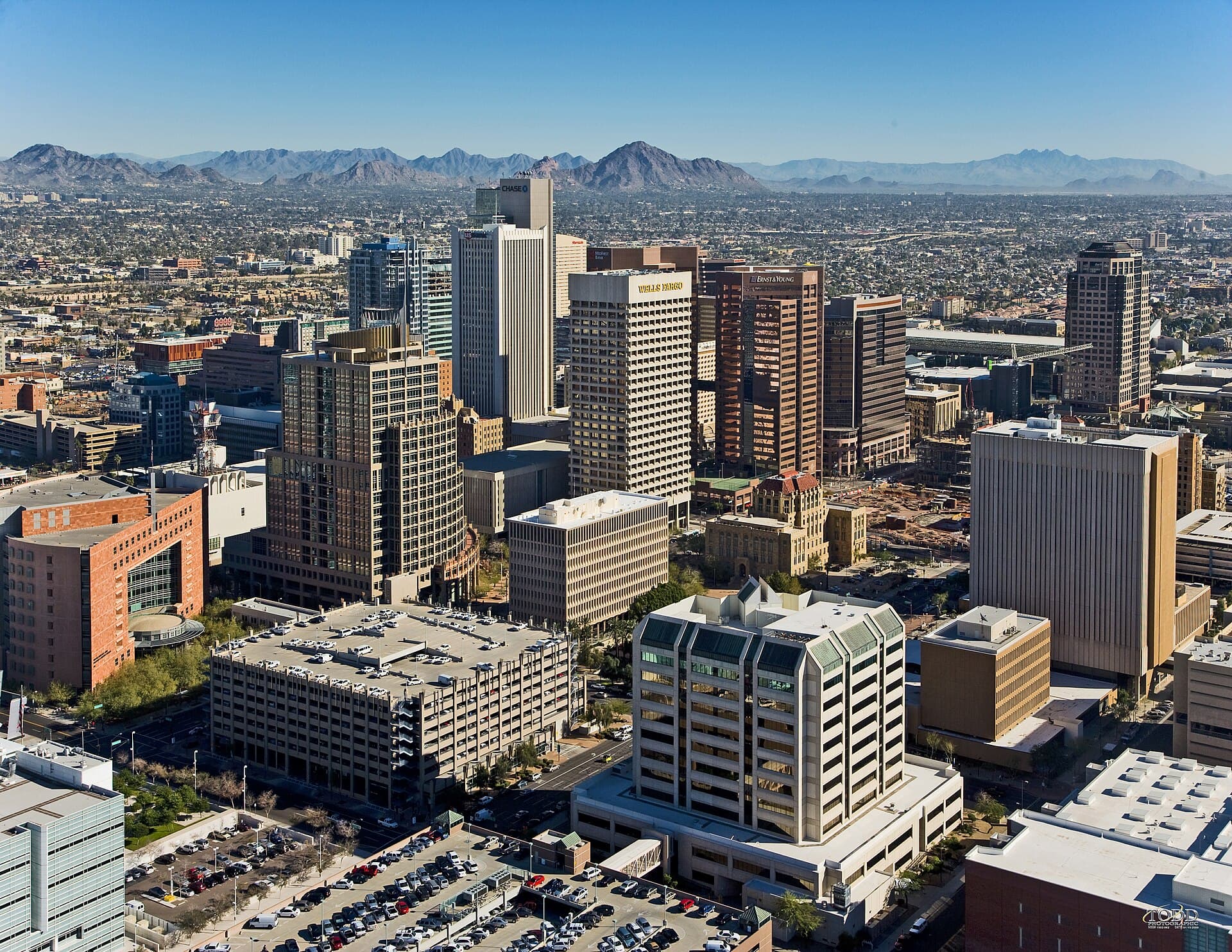
Phoenix, the capital of Arizona, rises from the Sonoran Desert, a sprawling metropolis often called the “Valley of the Sun.” It is a city defined by its abundant sunshine—averaging 300 to 330 clear days a year—and its dramatic desert landscape, dotted with saguaro cacti and framed by mountain ranges. As the fifth-largest city in the United States, Phoenix offers a blend of urban sophistication and outdoor adventure, drawing visitors with its warm climate, diverse cultural scene, and numerous recreational opportunities.
Beyond the resorts and golf courses, Phoenix is a place where ancient history intertwines with modern development. The city’s very existence is a testament to ingenious irrigation systems, first engineered by the ancient Hohokam people and later revived by early settlers. This legacy of water management in an arid environment has shaped Phoenix into a unique destination, where outdoor activities like hiking and biking are central to the lifestyle, and thriving arts and culinary scenes take root.
The story of Phoenix stretches back millennia, with evidence of nomadic paleo-Indians inhabiting the Salt River Valley as early as 7,000 BC. Around 1 AD, the Hohokam civilization emerged, establishing a thriving community that lasted for approximately 1,400 years. These ingenious people developed an extensive network of irrigation canals, some stretching over 12 miles long and 15 feet deep, transforming the desert into fertile agricultural land. They cultivated crops like maize, cotton, and squash, and their sophisticated canal system, totaling around 135 miles, is considered one of the largest and most advanced in the Americas. The Hohokam mysteriously disappeared around 1450 AD, possibly due to prolonged drought or disease, leaving behind their impressive ruins and canal systems.
Centuries later, in the mid-19th century, American settlers began to arrive in the Salt River Valley. In 1867, Confederate veteran Jack Swilling recognized the agricultural potential of the area, inspired by the ancient Hohokam canals. He led efforts to clear and rebuild some of these canals, establishing an agricultural community. The settlement was officially recognized on May 4, 1868, and a post office was established. The name “Phoenix” was suggested by one of the pioneers, Darrell Duppa, who envisioned a new city rising from the ashes of the ancient civilization, much like the mythical bird.
Phoenix was incorporated as a city in 1881 and became the capital of the Arizona Territory in 1889. The arrival of the railroad in 1895 further spurred its growth. The completion of the Theodore Roosevelt Dam in 1911 secured the city’s water supply and controlled the Salt River, crucial for its continued development. On February 14, 1912, Arizona achieved statehood, with Phoenix as its capital. The city’s economy was historically based on the “Five C’s”: cotton, citrus, cattle, climate, and copper. Following World War II, Phoenix experienced rapid growth, with many military personnel who had trained in the valley returning to settle there. Today, Phoenix is a major economic center with a diversified economy, a significant transportation hub, and a popular tourist destination.
Phoenix offers a diverse range of attractions, from desert landscapes to cultural institutions. Begin with the natural beauty of the Sonoran Desert at the Desert Botanical Garden, featuring over 50,000 plant displays, including towering saguaros and delicate desert blooms. Adjacent to the garden is Papago Park, a 1,200-acre desert oasis with hiking and biking trails, dramatic red rock formations, and the iconic Hole-in-the-Rock, which offers city views. Within Papago Park, you will also find the Phoenix Zoo, home to over 1,400 animals.
For expansive vistas, hike Camelback Mountain, a popular urban trail offering views of the city and the Phoenix Mountains Preserve. Another excellent option for outdoor exploration is South Mountain Park and Preserve, one of the largest municipal parks in North America, with over 50 miles of trails and ancient petroglyphs. Cultural experiences include the Heard Museum, renowned for its Native American art and culture, and the Phoenix Art Museum, the largest fine art museum in the Southwest. The Roosevelt Row Arts District in downtown Phoenix is known for its lively street art, murals, and galleries.
The most agreeable time to visit Phoenix is from November through April, when temperatures are mild and comfortable, typically ranging from 60°F to 85°F. This period is ideal for outdoor activities like hiking and golfing. Spring, particularly March and April, brings pleasant weather and events like MLB Spring Training, though it can be peak season with higher prices and crowds. For fewer crowds and good value, consider late fall (October and early November) or January. Summers are intensely hot, with temperatures often exceeding 100°F, but offer lower hotel rates and fewer tourists.
Phoenix Sky Harbor International Airport (PHX) is the primary gateway, known for its accessibility and user-friendly layout. Another option is Phoenix-Mesa Gateway Airport (AZA), which serves budget airlines. Phoenix is a sprawling city, so a rental car is highly recommended for exploring the wider metropolitan area and accessing attractions. The city has a well-organized grid system, making driving straightforward, and ample parking is generally available.
For those preferring not to drive, public transportation options include the Valley Metro bus system and the Light Rail, which connects downtown Phoenix with Tempe and Mesa, stopping near major attractions. Rideshares like Uber and Lyft are also readily available. When visiting, especially during warmer months, prioritize hydration by drinking plenty of water, wearing sunscreen, and scheduling outdoor activities for cooler morning or evening hours. Many resorts offer pools, which become central to daily life during the hotter periods.