Imperial Museum
Before you even step inside the Imperial Museum, you're asked to do something rather unusual to protect its historic floors.
Full story unlocks in the tour
 Eugenio Hansen, OFS / CC BY-SA 3.0, via Wikimedia Commons
“Where imperial echoes meet mountain mists.”
Not the postcards. The stories even locals don't know — whispered in your ear, right where they happened.
Before you even step inside the Imperial Museum, you're asked to do something rather unusual to protect its historic floors.
This grand palace, once a lavish casino, features an artificial lake with a surprising geographical secret.
More than just a beautiful glass structure, the Crystal Palace played a pivotal role in a defiant act of freedom.
Discover every secret of Petrópolis
Every address, every reveal in full — in your ear, right where it happened.
You pick your stops. You walk. The voice reveals what the others miss.
No tours available yet. Check back soon — we're preparing them.
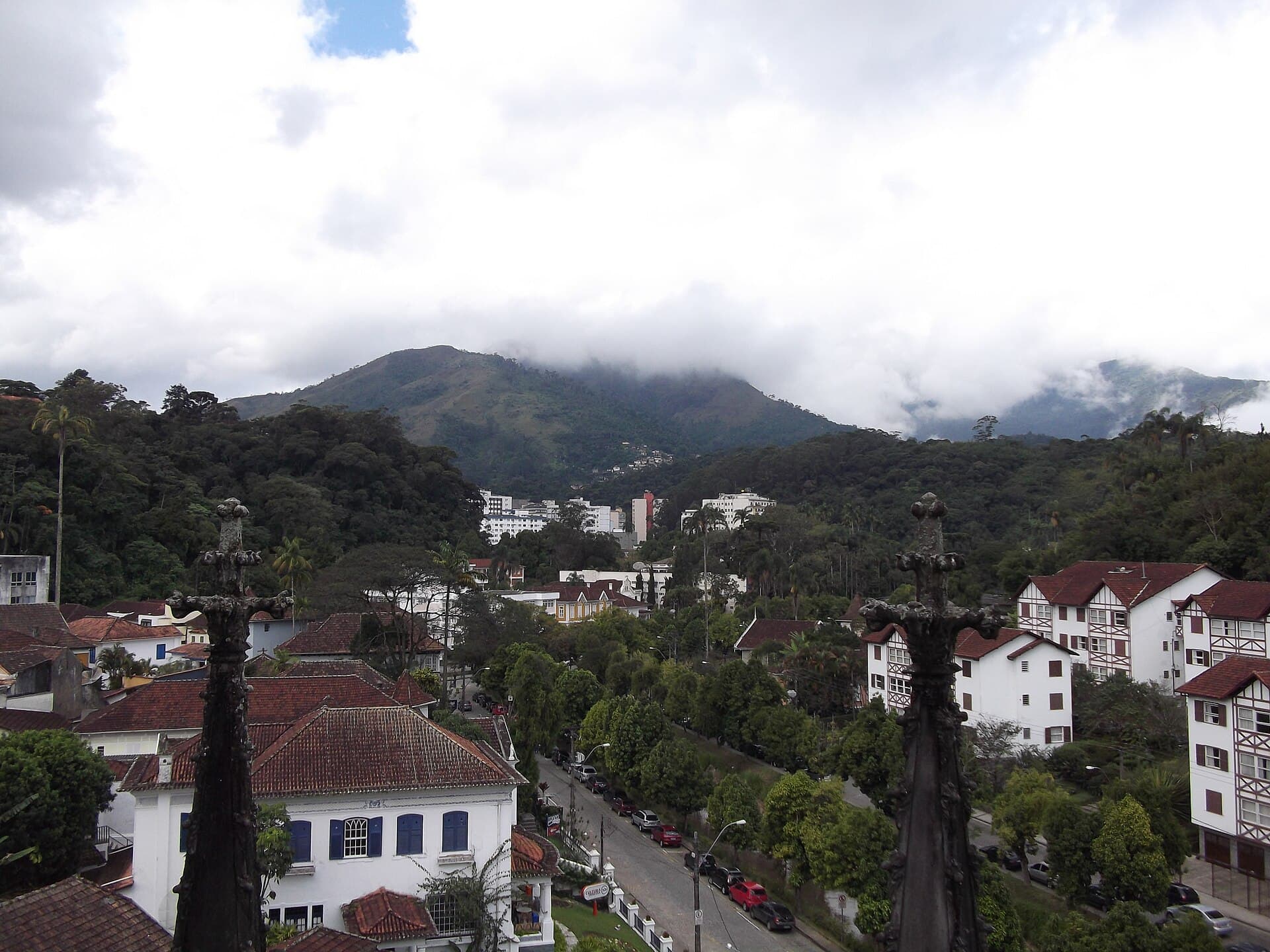
Situated in the Serra dos Órgãos mountains, approximately 68 kilometers northeast of Rio de Janeiro, Petrópolis offers a cool, tranquil escape from the coastal heat. Known as "The Imperial City," it served as the summer residence for Brazil's emperors and aristocracy during the 19th century, a legacy evident in its European-influenced architecture and calm atmosphere.
Today, Petrópolis intertwines its historical past with a lively present, drawing visitors with its museums, palaces, gardens, and a distinct cultural identity. The city's elevation, around 800 meters above sea level, contributes to its mild climate, making it a favored destination for those seeking cooler temperatures and a glimpse into Brazil's imperial era.
## Imperial Origins Petrópolis's story begins with Emperor Pedro I, who in 1830, captivated by the region's mild climate, acquired a farm with the vision of building a summer palace. However, it was his son, Emperor Pedro II, who brought this vision to fruition, officially founding the city by imperial decree on March 16, 1843. The name "Petrópolis," meaning "City of Peter," honors Pedro II, who would spend at least 40 summers, sometimes up to five months, in his mountain retreat.
German immigrants were invited to settle and develop the region, laying the groundwork for Petrópolis's organized urban structure and contributing to its distinctive European architectural influence. During the imperial era, the city became the de facto summer capital of Brazil, with the entire court relocating to escape Rio's intense heat and yellow fever outbreaks. This attracted aristocracy, politicians, and diplomats, fostering rapid growth and infrastructure development.
## Post-Monarchy Significance Even after the proclamation of the republic in 1889, Petrópolis maintained its prestige. It served as the state capital of Rio de Janeiro from 1894 to 1902. Key historical events continued to unfold here, including the signing of the Treaty of Petrópolis in 1903, which ceded the Acre territory from Bolivia to Brazil. During World War II, the Quitandinha Palace hosted the signing of the declaration of war by American countries against the Axis powers.
## Modern Developments In recent decades, Petrópolis has evolved into a significant cultural and economic hub. It is home to the National Laboratory for Scientific Computing (LNCC) and the Catholic University of Petrópolis. The city has also diversified its economy, with tourism and services playing a major role, alongside a thriving textile industry, particularly along Rua Teresa. While still a popular getaway for its historical sites and cooler climate, Petrópolis has also faced challenges, including devastating floods and mudslides in 2011 and 2022, prompting a shift towards a tech-focused economy.
Begin your exploration at the Imperial Museum, the former summer palace of Emperor Pedro II. This grand 44-room structure houses a vast collection of imperial artifacts, including the emperor's diamond-encrusted gold crown and scepter.
Next, visit the Cathedral of Saint Peter of Alcantara, a neo-Gothic masterpiece where the remains of Emperor Pedro II, his wife, and his daughter, Princess Isabel, are entombed.
Discover the Crystal Palace (Palácio de Cristal), an elegant cast-iron and glass structure imported from France. Originally a wedding gift for Princess Isabel, it now hosts cultural events and exhibitions.
Explore the quirky Casa de Santos Dumont, the former summer home of aviation pioneer Alberto Santos Dumont. This diminutive cottage, known as "A Encantada" (The Enchanted), features unique architectural solutions, including stairs that require you to ascend with a specific foot.
Contemplate the grandeur of Quitandinha Palace, a former luxury hotel and casino. Its Norman-French exterior and Rococo Hollywoodian interiors once hosted celebrities like Walt Disney and Carmen Miranda. Today, it serves as a cultural and convention center.
For a taste of local flavors, consider a tour of Cervejaria Bohemia, Brazil's oldest brewery, offering insights into the beer-making process.
The best time to visit Petrópolis is during the Brazilian winter months, from May to August. During this period, the weather is cooler and drier, with average daytime temperatures around 25°C in July, making it ideal for exploring historical sites and enjoying outdoor activities. The city also hosts festivals like Bauernfest in July, celebrating its German heritage. While the city can be visited year-round, summers (December to March) tend to be hotter and bring more rainfall.
Petrópolis is easily accessible from Rio de Janeiro, located about 68-70 kilometers away. The journey by car takes approximately 1.5 to 2 hours via the BR-040 highway. Buses also run frequently from Rio's Novo Rio Bus Terminal, with the trip lasting between 1.5 and 2 hours. Once in Petrópolis, the city center's historical attractions are largely walkable, and horse-drawn carriages offer a charming way to see the sights. Local buses (like numbers 100 or 010 from the bus terminal) and taxis/Ubers are also available for getting around.
Petrópolis is considered one of the safest cities in the state of Rio de Janeiro, especially in tourist areas during the day. However, as with any destination, it's advisable to be aware of your surroundings and avoid isolated areas at night. The city has a mountain climate, so bringing a jacket is recommended, even in summer, due to potential temperature changes.