Douro Museum
The Douro Museum holds the secrets of a groundbreaking decision.
Full story unlocks in the tour
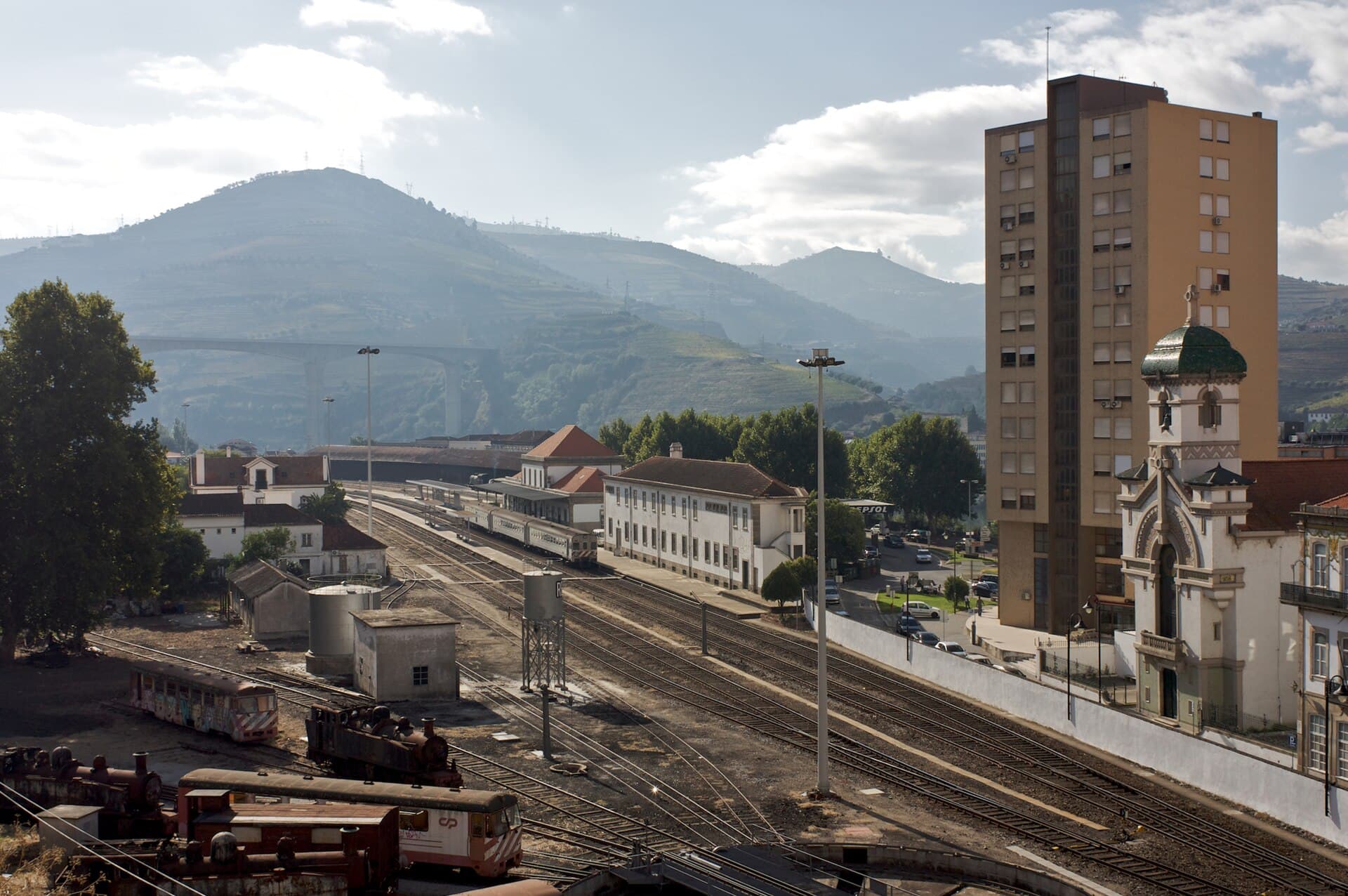 Nuno Morão from Portugal / CC BY-SA 2.0, via Wikimedia Commons
“Where the Douro's currents carved a wine-soaked legacy.”
Not the postcards. The stories even locals don't know — whispered in your ear, right where they happened.
The Douro Museum holds the secrets of a groundbreaking decision.
The town's name isn't just a label; it hints at a vital historical function.
One of Portugal's most recognizable wines has a surprising connection to a local palace.
Discover every secret of Peso da Régua
Every address, every reveal in full — in your ear, right where it happened.
You pick your stops. You walk. The voice reveals what the others miss.
No tours available yet. Check back soon — we're preparing them.
Peso da Régua, often simply called Régua, is a town in northern Portugal, resting on the banks of the Douro River. It serves as a central hub in the Alto Douro Wine Region, a UNESCO World Heritage site celebrated for its terraced vineyards and the creation of Port wine. The town's strategic location made it historically crucial for the wine trade, as barrels were transported from here by traditional rabelo boats downriver to Vila Nova de Gaia for aging.
While not always considered the most picturesque town itself, Peso da Régua is an essential entry point to the Douro Valley, offering a practical foundation for exploring the surrounding wineries, expansive viewpoints, and river activities. It provides an authentic Portuguese experience, with a local atmosphere and fewer international travelers compared to larger cities like Porto.
The origins of Peso da Régua can be traced back to the reign of King Sancho I, between 1202 and 1207. However, the town's significant development truly began in 1756 with the establishment of the Real Companhia Geral da Agricultura das Vinhas do Alto Douro (Royal Company of Vine-Growers from the Alto Douro Region) by the Marquis of Pombal. This pivotal moment marked the creation of the world's first demarcated and regulated wine region, a groundbreaking initiative to control the quality and production of Port wine.
Following its demarcation, Peso da Régua became the central trading post for the Douro Valley. From its river quay, the iconic rabelo boats, with their distinctive square sails, would transport barrels of wine down the Douro River to the cellars in Vila Nova de Gaia, where the wine would mature. This vital role in the Port wine industry solidified Peso da Régua's importance and contributed to its growth and identity.
In 1836, Peso da Régua was elevated to a municipality. The region's unique viticultural landscape, characterized by steep, terraced vineyards carved into the hillsides, was recognized by UNESCO in 2001 as a World Heritage site, underscoring its cultural and historical significance. Today, Peso da Régua continues its legacy as a "City of Wine," promoting the region's renowned Douro table wines and Port wines internationally.
Peso da Régua offers a blend of historical insights and opportunities to experience the Douro Valley's natural beauty.
Begin at the Douro Museum (Museu do Douro), an interactive institution dedicated to the history, culture, and winemaking traditions of the Douro region. Housed in the former headquarters of the Real Companhia Velha, the museum provides extensive information about the world's first demarcated wine region.
Take a stroll along the Peso da Régua Riverside Eco-trail or the Cais da Régua, a promenade offering views of the Douro River and the terraced vineyards on the opposite bank. Keep an eye out for the Douro Tile Panel near the train station, which depicts the region's winemaking history in azulejo form.
For expansive views, venture to one of the many viewpoints. The Viewpoint of Santo António (Miradouro de Santo António) provides an excellent vista of Peso da Régua, its three bridges, and the curve of the Douro River. Further afield, the São Leonardo de Galafura Viewpoint (Miradouro de São Leonardo de Galafura) is considered one of the most beautiful viewpoints in Portugal, offering sweeping views of the entire Douro Valley.
Consider a Douro River cruise from Peso da Régua, a popular way to experience the valley's dramatic scenery from the water. Options range from short trips to full-day excursions, often including lunch onboard. Alternatively, the Historic Douro Train offers a journey back in time, running along the river with scenic views and often including Port wine tastings and entertainment. Many local wineries, or quintas, such as Quinta do Vallado, offer tours and tastings, providing a deeper understanding of the winemaking process.
The most pleasant times to visit Peso da Régua are late spring (May-June) and early autumn (September-October). During spring, the vineyards are a verdant green with wildflowers in bloom, and the weather is comfortable for outdoor activities like hiking. September is the harvest season, offering picturesque scenery as grapes ripen and wineries are busy with activity, including traditional grape stomping. Summer (July-August) can be very hot, with temperatures reaching up to 40°C (104°F), though it's ideal for river cruises and river beaches. Winter (November-March) is quieter, with fewer crowds and potentially lower prices, making it suitable for a relaxed visit focused on wine tastings and cozy experiences.
Peso da Régua is approximately 120 kilometers (75 miles) east of Porto and 360 kilometers (225 miles) north of Lisbon. The town is well-connected by train from Porto, with the scenic Douro railway line running along the river. Buses also connect Peso da Régua to Porto and other nearby towns, though some routes may involve a change in Vila Real. If driving, it's about a 1 hour 15 minute journey from Porto via the A4 and A24 motorways, or 3.5 hours from Lisbon via the A1, IP3, and A24.
The town has a range of shops, restaurants, and grocery stores. For more extensive shopping, the Nosso Shopping mall is in the neighboring town. While the area receives travelers, English is not as widely spoken as in Porto, so learning some Portuguese phrases is beneficial for daily interactions. The local tourist office is located on Rua da Ferreirinha.