Perm-36 Gulag Museum
Perm-36 stands as Russia's sole preserved Gulag camp, a stark reminder of a grim chapter in Soviet history. Yet, after Stalin's death, it housed an unexpected group of prisoners.
Full story unlocks in the tour
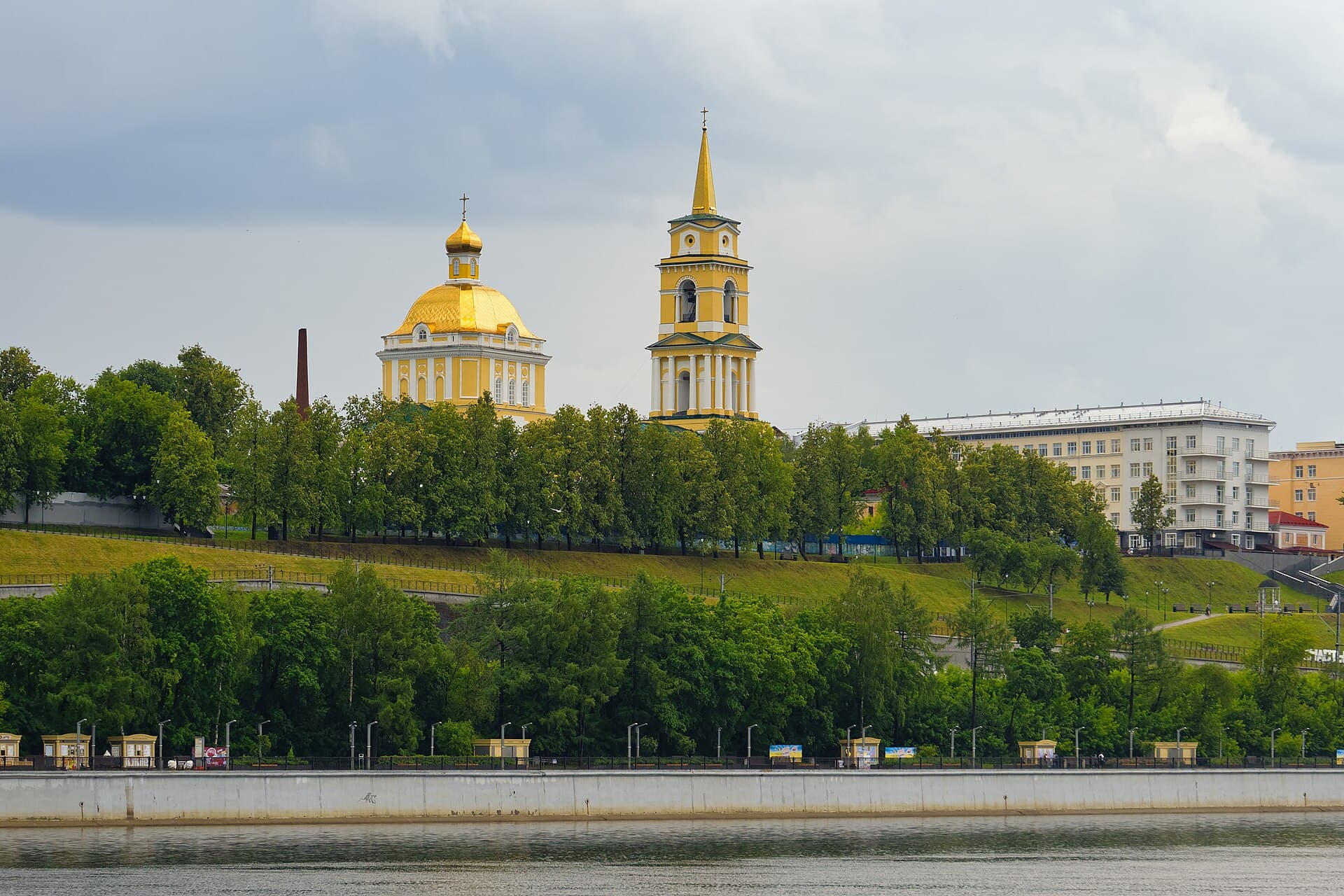 Alexxx1979 / CC BY-SA 4.0, via Wikimedia Commons
“Where ancient geology meets industrial might on Europe's edge.”
Not the postcards. The stories even locals don't know — whispered in your ear, right where they happened.
Perm-36 stands as Russia's sole preserved Gulag camp, a stark reminder of a grim chapter in Soviet history. Yet, after Stalin's death, it housed an unexpected group of prisoners.
The Perm Opera and Ballet Theatre is celebrated for its exceptional performances, often referred to as 'Tchaikovsky's House.' However, its very foundation and early growth are tied to a surprising figure in Russian arts.
The Perm Regional Museum safeguards a collection that garners global recognition, not for ancient artistry or historical documents, but for something far, far older.
Discover every secret of Perm
Every address, every reveal in full — in your ear, right where it happened.
You pick your stops. You walk. The voice reveals what the others miss.
No tours available yet. Check back soon — we're preparing them.
Perm, a sprawling metropolis along the Kama River, delineates Europe's easternmost boundary, where the vast East European Plain converges with the foothills of the Ural Mountains. This strategic location has forged its identity, establishing it as a significant industrial and cultural center. With a populace exceeding one million, Perm ranks among Russia's largest cities, recognized for its diverse metallurgical and engineering sectors.
The city's character is a fusion of broad avenues, grand squares, and Soviet-era architecture, yet it maintains a distinct 'Russian to the core' essence, a measured pace of life, and a profound sense of tradition, situated some 1,400 kilometers from the primary influences of Moscow and St. Petersburg. Perm Krai, the encompassing province, is frequently termed 'Eurasia' due to its singular geographical placement.
The origins of Perm can be traced to the village of Yagoshikha, first documented in 1647. The modern city's narrative truly began with Tsar Peter the Great's development of the Ural region. Vasily Tatishchev, commissioned by the Tsar to manage Ural factories, established Perm alongside Yekaterinburg in 1723, initiating the Yegoshikha metal-smelting works. Its position on the navigable Kama River, a tributary of the Volga, and its closeness to the Siberian Route across the Urals, swiftly transformed it into a vital trade and manufacturing nexus.
Perm's administrative importance solidified in 1780-1781 when Empress Catherine II declared it a provincial city, making it the heart of the expansive Perm Viceroyalty. The 19th century witnessed continued expansion, with the inauguration of an opera theatre in 1870 and the construction of Russia's inaugural phosphoric factory in 1871. The completion of a railway bridge across the Kama in 1912, carrying the Trans-Siberian Railway, further cemented Perm's role as a regional junction.
During the Soviet era, Perm underwent considerable industrial expansion, with aviation, shipbuilding, and chemical factories established in the 1930s. It played a crucial role in artillery production during World War II, known as the Great Patriotic War. From 1940 to 1957, the city was temporarily renamed Molotov, after Soviet politician Vyacheslav Molotov. During the Cold War, Perm became a restricted city, even vanishing from some Soviet-made maps until the late 1980s. Today, Perm continues to be a major industrial center and a significant railway intersection.
Commence your exploration along the Kama River Embankment, a thoughtfully designed promenade offering expansive views of the river and city skyline. For a deep immersion into the region's past, the Perm Regional Museum (Perm Museum of Local Lore), housed within the historic Meshkov House, stands as the oldest and largest museum in Perm Krai. It displays archaeological discoveries, ethnographic treasures of the Komi-Permyaks, and a singular collection devoted to the Permian geological period.
Those drawn to art and culture should visit the Perm Tchaikovsky Opera and Ballet Theatre, one of Russia's venerable and esteemed musical centers, celebrated for presenting all of Tchaikovsky's stage compositions. For a more contemporary perspective, the PERMM Museum of Modern Art offers a distinct cultural encounter. To confront a somber yet essential part of history, the Perm-36 Gulag Memorial Museum, located approximately 100 km northeast of the city, serves as Russia's sole preserved Gulag camp. Day excursions beyond the city limits can reveal natural marvels like the Kungur Ice Caves, featuring stalagmites and ice formations, and the Stone City, a unique expanse of ancient rock formations.
The most agreeable time to visit Perm for activities in warmer weather is from late June to early August, with average temperatures ranging from 15°C to 25°C (59°F to 77°F). July is typically the warmest month. For those interested in winter sports or experiencing a traditional Russian winter, December to February offers snow-covered landscapes and festivities, though temperatures can fall considerably, often below -20°C (-4°F). Spring and autumn are transitional periods, with changeable weather.
Perm functions as a major transport hub in Russia, enjoying excellent connections by air, rail, and bus. Bolshoye Savino International Airport (PEE) is situated approximately 18 kilometers southwest of the city center, offering daily flights to Moscow and other significant Russian cities. Perm features two primary railway stations: Perm-2, the main passenger station, and Perm-1, a historical station catering to regional trains. The Trans-Siberian Railway traverses Perm.
Within the city, an extensive public transport network includes buses and trams. Tickets can be acquired from the driver or conductor. Taxis are also readily available, with official services like Yandex and Citymobil recommended. The local currency is the Russian Ruble (RUB).