Pemayangtse Monastery
One of Sikkim's oldest and most significant monasteries holds a unique distinction regarding its monks.
Full story unlocks in the tour
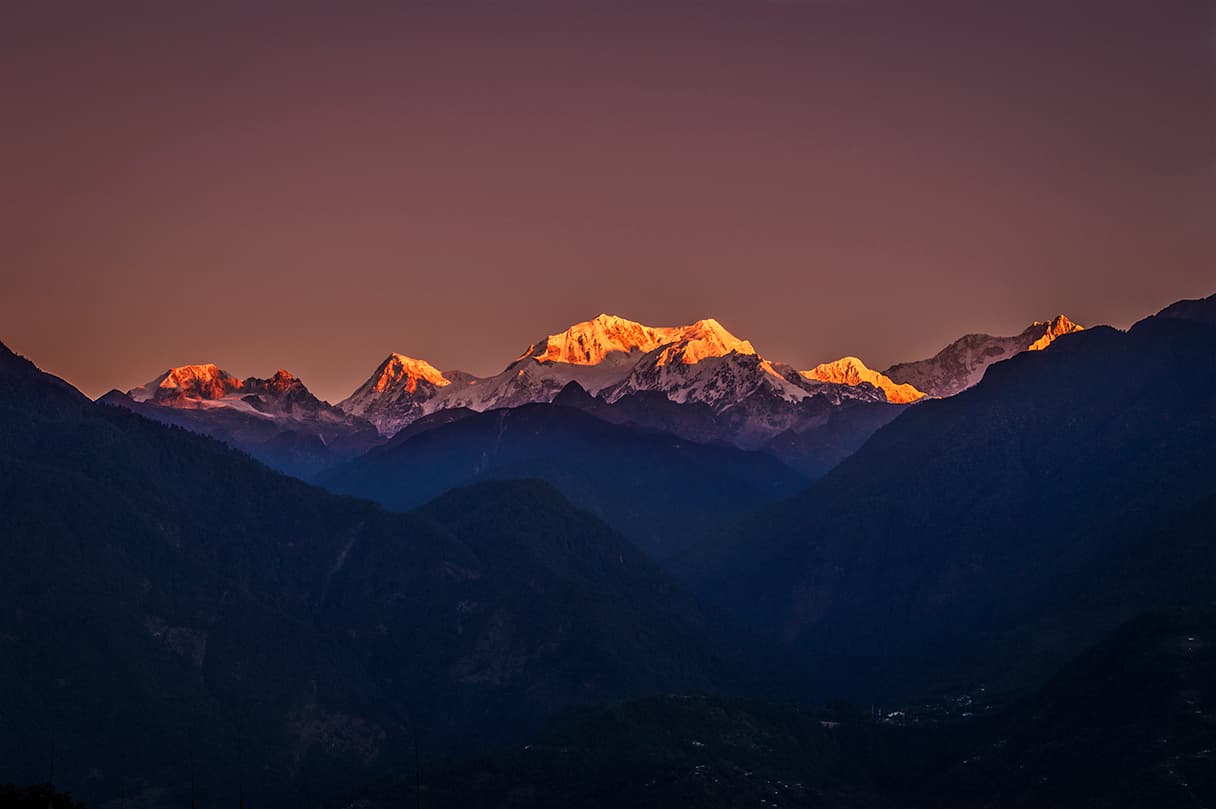 Santanu Paul / CC BY-SA 4.0, via Wikimedia Commons
“Where the world's third-highest peak greets you at sunrise, Pelling offers a profound connection to Sikkim's spiritual heart.”
Not the postcards. The stories even locals don't know — whispered in your ear, right where they happened.
One of Sikkim's oldest and most significant monasteries holds a unique distinction regarding its monks.
The former capital of Sikkim, now in ruins, reveals a fascinating detail about how people approached its royal court.
This sacred lake, revered by both Buddhists and Hindus, has a peculiar natural phenomenon that keeps its waters pristine.
Discover every secret of Pelling
Every address, every reveal in full — in your ear, right where it happened.
You pick your stops. You walk. The voice reveals what the others miss.
No tours available yet. Check back soon — we're preparing them.
Pelling, a captivating town in West Sikkim, rises to an elevation of 2,150 meters (7,050 feet) and is swiftly becoming a prominent destination after Gangtok. It is celebrated for its expansive and often clear views of the Kanchenjunga range, the world's third-highest peak, which commands the horizon. The town provides a tranquil respite, merging Himalayan splendor with a deep spiritual legacy, drawing in those who appreciate both nature and culture. With its verdant scenery, tumbling cascades, and ancient monasteries, Pelling truly embodies the spirit of Sikkim.
Upper Pelling is particularly favored for its remarkable sunrise views, where the first light of morning paints the snow-capped mountains in golden shades. Many hotels in Upper Pelling are thoughtfully positioned to offer these memorable views directly from guest rooms. Beyond the mountain panoramas, Pelling serves as a portal to exploring Sikkim's historical and spiritual sites, including venerable monasteries and archaeological remnants.
The story of Pelling is profoundly interwoven with the ancient kingdom of Sikkim. While Pelling itself took shape during British rule, its immediate surroundings hold the echoes of a much older epoch. Just a few kilometers from Pelling stand the Rabdentse Ruins, which served as the second capital of the former Kingdom of Sikkim from 1670 to 1814. The inaugural capital, Yuksom, was established in 1642 with the consecration of Phuntsog Namgyal as Sikkim's first king.
In 1670, the second Chogyal (king), Tensung Namgyal, relocated the capital from Yuksom to Rabdentse. He selected a forested ridge in West Sikkim, a location naturally defended by its terrain and situated within the cultural heartland of the Bhutia community. Here, a royal palace, a monastery, and a courtyard complex were constructed, forming the administrative core of the kingdom for over a century and a half. The palace was even christened 'Song Khim,' meaning 'New Palace,' by one of the king's queens.
However, Rabdentse's time as capital concluded abruptly. In the late 18th century, an invading Gurkha army laid waste to the city, leaving behind the remnants visible today. The Chogyal's son, Tshudpud Namgyal, eventually returned to Sikkim in 1793 but, finding Rabdentse too exposed due to its proximity to the Nepalese border, moved the capital further north to Tumlong. By 1814, the capital that had stood for 144 years was reduced to rubble.
Pelling is also home to some of Sikkim's most ancient and revered Buddhist monasteries. Pemayangtse Monastery, founded in 1705 AD by Lhatsun Chenpo, stands as one of the oldest and most significant monasteries in Sikkim. Lhatsun Chenpo was one of the three lamas who consecrated Phuntsog Namgyal, Sikkim's first king. The monastery's name, Pemayangtse, translates to 'Perfect Sublime Lotus,' symbolizing purity and spiritual awakening. It adheres to the Nyingma Order of Tibetan Buddhism and historically held the unique privilege of its head lama anointing the Chogyals of Sikkim with holy water.
Another historic location is the Sanga Choeling Monastery, established in 1697 by Lama Lhatsun Chempo. It is considered one of the oldest monasteries in Sikkim and belongs to the Nyingmapa sect of Tibetan Buddhism. The name Sanga Choeling means 'Island of the Guhyamantra teachings.' While it has been affected by fire and rebuilt multiple times, it still safeguards remarkable 17th-century clay idols. These monasteries, along with other sites like Khecheopalri Lake, form a significant Buddhist pilgrimage circuit in West Sikkim.
Pelling presents an array of attractions that merge natural splendor with spiritual and historical weight. The most prominent is the Kanchenjunga range, which can be observed in its full grandeur from various vantage points, particularly in Upper Pelling. The Pelling Skywalk offers an exhilarating experience with its glass floor and expansive mountain and valley views, alongside a commanding Chenrezig Statue.
For a journey into Sikkim's past, the Rabdentse Ruins are a compelling destination. These remnants of Sikkim's second capital provide glimpses into the Namgyal dynasty and offer clear views of the Kanchenjunga peaks after a pleasant stroll through a forest. Nearby, the Pemayangtse Monastery, one of Sikkim's oldest, displays intricate Buddhist architecture and artifacts.
Other notable sites include Sanga Choeling Monastery, another ancient Buddhist institution reachable via a scenic uphill walk, providing tranquil views. Khecheopalri Lake, a sacred 'wish-fulfilling' lake encircled by dense forests, is held in high regard by both Buddhists and Hindus. The Singshore Bridge, one of Asia's highest suspension bridges, delivers an invigorating experience with a deep gorge stretching below. Those who appreciate nature can also visit Kanchenjunga Falls and Rimbi Waterfall, the latter located near one of Sikkim's oldest hydropower stations and surrounded by orange orchards. For a window into local life, Darap Village extends opportunities for cultural immersion and traditional experiences.
Pelling welcomes visitors for much of the year, with particular seasons offering distinct advantages. The most pleasant times are generally considered to be September to May.
Summer (March to May) is ideal for exploration and outdoor activities, with agreeable temperatures ranging from 7°C to 28°C. The snow recedes, revealing verdant landscapes, and rhododendrons bloom across the hills. Autumn (October to November) also provides clear skies and pleasant weather, with temperatures between 15°C and 20°C, allowing for excellent views of the Kanchenjunga range. Winter (December to February) is perfect for those seeking snow-covered scenery and the clearest views of Mount Kanchenjunga, though temperatures can fall to -5°C. The monsoon season (June to September) is generally less favored due to heavy rainfall and potential road closures from landslides.
Pelling is a compact town, and while some areas can be explored on foot, a vehicle is essential to reach most attractions. Taxis are readily available for half-day or full-day tours, enabling visits to multiple locations. Many travelers divide their sightseeing over two to three days for a more leisurely pace. For the clearest Kanchenjunga views, consider staying in Upper Pelling, as hotels along this ridge often provide direct sightlines of the mountain range. The optimal time for clear mountain photographs and views is typically between sunrise and 7:30 AM, as clouds often begin to gather by mid-morning.
While Pelling lacks direct train or bus connections, it can be reached by hiring a private taxi from Bagdogra Airport or New Jalpaiguri Railway Station, a journey that takes approximately 4-5 hours. Shared jeeps are also accessible from places like Gangtok. When visiting during winter, be prepared for cold temperatures and carry warm clothing. Entry fees may apply at some attractions, such as monasteries and historical sites.