Château Mouton Rothschild
Beyond the legendary wines, this estate holds a surprising secret in its cellars.
Full story unlocks in the tour
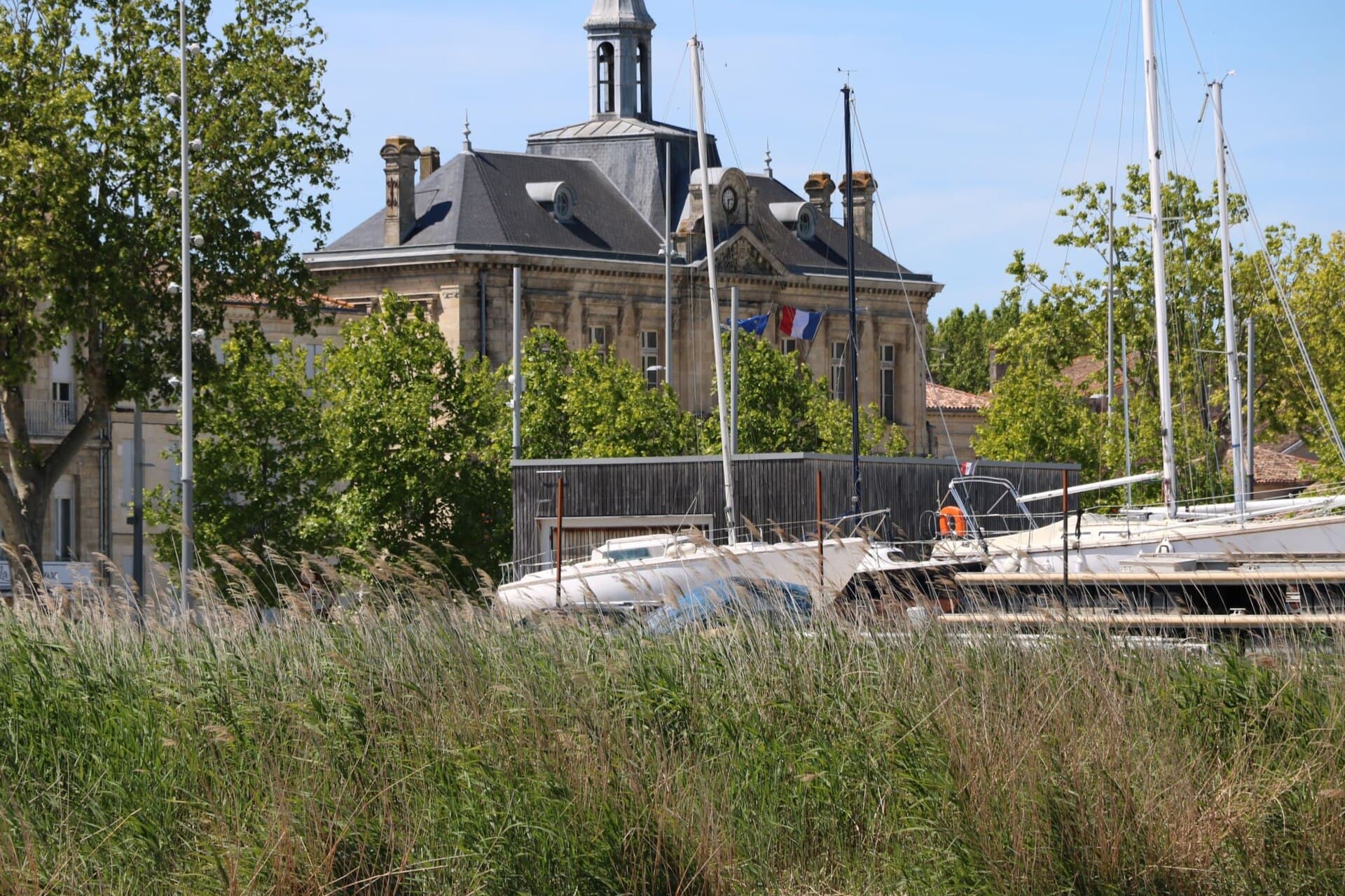 Anthony Baratier / CC BY-SA 4.0, via Wikimedia Commons
“Where the Gironde meets greatness, and every gravel stone tells a vintage story.”
Not the postcards. The stories even locals don't know — whispered in your ear, right where they happened.
Beyond the legendary wines, this estate holds a surprising secret in its cellars.
This tranquil riverside promenade once played a crucial, unexpected role in global aviation.
Despite being the heart of a billion-euro wine industry, the town grapples with an unsettling paradox.
Discover every secret of Pauillac
Every address, every reveal in full — in your ear, right where it happened.
You pick your stops. You walk. The voice reveals what the others miss.
No tours available yet. Check back soon — we're preparing them.
Pauillac, a name synonymous with some of the world's most revered wines, is a commune situated on the left bank of the Gironde estuary in the core of Bordeaux's Médoc region. This small town, with its quays along the water and a broad boulevard just behind, serves as a gateway to an unparalleled viticultural landscape. While many visitors are drawn by the appeal of its prestigious châteaux, Pauillac itself offers a quiet charm, with 19th-century architecture and a palpable sense of its maritime past.
The town lies amidst vineyards that stretch as far as the eye can see, producing what many consider the quintessential Bordeaux red wine—powerful, structured, and capable of aging for decades. It is a place where the gravelly soils and the moderating influence of the Gironde estuary converge to create an ideal terroir for Cabernet Sauvignon, the dominant grape variety here. Pauillac is not just a destination for wine connoisseurs; it's an invitation to explore a region where history, nature, and human endeavor have crafted a legacy of liquid gold.
The history of winemaking in the Aquitaine region, where Pauillac is situated, reaches back to antiquity, with the Romans introducing viticulture. However, in Pauillac itself, early vine cultivation was limited due to the marshy lands, which were more suited to fishing and livestock. It wasn't until the Middle Ages that viticulture began to gain momentum, largely thanks to monks who developed vineyards around monasteries and churches.
Under English rule from 1152 to 1453, the Aquitaine region, including Pauillac, experienced significant viticultural development driven by trade with England. The strategic location of Pauillac on the Gironde estuary gradually transformed it into a crucial port for the export of Médoc wines. A major turning point arrived in the late 16th century when Dutch merchants, under the Duke of Épernon's orders, undertook the draining of the Médoc marshes. This land development significantly boosted the expansion of vineyards.
By the 18th century, Pauillac's reputation soared, attributed to both its exceptional terroir and its strategic geographical position. The port facilitated the export of wines, quickly popularizing Pauillac crus both domestically and internationally. The defining moment for Pauillac's global recognition came with the 1855 Classification of Bordeaux wines, ordered by Napoleon III for the Paris Universal Exhibition. This classification, which ranked the finest Bordeaux estates, solidified Pauillac's prestige and influence in the wine world, notably by including three of its châteaux among the five Premier Cru Classé.
Beyond its viticultural fame, Pauillac also played a role in more recent history. During World War I, a U.S. Navy base was established in Pauillac in 1917 to operate seaplanes, closing shortly after the Armistice in 1918. The wharves were later targeted and destroyed in bombing raids during World War II due to the presence of an oil terminal and refinery. In the late 20th and early 21st centuries, the town's port found a surprising new purpose, serving as a departure point for components of the Airbus A380, which were transported by barge.
Pauillac offers a blend of viticultural grandeur and riverside tranquility. A primary draw is the opportunity to explore the prestigious Premier Cru Classé wine-producing Châteaux such as Château Lafite Rothschild, Château Latour, and Château Mouton Rothschild. Many châteaux offer tours and tastings, providing insight into the meticulous art of winemaking.
In the town itself, the 19th-century Church of Saint-Martin, with its distinctive architecture and an unusual boat offering inside, warrants a visit. The town also features a 19th-century market hall and a monument dedicated to those who perished in the World War II bombardment. For a unique diversion, seek out the 'museum of automated animals' on the main street. Strolling along the quays offers serene views of the Gironde estuary, with the distant Patiras island and its lighthouse, and the traditional carrelets (fishermen's huts on stilts). A short distance away, the charming village of Bages, meticulously renovated by a local wine-producing family, provides an engaging experience with its shops and restaurants amidst the vineyards.
The ideal time to visit Pauillac for warm-weather activities and vineyard exploration is from mid-June to mid-September. During these months, the weather is warm, and the vineyards are lush and green. Spring (March to May) offers mild temperatures and fewer crowds, with vines budding and châteaux preparing for the new season. Autumn (September to November) is the exciting harvest season, providing a dynamic look into winemaking, though tours might be more limited due to the busy schedule. Winter (December to February) is the quietest period, offering a more intimate experience with fewer visitors, though some châteaux may have reduced hours.
Pauillac is easily accessible and best explored with a combination of walking and, ideally, a car for venturing to the surrounding châteaux. The town itself is pleasant for a few hours of walking, with cafes and restaurants along its broad boulevard and quays. The Maison du Tourisme et du Vin de Pauillac is an excellent starting point for maps, information on wine tourism tours, and details on château visits. Many châteaux require appointments for tours and tastings, so it's advisable to book in advance. For those interested in cycling, bike rentals are available, offering a pleasant way to navigate the flat vineyard routes. The weekly market in Pauillac takes place every Saturday morning in the market square, offering local produce and specialties.
While the town offers some accommodation options, including hotels and chambres d'hôtes, many visitors choose to stay in nearby areas and make day trips to Pauillac. The region is committed to sustainable viticulture, with a growing number of châteaux embracing organic and biodynamic practices.