Patras Carnival
Patras hosts one of Europe's grandest carnivals, a month-long celebration of parades and parties. Yet, the origins of its famed 'Treasure Hunt Game' are a more recent, playful addition.
Full story unlocks in the tour
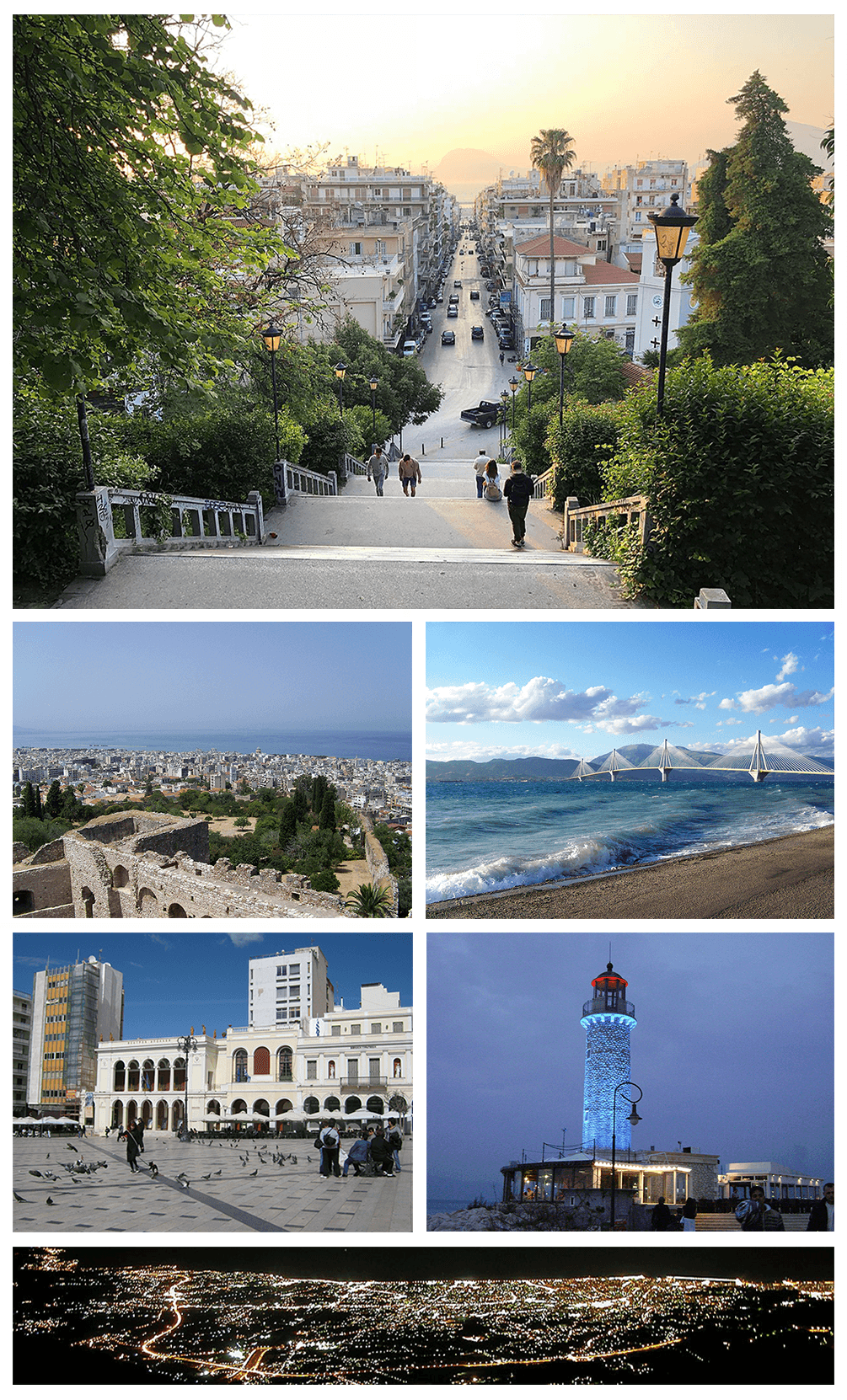 SilentResident (compilation, sources to attribute see above; if any of the sources used in the Montage are removed from Wikimedia Commons, or better ones are found, please inform its creator so that they can update it. You can contact the creator by leaving a message here: [1]) / CC BY-SA 3.0, via Wikimedia Commons
“Patras: Where ancient echoes meet a modern pulse.”
Not the postcards. The stories even locals don't know — whispered in your ear, right where they happened.
Patras hosts one of Europe's grandest carnivals, a month-long celebration of parades and parties. Yet, the origins of its famed 'Treasure Hunt Game' are a more recent, playful addition.
The expansive Cathedral of Saint Andrew stands as a significant pilgrimage site, holding revered relics. However, the construction of this immense church faced numerous delays and design debates for decades.
Patras contains a remarkably preserved Roman Odeon, an ancient theater that rivals Athens' renowned Herod Atticus. Its rediscovery, however, was entirely by chance, and its restoration a mid-20th-century endeavor.
Discover every secret of Patras
Every address, every reveal in full — in your ear, right where it happened.
You pick your stops. You walk. The voice reveals what the others miss.
No tours available yet. Check back soon — we're preparing them.
Patras, Greece's third-largest city, is a bustling port and a lively university town on the northwestern Peloponnese. Often considered a passageway to the West, it connects Greece with Italy and other parts of Western Europe through its active harbor. The city's energy is palpable, fueled by a significant student population that invigorates its cafe, theater, and music scene.
With a history extending over four millennia, Patras presents a compelling blend of ancient heritage and contemporary life. From its prehistoric settlements to its pivotal role in the Greek War of Independence, the city has undergone numerous transformations. While some areas display modern urban development, the pedestrianized streets of the city center and the Upper Town reveal gracefully restored neoclassical buildings and a distinct allure.
The history of Patras extends to prehistoric times, with evidence of settlements from the Mycenaean era over 4,000 years ago. The city traditionally takes its name from Patreus, a leader of the Achaeans who united three Ionian towns: Aroe, Mesatis, and Antheia. In 280 BC, Patras played a significant part in the formation of the Achaean League, a pioneering example of representative government in Greece.
Patras reached its peak during the Roman era, following its conquest in 146 BC. Emperor Augustus established an imperial colony here, transforming it into a cosmopolitan center of the eastern Mediterranean. The Romans invested substantially in infrastructure, constructing an odeon, temples, industrial zones, and paved roads, and even initiated the export of earthen oil lamps. It was also during this period that Saint Andrew is believed to have taught Christianity and was martyred in Patras, becoming the city's patron saint.
Following a destructive earthquake around 300 AD, Patras experienced a decline, but remained an important commercial center during the Byzantine era, safeguarded by a strong castle. Over subsequent centuries, it endured repeated conquests by Franks, Venetians, and Ottomans. The Ottomans captured Patras in 1458, renaming it 'Baliabadra' and granting special privileges and tax reductions, though it did not regain its former commercial prominence. Venetian and Genoese forces frequently raided the city in the 15th and 16th centuries, briefly re-establishing rule between 1687 and 1715.
Patras played a central role in the Greek War of Independence, being one of the first towns to revolt against the Turks in 1821. The city, then the largest and most prosperous in the Peloponnese, was largely destroyed during the conflict. After its liberation in 1828 by French forces, a new, ambitious urban plan was approved by Governor Ioannis Kapodistrias, though it was implemented with adaptations. Patras rapidly developed in the late 19th century, becoming Greece's second-largest city and a major export hub for agricultural produce. It was also a pioneer in modern amenities, being the first Greek city to introduce public streetlights and electric tramways in the early 20th century. Today, Patras continues to evolve as a significant economic and cultural center in Western Greece.
Begin your exploration at the Patras Castle, constructed in the 6th century AD on the ancient acropolis. Wander through its grounds, now a public garden, and absorb the wide views of the city and the Gulf of Patras. Just below the castle, in the Upper Town, you will discover the Roman Odeon, an impressive 2nd-century AD amphitheater that once hosted artistic performances and now stages summer concerts and theatrical events.
In the city center, the Cathedral of Saint Andrew (Agios Andreas) is a crucial sight. It is the largest Orthodox church in Greece and a significant pilgrimage destination, holding relics of Saint Andrew. Nearby, the Apollon Municipal Theatre, designed in 1872 by Ernst Ziller, is a neoclassical architectural treasure and a replica of Milan's La Scala. Stroll through Georgiou I Square, the modern city center, with its fountains and neoclassical buildings, and observe the daily rhythm of Patras.
For those interested in the past, the Archaeological Museum of Patras offers a modern and spacious display of artifacts from the Greco-Roman period, including well-preserved mosaics. Consider a visit to the Achaia Clauss Winery, established in 1861, for a taste of local wines, including the celebrated Mavrodaphne.
The ideal times to visit Patras for agreeable weather and fewer crowds are during the shoulder seasons: May, early June, September, and October. During these months, temperatures are comfortable, ranging from 15°C to 25°C (59°F to 77°F), with less rainfall and ample sunshine, perfect for sightseeing and outdoor activities. If you are interested in festivals, the famous Patras Carnival occurs in late February or early March, offering a lively, month-long celebration. For beach activities and swimming, July and August are peak months with the warmest sea temperatures.
Patras is well-connected and functions as a major transportation hub. Its port provides numerous ferry connections to Italy and the Ionian Islands. The city is also reachable by bus and train from Athens. Within the city, public urban buses and taxis are available for transit. Patras experiences a Mediterranean climate, marked by hot, dry summers and mild, wet winters. Summers can see temperatures exceeding 35°C (95°F), while winters typically range from 8°C to 15°C (46°F to 59°F).
Accommodation options are varied and generally more affordable than in more tourist-heavy Greek destinations. The city offers a range of hotels and inns, as well as budget-friendly hostels, particularly appealing to students and backpackers. Dining in Patras is also diverse, with numerous cafes, bars, and restaurants, offering both traditional Greek cuisine and modern choices. Local specialties include Bourjeto, Tilichtária Patrina, and the sweet wine Mavrodaphne.