Kumhrar
Beneath the contemporary city, one can trace the outlines of a truly immense ancient structure.
Full story unlocks in the tour
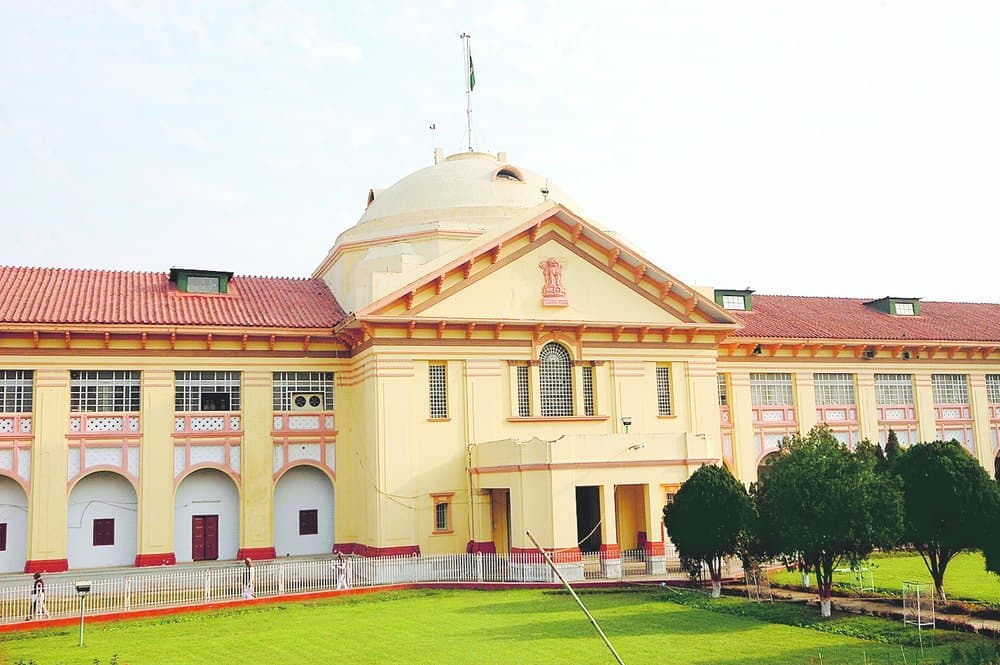 Patel95 / CC BY-SA 4.0, via Wikimedia Commons
“Where the echoes of ancient empires resonate through a bustling present.”
Not the postcards. The stories even locals don't know — whispered in your ear, right where they happened.
Beneath the contemporary city, one can trace the outlines of a truly immense ancient structure.
This grand 18th-century granary was constructed to avert famine, yet it offers more than just historical foresight today.
Among its extensive holdings, a particular sculpture commands attention, embodying the spirit of ancient Indian artistry.
Discover every secret of Patna
Every address, every reveal in full — in your ear, right where it happened.
You pick your stops. You walk. The voice reveals what the others miss.
No tours available yet. Check back soon — we're preparing them.
Patna, the capital of Bihar, stands as one of the world's most enduringly inhabited cities, its story stretching back over two and a half millennia. Once known as Pataliputra, it served as the seat of power for formidable empires like the Mauryan and Gupta dynasties, evolving into a pivotal political, cultural, and educational center of ancient India.
Today, Patna is a dynamic metropolis where the grandeur of its imperial past converges with the rhythms of contemporary existence. It functions as a gateway for pilgrims journeying to Buddhist, Hindu, and Jain sanctuaries such as Vaishali, Rajgir, Nalanda, Bodh Gaya, and Pawapuri. The city itself presents a compelling array of historical landmarks, museums, and spiritual sites, rendering it an intriguing destination for those drawn to India's profound heritage and lively culture.
The genesis of Patna, then recognized as Pataliputra, dates back to 490 BCE when King Ajatashatru of Magadha established a fortification along the Ganges to counter the Licchavi of Vaishali. Its strategic position at the confluence of the Ganges and Son rivers swiftly transformed it into a crucial nexus of northern India. Pataliputra became the capital of the formidable Mauryan Empire around 322 BCE, reaching its zenith under Emperor Ashoka, who governed a sprawling domain from this very city. During this era, the city was celebrated for its impressive urban design, including a massive wooden palisade adorned with 570 towers and 64 gates.
Following the Mauryas, the Shunga and Gupta dynasties continued their rule from Pataliputra, which blossomed as a center of scholarship and fine arts. Intellectuals such as Aryabhata, Vātsyāyana, and Chanakya were connected with this ancient urban center. However, with the decline of the Gupta Empire, the city entered a period of instability, eventually diminishing in prominence after its capture and extensive destruction by Bakhtiar Khilji in the 12th century.
The city experienced a resurgence in the mid-16th century under the Afghan emperor Sher Shah Suri, who reconstructed it and bestowed upon it its contemporary name, Patna. Although Sher Shah's fort no longer stands, the Sher Shah Suri mosque, built in the Afghan architectural style, endures. During the Mughal period, it was briefly known as Azimabad, named by Prince Azim-us-Shan. The British East India Company established a trading post in Patna in 1620, and the city became a significant hub for international commerce in the 17th century. In 1912, following the partition of the Bengal presidency, Patna was designated the capital of the Bihar and Orissa Province, and after India's independence in 1947, it became the capital of Bihar.
Patna presents a collection of sites that reflect its layered history. The Bihar Museum, inaugurated in 2015, offers a contemporary lens on the region's past through engaging exhibits and diverse galleries, encompassing historical art and a section dedicated to the Bihari diaspora. The Patna Museum, one of India's oldest, houses an array of artifacts from the Maurya and Gupta periods, notably the Didarganj Yakshi statue and Buddhist relics.
To glimpse ancient Pataliputra, visit Kumhrar, an archaeological site revealing vestiges of Mauryan palaces and the celebrated 80-pillared hall. The Golghar, an 18th-century granary, stands as an architectural marvel with a spiral staircase providing expansive city and Ganges River views.
Spiritually, Takht Sri Patna Sahib is one of Sikhism's five holiest gurdwaras, marking the birthplace of Guru Gobind Singh, the tenth Sikh Guru. The Buddha Smriti Park, inaugurated by the Dalai Lama, features a 200-foot stupa containing sacred Buddha relics, a meditation center, and a museum. For nature and recreation, the Sanjay Gandhi Biological Park (Patna Zoo) combines a zoo and botanical garden, making it a favored destination.
The most favorable period to visit Patna is during the cooler months, from October to March. In this time, temperatures are pleasant, typically ranging from 12°C to 20°C, creating ideal conditions for exploration and outdoor pursuits. Summers, from April to June, are intensely hot with temperatures often surpassing 40°C, and are generally best avoided by travelers due to the severe heat. The monsoon season, from July to September, brings substantial rainfall and humidity, which can make outdoor excursions challenging, though the city's greenery is at its most verdant.
Patna is readily accessible by air, rail, and road. Jay Prakash Narayan International Airport (PAT) is approximately 5-7 km from the city center and ranks as the 20th busiest airport in India, with a new terminal inaugurated in May 2025. Patna Junction (PNBE) is a significant railway station, among the busiest in the country, connecting Patna to most major Indian cities. The station features 10 platforms and offers amenities such as waiting rooms and complimentary Wi-Fi.
Within the city, local transport options include auto-rickshaws, taxis, and buses. For lodging, choices span from economical hotels to more opulent accommodations. While exploring, be sure to sample local Bihari cuisine, such as Litti Chokha, Sattu Paratha, and Malpua. Patna is a relatively economical city for travelers.