Kalogeros Beach
Most beaches invite you to swim, but Kalogeros offers a different kind of immersion.
Full story unlocks in the tour
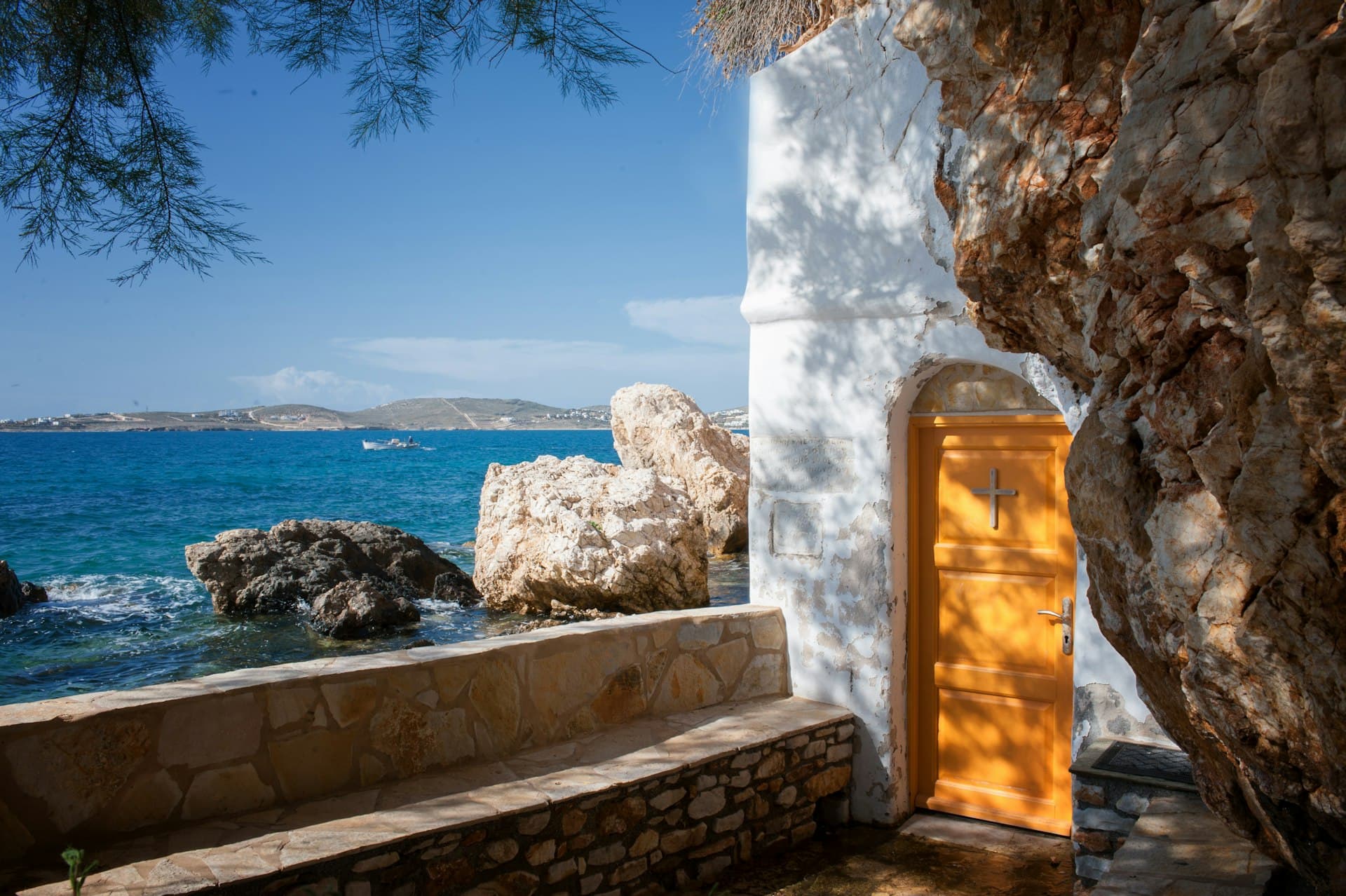 Photo: MICHAEL SALIS / Unsplash
“Where ancient marble meets Aegean blue, and every alley holds a secret.”
Not the postcards. The stories even locals don't know — whispered in your ear, right where they happened.
Most beaches invite you to swim, but Kalogeros offers a different kind of immersion.
This ancient church in Parikia is said to have a concealed entrance, waiting for a specific moment in history.
Paros was once the source of some of the ancient world's most celebrated sculptures, and you can still explore where it all began.
Discover every secret of Paros
Every address, every reveal in full — in your ear, right where it happened.
You pick your stops. You walk. The voice reveals what the others miss.
No tours available yet. Check back soon — we're preparing them.
Paros, a shimmering island in the heart of the Cyclades, offers a captivating blend of traditional Greek character and contemporary appeal. Positioned in the central Aegean Sea, it lies a short ferry ride from Athens and serves as a popular stop for island-hoppers. The island presents a diverse landscape, from its golden-sand shores and clear waters to verdant mountains and villages crowning the cliffs.
While some of its neighbors, like Santorini and Mykonos, are often associated with specific types of travel, Paros strikes a balance, appealing to families, couples, and groups of friends alike. Its main towns, Parikia and Naoussa, serve as lively centers, offering a mix of authentic Greek experiences and modern amenities, including bustling nightlife and diverse dining options. Beyond the active coastal areas, Paros also holds pockets of tranquility in its inland settlements, inviting visitors to experience a slower pace of island life.
Paros possesses a history stretching back to at least the Neolithic Ages, with evidence suggesting habitation as early as 4000 BC. During the early Bronze Age (3200 – 2000 BC), the island began to flourish. According to myth, Alkaios, the first king of Paros, built a city on the site of modern-day Parikia during the Minoan period (2000 – 1500 BC). Its strategic position in the center of the Cycladic islands and fertile plains made it an ideal naval base, earning it the honorific title of Minoa, given to Royal Cretan cities.
Around 1100 BC, the Ionians arrived, followed by the Arcadians around 1000 BC, who, under the leadership of Parios, gave the island its current name. The period between 800 and 700 BC saw Paros flourish as a prosperous maritime power, engaging in trade with the Phoenicians and even colonizing other islands. The island was celebrated throughout the ancient Mediterranean for its high-quality, semi-transparent white marble, known as Parian marble, which was used in famous sculptures such as the Venus de Milo and the Hermes of Praxiteles.
Paros later became part of the Roman and then the Byzantine Empire, during which many churches and monasteries were constructed, including the significant Church of Panagia Ekatontapiliani in Parikia. In 1207, Paros was incorporated into the Duchy of the Aegean under Venetian rule, passing through various Venetian families. This era also saw the construction of defensive structures, such as the Fort of Naoussa, to protect against pirate raids. In 1537, the island was captured by the pirate Hayreddin Barbarossa, an event still commemorated today in Naoussa's annual pirate festival. Paros then fell under Turkish rule in 1560, remaining part of the Ottoman Empire until the Greek Revolution in 1821, when it finally gained independence and became part of the modern Greek state.
In the 18th century, during the Russo-Turkish War (1768–1774), Naoussa Bay served as a home base for the Russian Archipelago Squadron. Following its independence, Paros became home to Manto Mavrogenous, a heroine of the nationalist movement who financed and fought in the war. Her house near the Ekatontapiliani church is now a historical monument. Today, Paros continues to be an active island that cherishes its enduring past, with ancient and medieval ruins visible across the landscape.
Paros offers a variety of experiences, from exploring charming villages to relaxing on distinctive beaches. Begin in Parikia, the capital and main port, characterized by its traditional Cycladic architecture and a labyrinth of narrow streets filled with shops and restaurants. Here, you can visit the Church of Panagia Ekatontapiliani, a significant Byzantine monument believed to have been founded by Saint Helen. Do not miss the Archaeological Museum of Paros to see artifacts from the island's long story.
Naoussa, a picturesque fishing village on the north side of the island, is known for its Venetian castle at the harbor entrance and its lively atmosphere, especially in the evenings. You can take a taxi boat from Naoussa marina to explore nearby shores like Kolymbithres and Monastiri. For a taste of inland life, venture to Lefkes, a hilltop village with marble-paved streets, traditional whitewashed houses, and expansive views. From Lefkes, consider walking the ancient Byzantine Trail to the neighboring village of Prodromos.
Beaches are a major draw. Kolymbithres Beach is famous for its unique granite rock formations that create natural swimming pools and sheltered coves. Golden Beach (Chrissí Aktí) on the east coast is a popular spot for windsurfing due to its consistent strong winds. For a quieter escape, consider Faragas Beach on the southern coast. A short ferry ride connects Paros to its smaller sister island, Antiparos, offering additional exploration opportunities.
The best time to visit Paros is during the shoulder months of May, June, and September. During these periods, the weather is warm and sunny, ideal for beach activities and sightseeing, with fewer crowds than the peak summer months. July and August are the hottest and busiest months, with active nightlife and bustling beaches, but also higher prices and more people. The sea temperature is comfortably warm from mid-June through September. For those interested in hiking, spring (April and May) offers pleasant temperatures and blooming wildflowers.
Paros is easily accessible by ferry from Athens' Piraeus or Rafina ports, with journey times ranging from 3 to 5 hours. There's also a small airport on Paros with flights from Athens and seasonal flights from other European cities.
Getting around the island is convenient. Local buses connect major towns and beaches, offering an inexpensive way to explore. Renting a car, ATV, or scooter provides more independence, especially for reaching quieter areas. Roads are generally well-maintained but can be narrow in rural areas. Most places accept credit cards, but it's advisable to carry some euros for smaller establishments. The official language is Greek, though English is widely spoken in the tourism industry. Tap water is generally not recommended for drinking.