Parma Cathedral Dome
Look up into the dome of Parma Cathedral, and you might feel a dizzying sensation, as if the ceiling has vanished entirely.
Full story unlocks in the tour
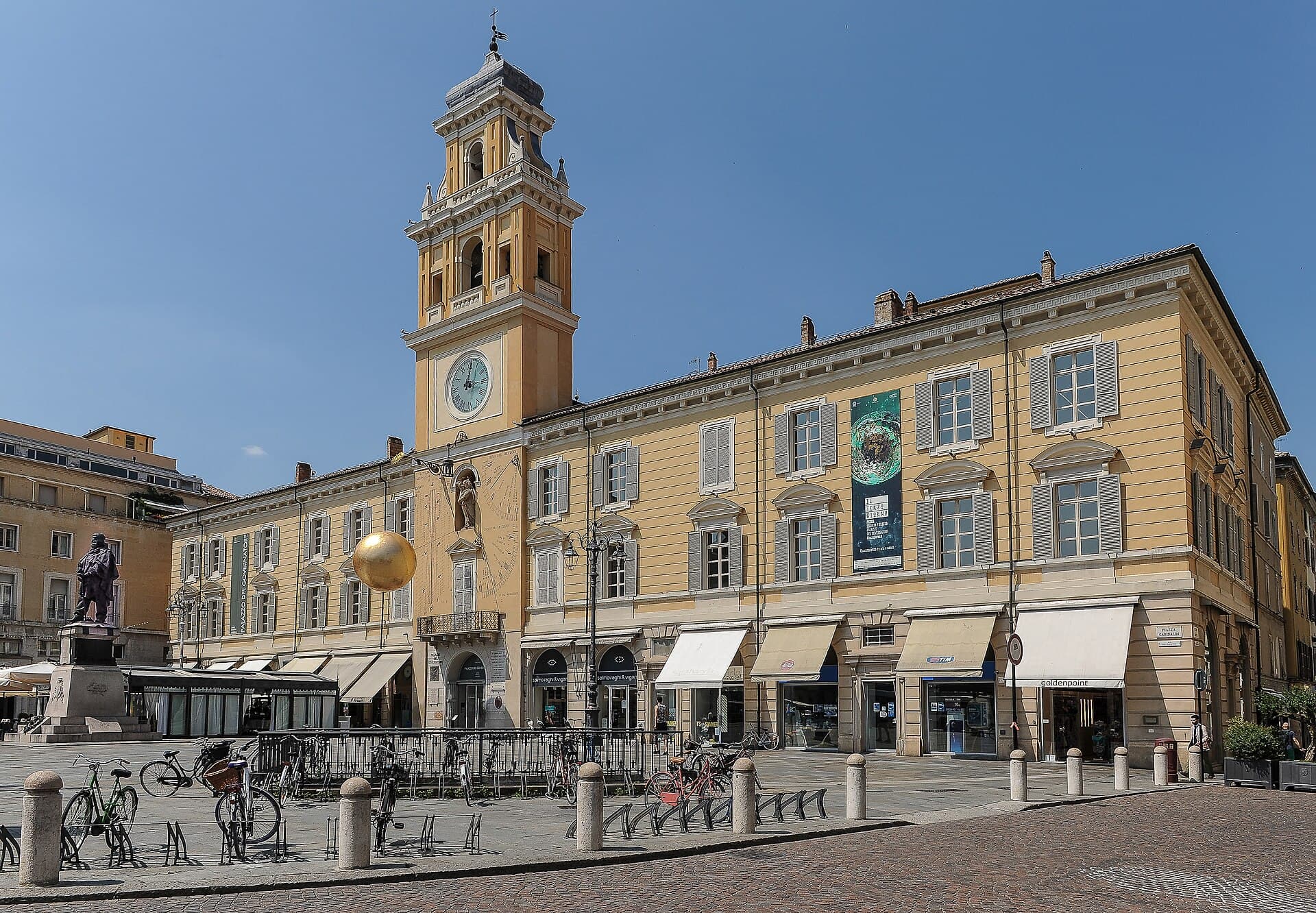 Pjt56 --- If you use the picture outside Wikipedia I would appreciate a short e-mail to pjt56@gmx.net or a message on my discussion page / CC BY-SA 4.0, via Wikimedia Commons
“Where art, opera, and culinary mastery converge in a city of quiet elegance.”
Not the postcards. The stories even locals don't know — whispered in your ear, right where they happened.
Look up into the dome of Parma Cathedral, and you might feel a dizzying sensation, as if the ceiling has vanished entirely.
The grand Teatro Farnese, a Renaissance marvel, was originally built for a guest who never arrived.
Those crunchy white crystals you find in aged Parmigiano Reggiano aren't salt.
Discover every secret of Parma
Every address, every reveal in full — in your ear, right where it happened.
You pick your stops. You walk. The voice reveals what the others miss.
No tours available yet. Check back soon — we're preparing them.
Parma, a city in Italy's Emilia-Romagna region, offers a captivating blend of artistic heritage, operatic tradition, and world-renowned gastronomy. Divided by the Parma stream, the city is a repository of Romanesque architecture, Renaissance masterpieces, and inviting streets. Often described as a "little Paris" due to its refined appearance, Parma invites visitors to explore its cultural depths and savor its celebrated culinary scene.
Beyond its celebrated edible exports, Parma is a city of quiet elegance and a profound past that dates back to 183 BC when it was founded by the Romans. It has been a significant hub throughout various historical periods, from being a Lombard duchy to a Farnese capital, each era leaving an indelible mark on its character. Today, Parma is recognized as a UNESCO Creative City for Gastronomy, a testament to its enduring influence on Italian and global cuisine.
A stroll through Parma reveals a city that values its past while embracing the present. From the grand Piazza Garibaldi, the city's main square, to the serene Ducal Park, there are countless opportunities for leisurely exploration. Whether you're drawn to its artistic wonders, its musical legacy, or its unparalleled food, Parma promises an authentic and enriching Italian experience.
## Roman Origins and Medieval Shifts Parma's story begins in 183 BC, when the Romans established a colony along the Via Aemilia, a crucial road that fostered agricultural and trade development. This strategic location made Parma an important road junction, and it eventually gained Roman citizenship. However, its early history was marked by destruction, first by Attila in 452 and later by the Ostrogoth king Totila in the mid-500s.
Rebuilt in the Middle Ages, Parma became an episcopal see in the 4th century and was ruled by its bishops from the 9th century. During the subsequent struggles between the Papacy and the Holy Roman Empire, Parma often sided with the Imperial party. An almost independent commune was established around 1140, signifying a period of communal liberty in the late 12th and 13th centuries.
## The Farnese and Bourbon Dynasties The most significant period for Parma began in 1545 when Pope Paul III detached Parma and Piacenza from the Papal States and granted them as a duchy to his illegitimate son, Pier Luigi Farnese. The Farnese family governed Parma until 1731, transforming it into a grand capital adorned with art and monuments, including the Ducal Palace and the Palazzo della Pilotta. After the Farnese line ended, the duchy passed to the Austrians and then, in 1815, to Napoleon's second wife, Marie Louise of Austria, following Napoleon's conquest of the region.
Marie Louise's reign saw further cultural development, including the founding of the Teatro Regio. However, upon her death, the Duchy reverted to the Bourbons. Parma participated in the risings for independence in 1831 and 1848, eventually becoming part of united Italy in 1861. The city experienced significant damage during World War II due to Allied bombardment, but its inhabitants, with a strong love for culture, meticulously reconstructed its important architectural buildings.
## Modern Parma In the 20th century, Parma became a hub for unions and socialist organizations, notably opposing the Fascist regime. Today, Parma is the second most populous city in Emilia-Romagna and a UNESCO Creative City for Gastronomy, celebrated for its culinary traditions. It continues to be an important rail and road junction, with an economy rooted in agriculture and the production of its world-famous cheeses and cured meats.
Begin your exploration in the heart of Parma at the Piazza Duomo, home to the magnificent Parma Cathedral (Cattedrale di Santa Maria Assunta) and its adjacent Baptistery (Battistero di Parma). The Cathedral, a testament to Romanesque art, features a striking façade and an interior adorned with frescoes, most notably Correggio's illusionistic 'Assumption of the Virgin' in the dome. Next to it, the octagonal Baptistery, covered in pink marble, showcases sculptures by Benedetto Antelami.
Just a short walk away is the Palazzo della Pilotta, a vast complex housing several cultural institutions. Here, you'll find the National Gallery of Parma (Galleria Nazionale), with works by Correggio, Parmigianino, and even a piece by Leonardo da Vinci. Within the same complex is the extraordinary Teatro Farnese, a grand Renaissance theater built almost entirely of wood. Though heavily damaged in WWII, it has been meticulously restored, with some sections left bare to highlight its story.
For music lovers, the Teatro Regio di Parma is a destination, renowned for its opera performances and particularly associated with Giuseppe Verdi. The House of Music (Casa della Musica) also offers insights into the city's musical heritage. Take a stroll through the tranquil Ducal Park (Parco Ducale), a lovely green space with fountains and sculptures, and consider a visit to the Ducal Palace of Colorno within its grounds. Do not miss the opportunity to wander the inviting streets of the historic center, discovering charming boutiques and enjoying an aperitivo in Piazza Garibaldi.
Parma is a delightful destination year-round, with each season offering a distinct experience. The ideal times to visit are spring (April to June) and early autumn (September to October). During these months, temperatures are mild and pleasant, ranging from 18°C to 25°C, perfect for exploring the city on foot or by bicycle. Spring brings blooming flowers and a lively atmosphere, while autumn coincides with the gastronomic season, featuring numerous food-related events and festivals.
Summer (July and August) can be hot and humid, with temperatures often exceeding 30°C, though evenings can offer a slight breeze. Winter (December to February) is cold but rarely harsh, with temperatures around 3–8°C. While snow is uncommon, this period offers a more intimate atmosphere, with Christmas decorations and markets, and the opera season at Teatro Regio.
Parma is easily accessible, with its train station located about a 10-minute walk from the city center. If flying into Italy, Bologna Guglielmo Marconi Airport is a common entry point, with connections to Parma. For getting around the city, Parma's historic center is pedestrian-friendly, making walking an excellent way to explore. Public transportation is also available.
Accommodation options range from luxury hotels to charming guesthouses. It's advisable to book in advance, especially during peak seasons like spring and autumn. When dining, be sure to sample Parma's culinary staples: Prosciutto di Parma, Parmigiano-Reggiano cheese, and culatello. Many traditional trattorias offer these local delicacies. Consider a food tour or a factory visit to truly appreciate the production of these world-famous products. The local currency is the Euro. Tipping is appreciated but not mandatory, typically a few Euros for good service.