145 rue Lafayette (10th arrondissement)
Stand in front of this elegant five-storey townhouse and look closely: the doors never open, no one ever appears at the windows. There's a reason.
Full story unlocks in the tour
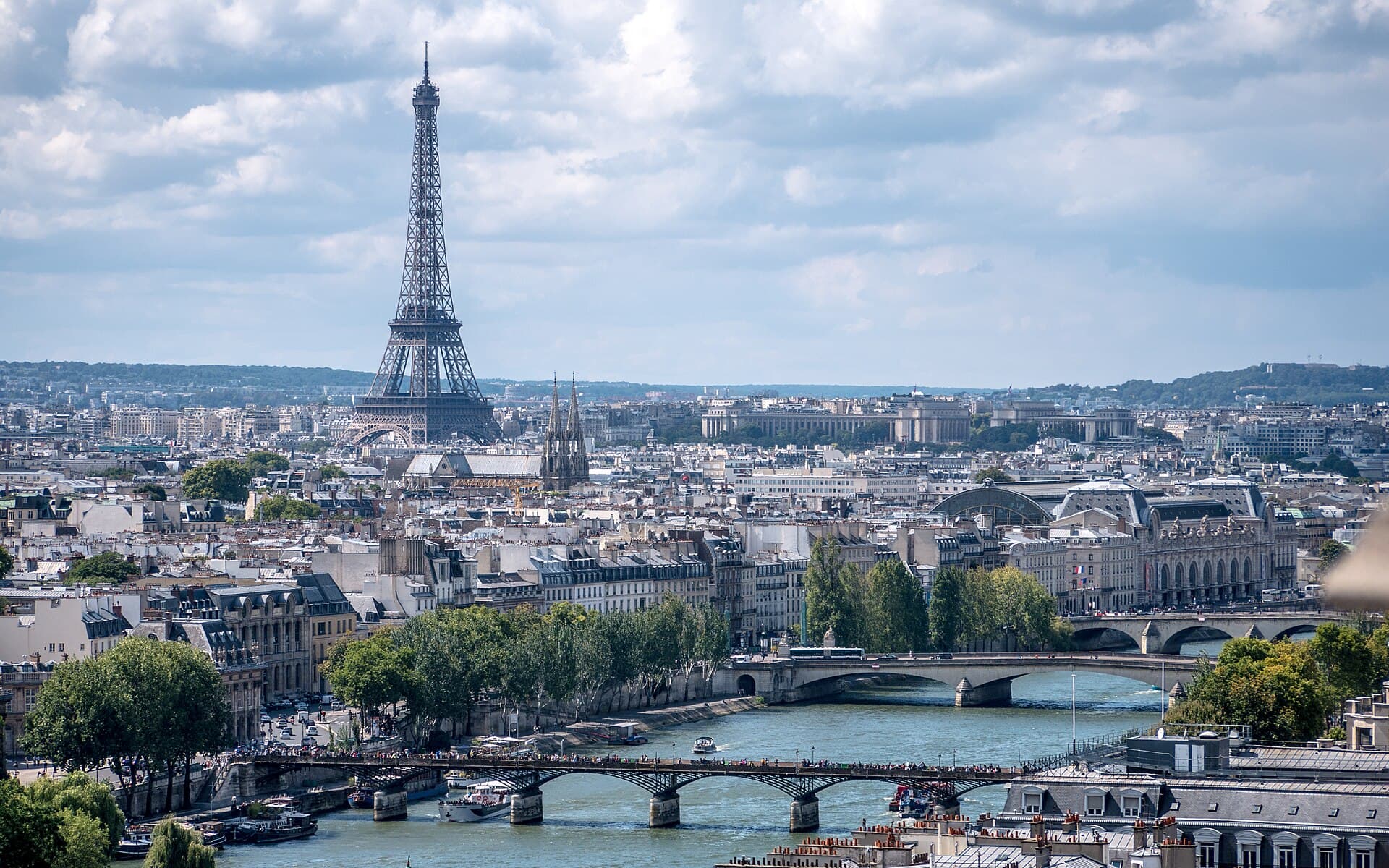 Yann Caradec from Paris, France / CC BY-SA 2.0, via Wikimedia Commons
“Light that makes every street a rumor.”
Not the postcards. The stories even locals don't know — whispered in your ear, right where they happened.
Stand in front of this elegant five-storey townhouse and look closely: the doors never open, no one ever appears at the windows. There's a reason.
For a full year, a secret crew lived hidden under the dome of the Panthéon, with sofas and an internet connection — and the state never noticed.
One bronze man lying in Père Lachaise is green with age everywhere — except three spots polished bright gold by millions of hands. Guess which spots.
Discover every secret of Paris
Every address, every reveal in full — in your ear, right where it happened.
You pick your stops. You walk. The voice reveals what the others miss.

No tours available yet. Check back soon — we're preparing them.
On December 7, 2024, after five years of silence, the 13-tonne bourdon Emmanuel rang out over the Seine again — and the rebuilt Notre-Dame proved that this city is never finished with itself. That's the thing about Paris. It rebuilds, reinvents, and quietly buries its older selves under your feet: a Roman bath under a museum, a medieval fortress under the Louvre's courtyard, a 19th-century boulevard cut straight through a tangle of demolished lanes. You came for the postcard. What you'll actually walk through is roughly two thousand years of a city arguing with itself, and winning.
Long before the boulevards, there were the Parisii — a Gallic tribe who settled the banks of the Seine around the middle of the third century BC, near a crossing point where land and water trade routes met. Rome arrived in the first century BC and built a proper city, renaming it Lutetia Parisiorum. The forum, an amphitheatre, an aqueduct, and the baths went up; fragments of them survive today, tucked beneath the modern street grid.
The Romans faded, and in the fifth century Clovis I, founder of the Merovingian dynasty, made the place his capital. The name shortened to Paris, after the tribe that started it all.
King Philip II raised the first Louvre as a fortress in the late 12th century. Charles V turned it into a Gothic palace in the 14th. Francis I rebuilt sections as a Renaissance residence in the 16th. For centuries it was where kings lived — and only later did it become the most visited art museum on earth, drawing 8.7 million people in 2024.
By the mid-1800s, central Paris was dark, overcrowded, and prone to cholera — a warren of medieval streets often under three metres wide. Emperor Napoleon III, who admired London's wide avenues, appointed Georges-Eugène Haussmann prefect of the Seine in 1853 and turned him loose. Over the next 17 years, roughly 40,000 buildings came down and 34,000 went up. Haussmann carved out more than 140 kilometres of boulevards, laid down modern water and sewer networks, opened the Bois de Boulogne and the Buttes-Chaumont, and imposed the uniform cream-stone facades that still read, instantly, as "Paris." Critics forced his dismissal in 1870, but work on his plan continued until 1927.
Gustave Eiffel built his tower for the 1889 Exposition Universelle, marking a century since the Revolution. At 300 metres of open-lattice wrought iron — 312 to the tip at inauguration — it was the tallest structure in the world, a title it held until New York's Chrysler Building overtook it in 1929. Up on Montmartre, the white travertine of Sacré-Cœur was rising in the same decades: begun in 1875, completed in 1914, consecrated in 1919.
Paris rewards walking more than ticking boxes, but a few places earn the queue.
The Louvre. A former royal palace turned the world's most visited museum. Around 80 percent of visitors head straight for the Mona Lisa in the Salle des États — which means 20,000 to 30,000 people a day funnel into one room. Go early, then escape the crowd: the Louvre's older bones, including the medieval fortress foundations, are far quieter.
Notre-Dame de Paris. Reopened December 7, 2024 after the 2019 fire. The bourdon Emmanuel — cast to an inscription reading 1685, finished in 1686, 13 tonnes, tuned to F-sharp — rings again. Louis XIV stood as its godfather.
Musée d'Orsay. The largest collection of Impressionist and post-Impressionist painting anywhere — Monet, Manet, Degas, Renoir, Cézanne, van Gogh — housed in a Beaux-Arts railway station built 1898–1900 for the 1900 Exposition and reopened as a museum in 1986. The great glass clock face is reason enough to climb to the upper level.
The Eiffel Tower. 330 metres today, counting the antennas added in 1957, 2000, and 2022. The view from the Trocadéro across the river costs nothing.
Sacré-Cœur and Montmartre. The basilica crowns the highest point in the city; its travertine whitens with every rainfall. The streets below still hold the village Montmartre once was.
A few ways to slow down:
Spring (April–May) and early autumn (September–October) are the sweet spots — mild days between roughly 10°C and 22°C, gardens in bloom or turning, and thinner crowds than summer. You'll pay a premium on flights and hotels in those months, but the trade is worth it.
Summer is hottest, busiest, and priciest. July has quietly become the peak month; August is crowded too, though many Parisians leave town, so neighbourhood bakeries and shops shutter even as the big sights, department stores, and seasonal events (Paris Plages along the Seine, open-air screenings) stay open. Note August 15, Assomption — a public holiday when banks and offices close. Winter is grey and cool but genuinely quiet, with the shortest lines you'll find all year.
Getting around. The Métro is the fastest way across the city: 16 lines and over 300 stations covering the central 10-by-10-kilometre core. Buy a reloadable Navigo Easy card (introduced 2019, valid ten years) and load it with tickets; a single ride is €2.55 for adults as of January 2026. Keep your ticket or card until you've fully exited — inspectors check randomly, often right at the exits. Let passengers off before you board.
Money and tipping. A 15 percent service charge is included by law in French restaurants, usually marked "service compris" on the bill, so tipping is not expected. If service was good, rounding up or leaving a euro or two per person is a kind gesture, not an obligation.
Opening tendencies. Many museums close one day a week (often Monday or Tuesday — check before you go), and smaller shops and restaurants may shut in August and on public holidays. A quick "Bonjour" before any request goes a long way; skipping it reads as rude.