Parga Castle
The formidable Parga Castle, a sentinel over centuries of shifting powers, holds a secret passage.
Full story unlocks in the tour
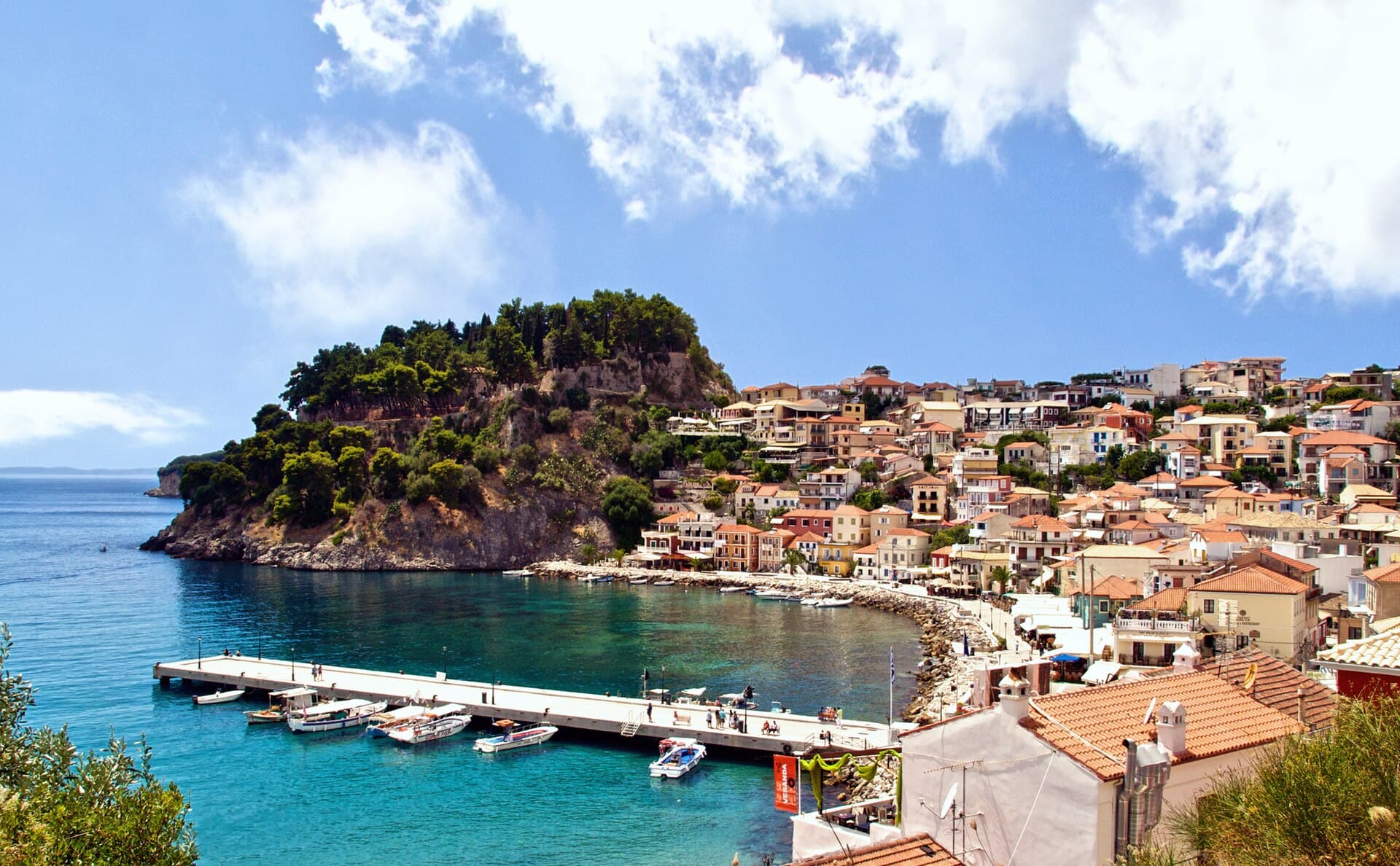 Γιάννης Χουβαρδάς / CC BY-SA 2.0, via Wikimedia Commons
“Where the Ionian Sea meets a kaleidoscope of history.”
Not the postcards. The stories even locals don't know — whispered in your ear, right where they happened.
The formidable Parga Castle, a sentinel over centuries of shifting powers, holds a secret passage.
Parga's connection to olive oil runs deep, but the Paragaea Old Olive Oil Factory holds a surprising detail about its origins.
Parga's residents once made an extraordinary and heartbreaking choice rather than submit to foreign rule.
Discover every secret of Parga
Every address, every reveal in full — in your ear, right where it happened.
You pick your stops. You walk. The voice reveals what the others miss.
No tours available yet. Check back soon — we're preparing them.
Parga, a town on Greece's Ionian coast, presents a tableau of colorful houses ascending a hillside, crowned by a historic Venetian castle. This mainland destination, located in the Epirus region, offers the atmosphere often associated with Greek islands, drawing visitors with its scenic beauty and lively waterfront. Its unique location provides not only appealing beaches with turquoise waters but also convenient access to the dramatic landscapes and historical sites of northwestern Greece.
The town's compact size means the entire old town is easily walkable, taking about 20 minutes to traverse. From its bustling harbor, lined with cafes and restaurants, to its narrow, winding streets, Parga invites exploration. It serves as an ideal base for those looking to combine relaxing beach days with excursions to natural wonders like Vikos Gorge or the ancient monasteries of Meteora.
The history of Parga stretches back to antiquity, with evidence of habitation in the bay area since Mycenaean times. The ancient town of Toryne, possibly named for the ladle-like shape of its beach, is thought to have been located here. The modern settlement of Parga first appeared in the early 13th century, initially on Pezovolo mountain. To escape attacks, the inhabitants relocated to the current site in 1360. With assistance from the Normans, who controlled Corfu, the first fortifications of Parga were constructed around this time.
Parga came under Venetian control in 1401, a period that brought significant stability and prosperity. The Venetians recognized Parga's strategic geographical position, which allowed them to oversee the Ionian Islands and monitor the Ottoman Empire. During this era, they rebuilt and fortified the castle, transforming Parga into a vital commercial hub for olive oil. The Venetians also initiated the extensive planting of olive trees, a legacy that continues to shape the region's landscape and economy.
Despite Venetian rule, Parga faced numerous challenges. It was briefly occupied by the Ottomans in 1452 and suffered destruction at the hands of Ottoman admiral Hayreddin Barbarossa in 1537. The castle was repeatedly damaged and rebuilt over the centuries. In 1797, with the fall of the Republic of Venice, Parga passed to French rule, and then briefly to Russian and British control.
A pivotal moment in Parga's history occurred in 1819 when the British, through a treaty, sold the town to Ali Pasha of Ioannina. Knowing Ali Pasha's brutal reputation, a significant portion of the town's population, estimated at 4,000 people, chose to abandon their homes and resettle in Corfu rather than live under Ottoman rule. Ali Pasha subsequently made structural additions to the castle, including strengthening its walls and adding a hammam. Ottoman rule in Parga concluded in 1913, following Greece's victory in the Balkan Wars, when the town officially became part of the Greek state.
Parga offers a blend of historical sites and natural beauty. The most prominent landmark is the Venetian Castle of Parga, situated on a hill overlooking the town. A 15-minute uphill walk from the town center, the castle ruins provide expansive views of the Ionian Sea, Valtos Beach, and the surrounding coastline, especially captivating at sunset. Inside, you can explore remnants of old buildings, cisterns, and imagine its past as an invincible fortress.
Beyond the castle, wander through Parga's Old Town with its colorful houses and narrow, stone-paved streets, discovering local crafts and traditional tavernas. The town's main beach, Krioneri Beach, is a short walk from the port, offering calm waters and views of Panagia Island, which you can swim to. For a larger sandy expanse, Valtos Beach stretches for kilometers with shallow, warm water, ideal for families and water sports.
For a glimpse into local heritage, visit the Paragaea Old Olive Oil Factory, now a museum, which showcases traditional olive oil production and offers tastings. Consider a boat trip to the nearby islands of Paxos and Antipaxos, known for their emerald waters and sea caves. Alternatively, explore the Acheron River springs, a site with mythological connections to ancient Greek legends, offering hiking paths and clear waters.
The best time to visit Parga is during spring (April-May) and fall (September-October) when temperatures are comfortable, ranging from 20-25°C. During these periods, crowds are smaller, and hotel prices are generally lower. May through June offers excellent walking weather with swimmable sea temperatures. September is particularly recommended, as the sea is at its warmest, the peak-season haze has lifted, and visibility for scenic views improves significantly.
Summer (June-August) brings guaranteed sunshine and the warmest water, but also the largest crowds and highest prices, with temperatures potentially reaching 35°C. While lively, midday exploration can be uncomfortable due to the heat.
Parga is accessible by several routes. The closest airport is Aktion National Airport (Preveza), approximately 45 minutes to an hour's drive south of Parga, with seasonal flights from various European cities. Alternatively, you can fly into Corfu and take a ferry to Igoumenitsa, which is about a 40-minute drive from Parga. Buses connect Parga with cities like Athens, Thessaloniki, and Ioannina.
Within Parga, the town center is compact and easily explored on foot. Parking can be challenging during summer, though many hotels offer it, and public lots are available for a daily fee. Water taxis provide convenient transport to nearby beaches like Valtos and Lichnos. Car rentals are useful for exploring the wider Epirus region.
For accommodation, Parga offers a range of options, from boutique hotels to villas. It's advisable to book in advance, especially during peak season. Greece uses 220V/50Hz electricity with F-type plugs. Tap water in resorts is generally safe for drinking. A Climate Resilience Tax is applied per room per night, payable at check-in, varying based on hotel star rating and season.