Papeete Market
The lively core of Papeete offers more than just exotic produce and fragrant oils.
Full story unlocks in the tour
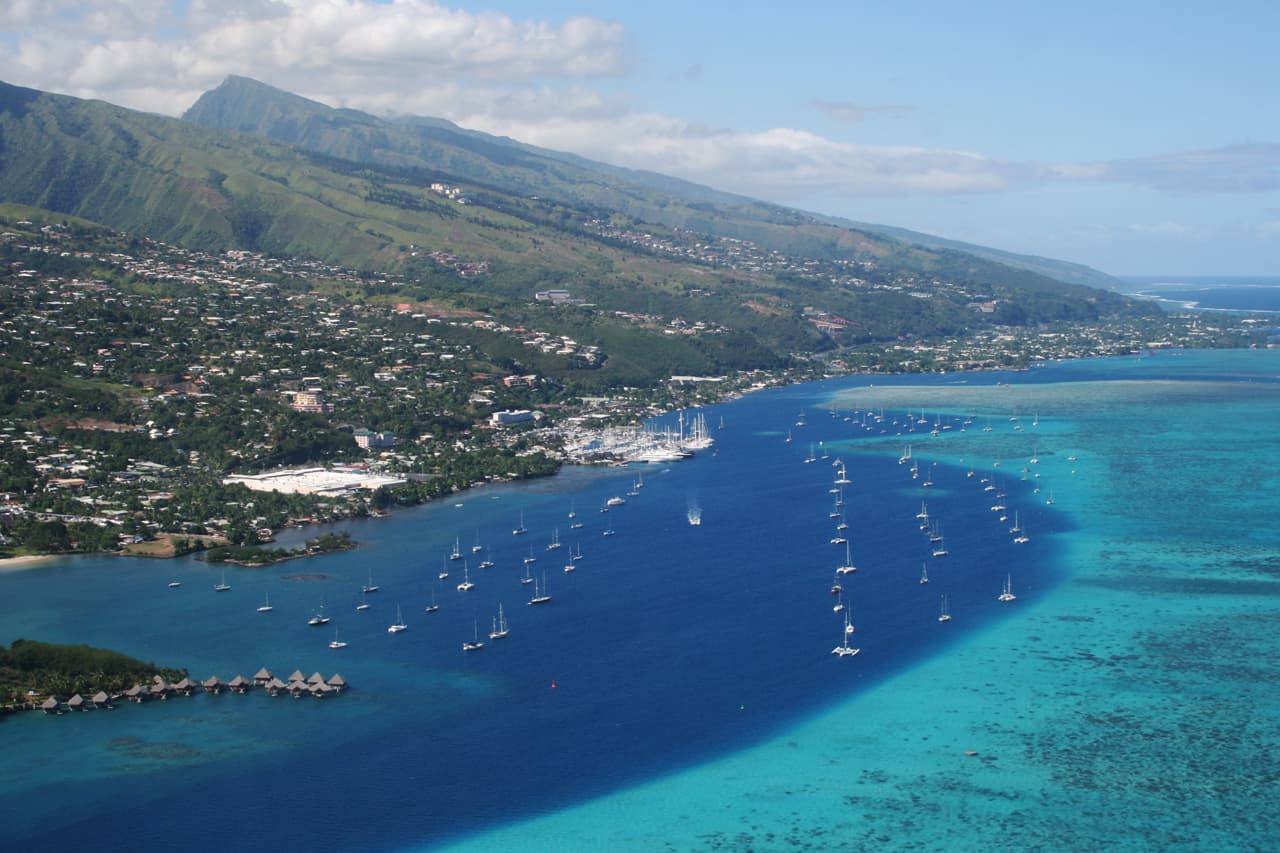 Remi Jouan / CC BY-SA 3.0, via Wikimedia Commons
“Where the sea’s deep blues meet the vivid hues of island life.”
Not the postcards. The stories even locals don't know — whispered in your ear, right where they happened.
The lively core of Papeete offers more than just exotic produce and fragrant oils.
This seemingly serene park, ideal for an evening promenade, holds a direct tie to a global voyager.
Papeete's prominent yellow cathedral has silently observed more than just sacred ceremonies.
Discover every secret of Papeete
Every address, every reveal in full — in your ear, right where it happened.
You pick your stops. You walk. The voice reveals what the others miss.
No tours available yet. Check back soon — we're preparing them.
Papeete, the capital of French Polynesia, rests on the northwest coast of Tahiti, the largest island in this South Pacific haven. It serves as the administrative and economic nexus for the five archipelagos that comprise French Polynesia, a vast oceanic expanse comparable in size to Western Europe. Despite its considerable influence, Papeete itself is a relatively compact and traversable city, making it an excellent starting point for exploring Tahiti.
This animated port city, whose name translates to "water from a basket," presents a compelling fusion of Polynesian character and French colonial influences. From its bustling municipal market to its calm waterfront, Papeete offers a dynamic counterpoint to the more secluded islands of the region. It functions as a primary hub for transpacific vessels and airlines, with Faa'a International Airport (PPT), French Polynesia's sole international airport, located a short drive away.
While many travelers are eager to journey to other islands, dedicating a day or two in Papeete is highly recommended to absorb its distinctive character, uncover its historical landmarks, and immerse oneself in the local way of life.
The contemporary story of Papeete began in 1818 with the arrival of British missionary William Crook, who established a settlement that swiftly drew traders and whalers due to its advantageous harbor. Between 1827 and 1830, Queen Pōmare IV of Tahiti relocated her residence to Papeete, formally declaring it the capital.
In 1842, France established a protectorate over Tahiti, and by 1880, the island was annexed, marking the end of the independent monarchy under King Pōmare V, who ceded his territories to France. Papeete officially became a commune of the French Republic in 1890. The city has borne witness to significant historical events, including an assault by two German warships during World War I in 1914, which resulted in the sinking of a French gunboat and a captured German freighter in the harbor.
The 1960s brought substantial transformations with the construction of Faa'a International Airport, a pivotal development that opened French Polynesia to the wider world. However, this era also saw the establishment of the Pacific Experimentation Center and subsequent nuclear test detonations, leading to civil unrest in Papeete in 1995. Today, Papeete stands as a modern urban center, reflecting its evolution from a missionary outpost to the active capital of French Polynesia.
Begin your journey at the Papeete Market (Le Marché), a lively two-story indoor market where you can discover everything from exotic fruits and local crafts to vanilla beans and monoi oil. It is especially animated on Sunday mornings.
Just a brief walk from the market stands the Cathedral of Notre Dame of Papeʻete, an imposing yellow structure featuring Gothic and Colonial architectural elements, inaugurated in 1875.
Walk along the landscaped waterfront esplanade, which extends 1.5 kilometers from the ferry terminal to Place To'ata, a venue for traditional dance festivals. Along the waterfront, you will also find the Gardens of Paofai, a four-hectare park ideal for repose and enjoying evening views of Moorea.
Delve into the world of Tahitian pearls at the Robert Wan Pearl Museum, the world's only museum solely dedicated to pearls. This complimentary museum chronicles the origins, folklore, and technical aspects of pearl cultivation, including Robert Wan's personal collection.
For a glimpse into local life after dusk, make your way to Place Vai'ete, where food trucks (known as roulottes) offer a variety of French and Tahitian dishes. Do not miss the impressive Papeete Town Hall, a fine example of French colonial design with a brightly colored façade and clock tower.
The dry season, from April to October, offers the most agreeable weather with minimal rainfall and comfortable temperatures averaging around 30°C (86°F) during the day. June through September is considered the optimal period, with very dry conditions and ideal temperatures. July is particularly notable for the month-long Heiva i Tahiti festival, a celebration of traditional Polynesian dance, music, and sports. While November to March is the wet season, it can provide lower accommodation rates and intermittent periods of sunshine.
Papeete is served by Faa'a International Airport (PPT), situated approximately 15 minutes west of the city center. Taxis are available, though they can be expensive. Car rental is advisable for exploring beyond the city. Public transport, known as le truck (converted flatbed trucks with wooden benches), offers an economical and authentic way to navigate, though service is limited, particularly in the evenings and on weekends. The local currency is the French Pacific Franc (XPF). Showing gratitude with a tip is not customary in French Polynesian culture, though it is appreciated for exceptional service. Tap water in Papeete is generally safe to drink, but it is always prudent to confirm with your lodging.