Casa Cakchiquel
This historic hotel, dating to 1948, once welcomed an unlikely pair of international figures.
Full story unlocks in the tour
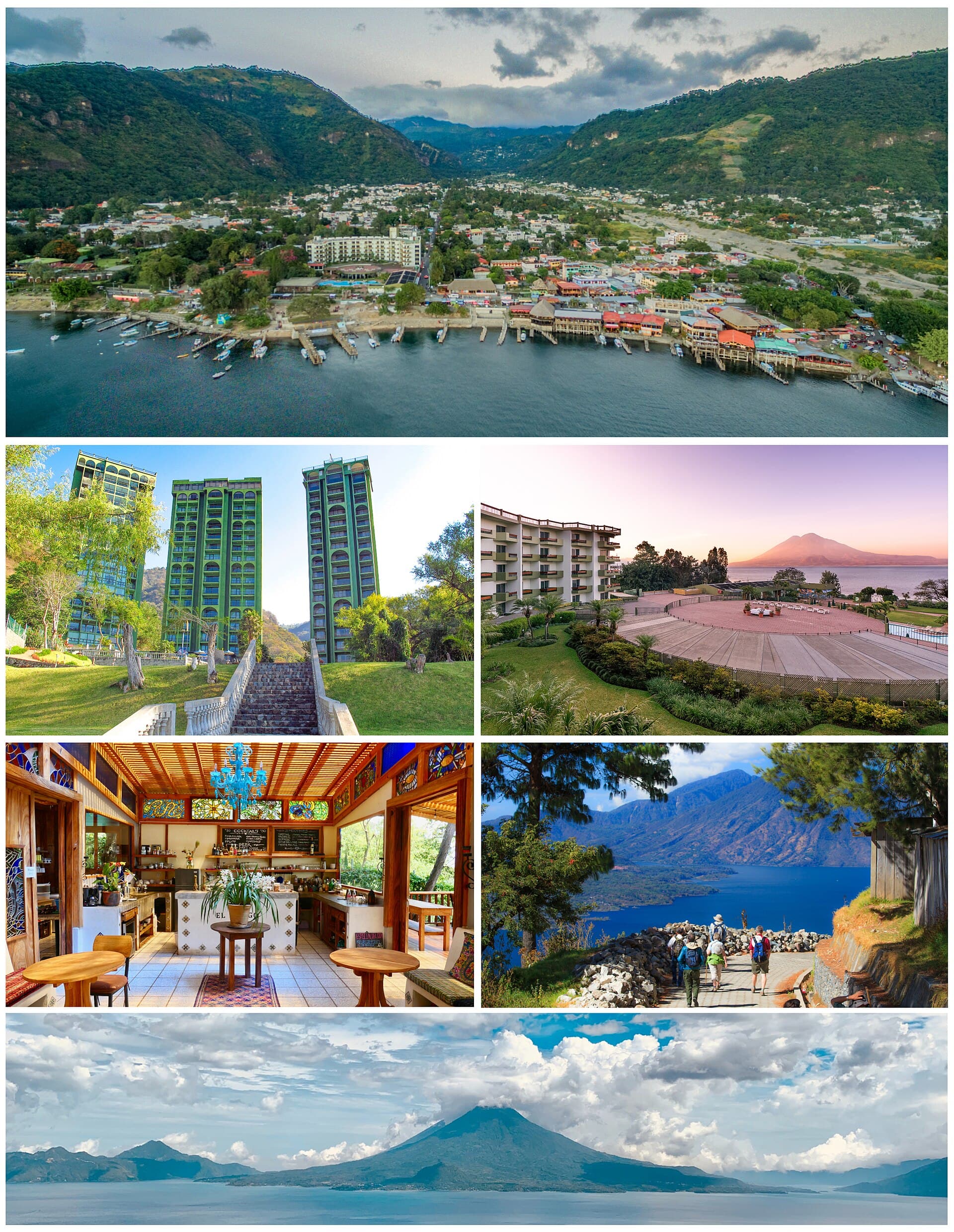 Merari Rene 0901 / CC BY-SA 4.0, via Wikimedia Commons
“Where three volcanoes meet the lake, and stories linger in the air.”
Not the postcards. The stories even locals don't know — whispered in your ear, right where they happened.
This historic hotel, dating to 1948, once welcomed an unlikely pair of international figures.
The tranquil waters of Lake Atitlán hold an ancient secret beneath their surface.
The daytime appeal of Panajachel undergoes a dramatic shift after the sun sets.
Discover every secret of Panajachel
Every address, every reveal in full — in your ear, right where it happened.
You pick your stops. You walk. The voice reveals what the others miss.
No tours available yet. Check back soon — we're preparing them.
Panajachel, affectionately known as 'Pana' by those who live here, is a lively town in the southwestern Guatemalan Highlands. It serves as the primary entry point to the expansive Lake Atitlán. Resting on the lake's northeast shore, it affords unobstructed views of the three towering volcanoes—San Pedro, Tolimán, and Atitlán—that frame the distant horizon. The town's name, originating from the Kaqchikel language, translates to 'place of the Matasanos,' a reference to the white sapote fruit tree.
Pana is a nexus of activity, offering a broad spectrum of accommodations, eateries, shops, and tour operators. This makes it a favored base for venturing out to the surrounding indigenous villages by boat. While it possesses more development than some of the other lakeside communities, Panajachel maintains a distinct character, weaving together traditional Mayan culture with contemporary conveniences. Its animated street life, particularly along Calle Santander, invites visitors to peruse local crafts and absorb the energetic atmosphere.
The history of Panajachel extends back to the pre-Columbian era, initially a home for a settlement of the Maya Kaqchikel people who cultivated the fertile river delta. In the 16th century, during the Spanish conquest of Guatemala, the shores of Lake Atitlán became the location of a significant battle where the Spanish, allied with the Kaqchikel, overcame the Tz'utujils.
Following the Spanish triumph, Franciscan friars established a church and monastery in Panajachel, utilizing the town as a center to convert the indigenous population to Roman Catholicism. The original facade of the Church of Saint Francis of Assisi, completed in 1567, still stands today and is regarded as a notable example of colonial architecture in Guatemala. By 1700, the Franciscan convent in Panajachel housed three priests overseeing approximately 1,800 people. Daily life during this period involved Catholic Mass and religious lessons, often conducted in the local language, with processions held during Lent.
The late 19th century witnessed a 'coffee boom' in the region, drawing German and American investors and establishing Panajachel as a coffee trade center. By the 1930s, the town began to gain favor as a resort destination, with the opening of its first hotels for affluent travelers. English writer and philosopher Aldous Huxley visited Panajachel in 1934, famously likening Lake Atitlán to Lake Como but with the 'additional embellishment of several immense volcanoes,' a quote that became an unofficial tourist slogan.
The 1960s brought a new wave of visitors, as Panajachel became a popular stop on the international 'hippie trail.' However, the Guatemalan Civil War led to a decrease in foreign visitors. After the war's conclusion, tourism recovered, and Panajachel's economy once again relied primarily on it. The town has grown into Lake Atitlán's principal transportation and tourist hub, providing a diverse array of services and activities while still preserving its historical landmarks.
Begin your journey on Calle Santander, Panajachel's main thoroughfare, where you will encounter a lively collection of shops, boutiques, and market stalls offering colorful textiles, handcrafted items, and local goods. Venture beyond the main tourist street to uncover the Panajachel Municipal Market, a bustling covered area presenting fresh produce, spices, flowers, and prepared foods, offering a glimpse into local daily routines.
Visit the historic Church of Saint Francis of Assisi, a colonial-era structure with an original facade dating back to the 16th century. For a deeper understanding of the region's past, explore Casa Cakchiquel, a beautifully restored cultural center that was one of the lake's earliest hotels and now contains Guatemala's first historical photo museum. Another cultural stop is La Galeria, one of Central America's oldest art galleries, exhibiting both indigenous folk art and contemporary creations.
Those who appreciate nature should make their way to the Atitlán Nature Reserve, where paths wind through forests and coffee groves, leading to a butterfly garden, a waterfall, and even ziplining opportunities. The reserve also offers a secluded private beach, ideal for a quiet escape. For expansive views of Lake Atitlán and its volcanoes, consider a boat tour to nearby villages like Santa Catarina Palopó or San Antonio Palopó, or rent a kayak or paddleboard to explore the lake's expanse.
The most favorable time to visit Panajachel is during the dry season, which stretches from November to April. During these months, you can anticipate clear skies, minimal rainfall, and agreeable daytime temperatures ranging from 20-25°C (68-77°F). Evenings can be cooler, around 10-15°C (50-59°F), so packing layers is advisable. March and April may experience stronger afternoon winds, which can make boat crossings choppier but create ideal conditions for paragliding. This period is considered peak tourist season, so arranging accommodations in advance is recommended. While the rainy season (May to October) brings lush green landscapes and fewer visitors, afternoon thunderstorms are common.
Panajachel is well-connected and functions as Lake Atitlán's primary transportation hub. Shared shuttles offer a popular and dependable way to travel from Guatemala City's La Aurora International Airport (GUA) or Antigua, with journey times typically spanning 3 to 4.5 hours. Taxis and private drivers are also available for a more direct route, though at a higher cost. Once in Panajachel, navigating the town is simple on foot, or by utilizing the ever-present tuk-tuks.
The local currency is the Guatemalan Quetzal (Q). Spanish is the primary language, and while English speakers may be found in tourist areas, learning some basic Kaqchikel phrases, one of the indigenous languages spoken here, can enrich your experience. Panajachel is generally considered secure for visitors, but it is always prudent to observe standard international travel precautions.