The Doom Bar
Sailors have long dreaded the sandbank at the mouth of the Camel Estuary, but its treacherous nature is said to stem from a spurned lover's curse.
Full story unlocks in the tour
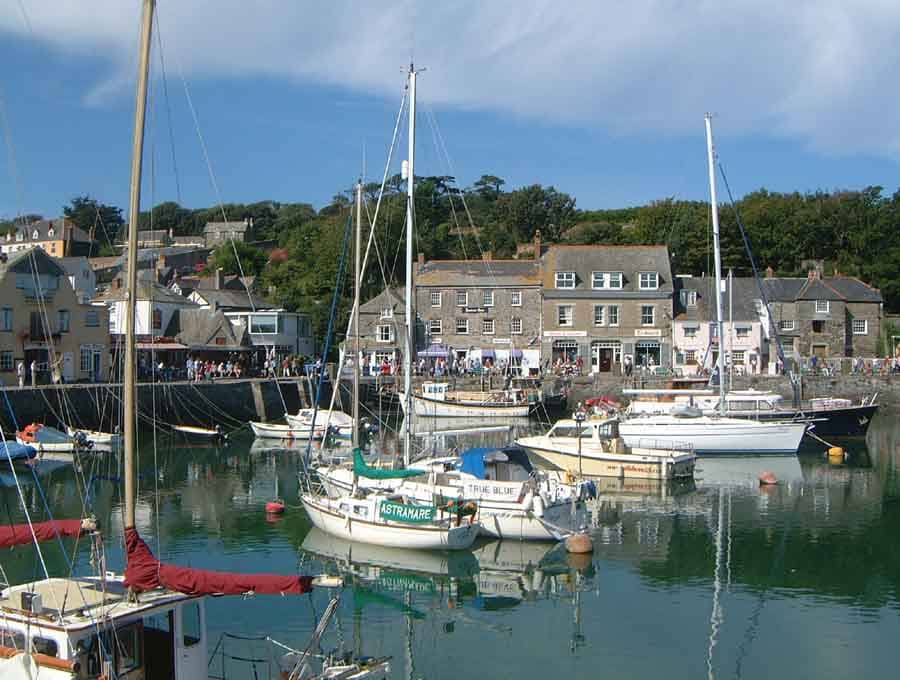 Personal photograph taken by Mick Knapton at en.wikipedia / CC BY-SA 3.0, via Wikimedia Commons
“Where ancient folklore dances with the tide, and culinary delights meet salty air.”
Not the postcards. The stories even locals don't know — whispered in your ear, right where they happened.
Sailors have long dreaded the sandbank at the mouth of the Camel Estuary, but its treacherous nature is said to stem from a spurned lover's curse.
Each May Day, two mysterious, horse-like figures parade through Padstow's streets, a tradition whose origins are shrouded in time.
This seemingly unassuming building on the quay plays a crucial role in safeguarding Cornwall's most valuable seafood.
Discover every secret of Padstow
Every address, every reveal in full — in your ear, right where it happened.
You pick your stops. You walk. The voice reveals what the others miss.
No tours available yet. Check back soon — we're preparing them.
Padstow, a captivating fishing port on Cornwall's north coast, offers a singular blend of maritime heritage, culinary excellence, and compelling folklore. Situated on the west bank of the Camel Estuary, the town has been a significant community for centuries due to its sheltered waters, a rarity along this wild coastline. Its working harbour remains the heart of the town, where fishing vessels share space with pleasure craft, and the scent of fresh seafood mingles with the salty air.
Beyond its waterfront, Padstow's narrow streets are home to independent shops, art galleries, and a thriving food scene that has earned it a reputation as a culinary destination. From world-class restaurants to cosy tearooms and traditional pubs, there's a tempting array of options to explore. The town also serves as a gateway to striking coastal scenery, including the Camel Estuary, a designated National Landscape, and access to the South West Coast Path.
Padstow's existence as a natural harbour dates back as early as 2,500 BC, connecting Brittany to Ireland along the ancient 'Saints Way.' In the 6th century, Saint Petroc, a Welsh Christian missionary, established a monastery here, giving the town its original name, 'Petroc-stow,' meaning 'Petroc's Place.' This early Christian settlement developed into a significant regional religious centre, though it faced a dramatic Viking raid in 981, which led to the relocation of the monks and Saint Petroc's relics inland to Bodmin.
During the medieval period, Padstow flourished as a bustling port and trading hub. Its sheltered position on the Camel Estuary made it a safe haven for mariners navigating the often-perilous North Cornish coast. The town exported tin, copper, lead, slate, pilchards, and agricultural produce, while importing goods like Welsh coal, timber from Norway, and wine from France. The fishing industry prospered, and by the 19th century, Padstow was home to six shipyards. It also became a significant departure point for many Cornish people seeking new lives in the Americas and Canada during the height of emigration.
The shipbuilding industry declined in the 1880s with the shift from wooden to iron vessels. However, Padstow adapted, becoming a winter fishing hub for east coast trawlers. The arrival of the railway in 1899 marked a turning point, providing a significant boost to the burgeoning tourist trade that had begun a century earlier. The 20th century saw tourism become Padstow's main industry, a trend that continues today, further enhanced by its reputation as a culinary destination. The town has diligently preserved much of its medieval and Elizabethan character, including 104 listed buildings, such as St Petroc's Church and Prideaux Place.
The lively Padstow Harbour is a focal point, perfect for observing the ebb and flow of maritime life or enjoying fresh seafood. From here, you can embark on boat trips to explore the Camel Estuary, spot seals and dolphins, or even try mackerel fishing.
For those who enjoy walking, the South West Coast Path offers expansive views of the Camel Estuary and the notorious Doom Bar, with routes suitable for various fitness levels, including a walk to Stepper Point. The Camel Trail, a car-free path following the old railway line, is ideal for walkers and cyclists, stretching from Padstow to Bodmin.
Prideaux Place, an Elizabethan manor house built in 1592, overlooks Padstow and its ancient deer park, offering a glimpse into the town's aristocratic past. The National Lobster Hatchery provides an engaging educational experience, showcasing efforts to conserve European lobster populations through a unique breeding and release program.
Nearby beaches like St George's Cove, Harbour Cove, and Trevone Bay offer sandy shores and opportunities for water sports. For a singular experience, take the Black Tor Ferry across the River Camel to the village of Rock, which also offers beautiful beaches like Daymer Bay.
Padstow is a year-round destination, but the best time to visit for warm-weather activities is from late June to early September, when temperatures average around 19°C. Spring and autumn offer milder weather and fewer crowds, providing a quieter experience to explore the town and coastal paths. The 'Obby 'Oss Festival on May 1st is a major highlight, drawing significant crowds for its unique traditional celebrations. Winter offers a peaceful charm, dramatic coastal scenery, and a festive atmosphere, often with better rates on accommodation.
Padstow is most easily reached by car, with the most direct route from London via the A303 and A30. The nearest train station is Bodmin Parkway, from which bus services run to Padstow. Newquay Airport is also an option, though bus links are less frequent.
Parking can be busy, especially in summer. The Link Road Car Park on the outskirts of town offers a shuttle bus during peak times, and the Railway car park provides level access to the town centre. Many visitors also choose to park in Wadebridge and cycle the Camel Trail into Padstow. The town centre is walkable, and local bus services connect Padstow to nearby towns like Newquay and Wadebridge. Cornish weather can be unpredictable, so packing layers and waterproof clothing is advisable, even in summer.