Minangkabau International Airport (PDG)
The airport's architecture begins to tell a story even before you step beyond the terminal doors.
Full story unlocks in the tour
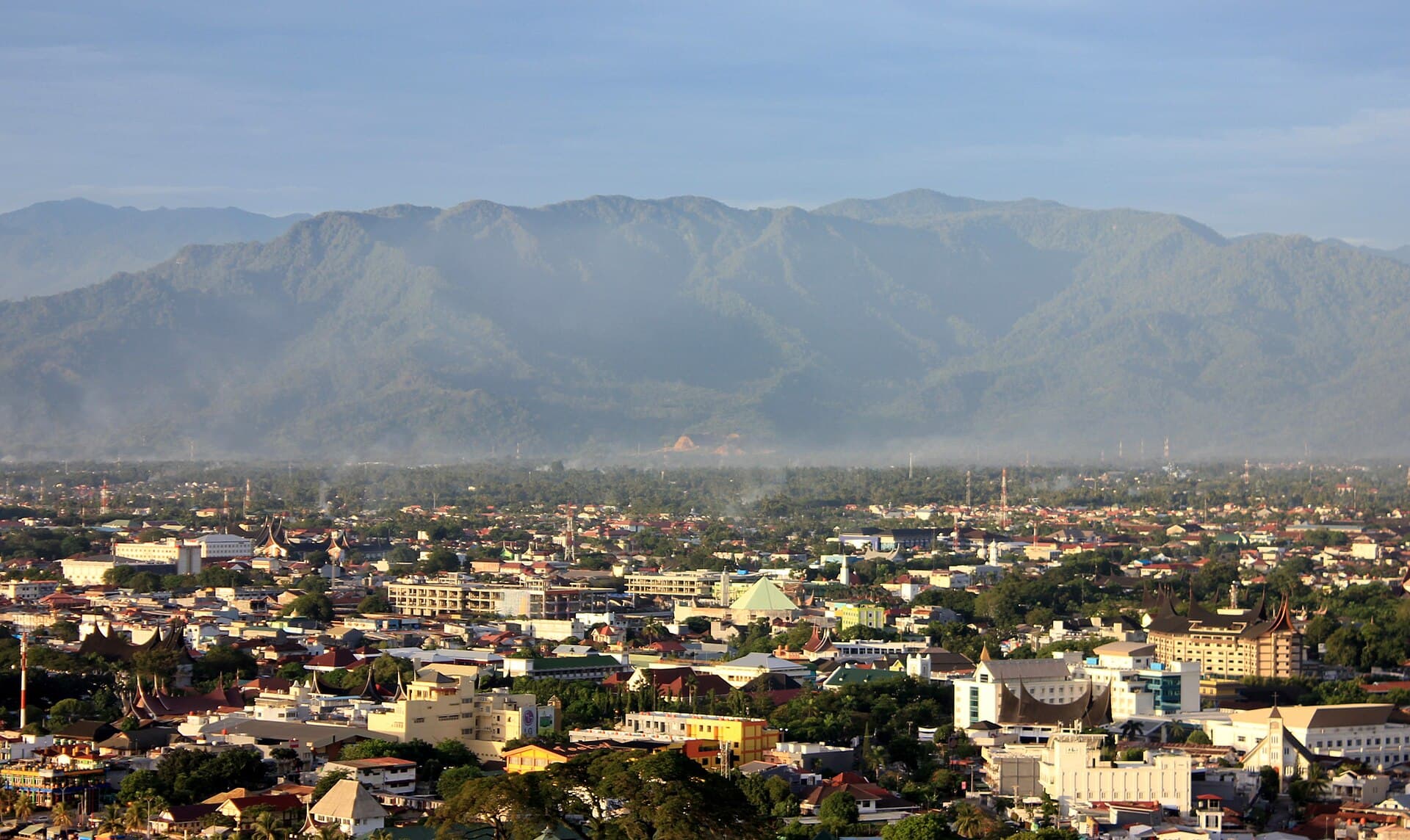 Zhilal Darma / CC BY-SA 4.0, via Wikimedia Commons
“Where the curve of buffalo horns meets the spice of curries and a matrilineal heart guides the way.”
Not the postcards. The stories even locals don't know — whispered in your ear, right where they happened.
The airport's architecture begins to tell a story even before you step beyond the terminal doors.
The presentation of your meal in a traditional Padang restaurant unfolds as a captivating performance.
This elevated landscape offers more than just sweeping views across Padang.
Discover every secret of Padang
Every address, every reveal in full — in your ear, right where it happened.
You pick your stops. You walk. The voice reveals what the others miss.
No tours available yet. Check back soon — we're preparing them.
Padang, the capital of West Sumatra, is an Indonesian city that offers a captivating blend of cultural heritage and coastal allure. Situated along Sumatra's western coast, it offers views of the Indian Ocean and the surrounding mountains. While often considered a departure point for the surfing destinations of the Mentawai Islands or the highlands of Bukittinggi, Padang itself stands as a destination defined by its unique Minangkabau culture, distinctive architecture, and world-renowned cuisine.
The city's identity is deeply intertwined with the Minangkabau people, recognized for their matrilineal society—a rare tradition where property and lineage pass through the female line. This cultural foundation influences everything from their dramatic, buffalo-horn-shaped traditional houses, the Rumah Gadang, to their communal dining customs. Exploring Padang means immersing oneself in a living museum of traditions amidst a bustling modern city.
## Early Trade and Colonial Influence Padang has been a significant trading hub since the 16th century, initially dealing in pepper and gold. The Minangkabau culture was already deeply rooted in the area before European contact. The Portuguese were among the first Europeans to take notice, drawn by the spice trade, but it was the Dutch East India Company (VOC) that established a firm presence in the 17th century. The Dutch officially took control in 1663, establishing a trading post and building a fort by 1667.
## Dutch East Indies and British Interruptions Under Dutch rule, Padang developed into a crucial administrative and economic center for the Dutch East Indies. The port facilities were expanded to handle commodities like coffee, rubber, and coal from Sumatra's interior, with infrastructure like roads and railways built to connect the city to its hinterland. Padang experienced two periods of British rule: first from 1781 to 1784 during the Fourth Anglo-Dutch War, and again from 1795 to 1819 during the Napoleonic Wars, before being transferred back to the Netherlands. In 1837, the Dutch East Indies government made Padang the seat of government for the West Coast of Sumatra.
## Modern Era and Cultural Identity Padang achieved city status (gemeente) in 1906, becoming one of the first populated places in Sumatra to do so, alongside Palembang. Until World War II, it was one of Indonesia's five largest port cities. Following Japan's occupation during World War II, Padang played a role in the Indonesian War of Independence (1945-1949) as a center for resistance against the Dutch attempts to reassert control. Today, Padang is the 16th most populous city in Indonesia, known globally for its Minangkabau culture and cuisine. The city's architecture still reflects its colonial past, with old Dutch buildings visible in the city's layout.
Begin your exploration in Padang's Old Town, where colonial-era buildings stand as a testament to its past as a significant trading port. Wander through Chinatown, home to the See Hin Kiong Temple, which glows with red lanterns and candlelight in the evening. Cross the Siti Nurbaya Bridge, an iconic spot that lights up with lanterns and flowers at night, offering peaceful river views. For sweeping city vistas, hike up Siti Nurbaya Hill, where you can also find old Japanese WWII bunkers.
Immerse yourself in Minangkabau culture at the Adityawarman Museum, housed in a traditional Rumah Gadang with its distinctive buffalo-horn-shaped roof. The museum showcases traditional costumes, musical instruments, and artifacts. Do not overlook the Grand Mosque of West Sumatra, an architectural marvel and a symbol of local pride. For a relaxing afternoon, visit Padang Beach, known for its sunsets over the Indian Ocean. Nearby, Air Manis Beach is famous for the legendary Batu Malin Kundang, a stone shaped like a prostrating man, tied to a local folktale.
The ideal time to visit Padang is during the dry season, which generally extends from May to September. During these months, the weather is typically sunny and pleasant, with temperatures ranging from 25°C to 30°C, making it suitable for outdoor activities and sightseeing. While the weather is tolerable year-round, the wet season from October to April can bring heavy rainfall, potentially disrupting travel plans. For warm and sunny weather, specific months like February, May, June, and July are particularly favorable.
Navigating Padang is relatively straightforward with various transportation options. Taxis and ride-hailing services like Gojek and Grab are popular and convenient. Public transportation includes angkots (minivans) and Trans Padang buses, which offer affordable travel, though angkots can be crowded during peak hours. For greater flexibility, renting a motorbike or car (often with a driver) is an option. Minangkabau International Airport (PDG) is located about 23 km from the city center. The Minangkabau Express airport train offers a swift and comfortable connection to the city, bypassing traffic. Damri buses also connect the airport to the city.
Padang is generally considered safe for travelers, but it is always wise to take standard precautions such as avoiding displaying valuables and being cautious in crowded areas. Modest dress is advisable, especially when visiting religious sites. The primary language is Bahasa Indonesia, but many locals also speak Minangkabau. Learning a few basic Bahasa phrases can enrich interactions. Always carry cash, as not all establishments accept credit cards.