Lake Storsjön
The legendary Storsjöodjuret, or Great Lake Monster, once held a surprising legal status.
Full story unlocks in the tour
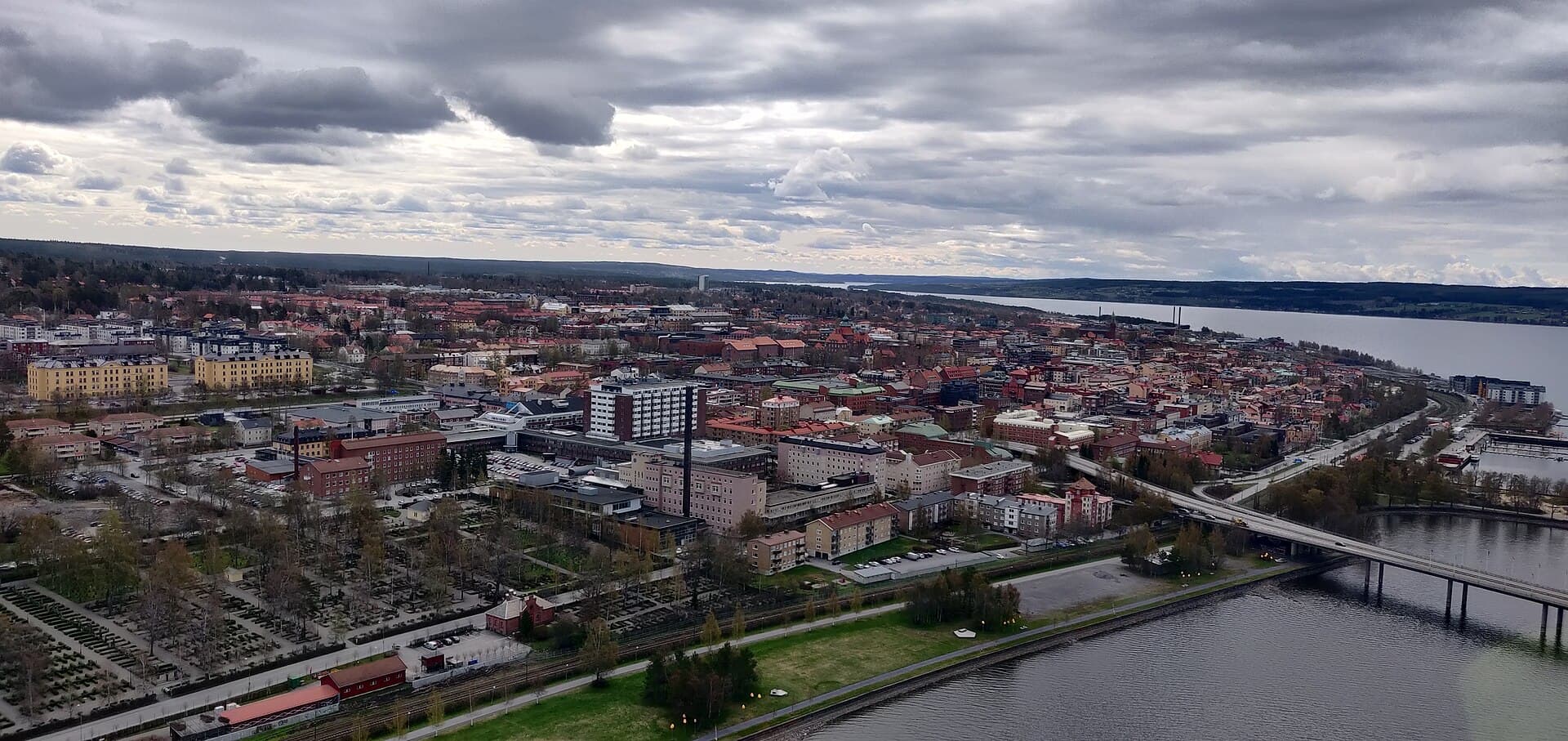 Hult / CC BY-SA 4.0, via Wikimedia Commons
“Where ancient sagas meet modern innovation by the lake.”
Not the postcards. The stories even locals don't know — whispered in your ear, right where they happened.
The legendary Storsjöodjuret, or Great Lake Monster, once held a surprising legal status.
The world's northernmost raised runestone on Frösön island tells a tale not of kings, but of a local chieftain's pivotal act.
The city's unique street layout isn't just for aesthetics; it was designed with a specific natural feature in mind.
Discover every secret of Östersund
Every address, every reveal in full — in your ear, right where it happened.
You pick your stops. You walk. The voice reveals what the others miss.
No tours available yet. Check back soon — we're preparing them.
Östersund, a city of approximately 65,505 residents, serves as the cultural and commercial heart of Jämtland County in central Sweden. Situated on the eastern shore of Lake Storsjön, Sweden's fifth-largest lake, the city offers a blend of urban life and access to wild nature. Often called "Vinterstaden" or "Winter City," Östersund is recognized for its reliable snow conditions and world-class winter sports facilities.
Beyond its winter allure, Östersund is a designated UNESCO Creative City of Gastronomy, celebrated for its high-quality local produce and artisanal culinary traditions. The city's compact center and proximity to the water make it easy to explore, inviting visitors to experience the authentic character of the Swedish north, whether through outdoor adventures, enduring culture, or exceptional food.
## From Royal Decree to Regional Hub Östersund's origins are distinct, as it was not a city that grew organically from ancient settlements. Instead, it was founded on October 23, 1786, by King Gustav III of Sweden. The monarch's intention was to centralize trade in the province of Jämtland and bolster the Crown's control over this distant territory. Before Östersund's establishment, local farmer-traders often bypassed Swedish tariffs by trading directly with Norway. The new city aimed to redirect these trade flows and associated taxes to the Swedish treasury.
Despite the royal decree, the local population initially resisted this economic philosophy, and Östersund remained small for many years. By 1820, the city had fewer than 400 inhabitants, resembling a farming village more than a bustling urban center. Growth truly began in the late 19th century with the arrival of the railroad in 1879 and the economic liberalization of the era. The railway connected Östersund with Sundsvall on the east coast and Trondheim in Norway by 1882, facilitating a population boom and rapid development.
## Cultural and Sporting Milestones Östersund's administrative status was cemented in 1810 when it became the official residence of the Governor of Jämtland County. The early 20th century saw significant architectural additions, such as the Östersund City Hall, inaugurated in 1912. This monumental building, combining Northern European brick architecture with Jämtland traditions, became a symbol of the city's prosperity. The Jamtli museum, a key cultural institution, was also founded in 1912, dedicated to preserving the unique cultural heritage of the province.
In the latter half of the 20th century, Östersund emerged as a significant center for winter sports, hosting the Biathlon World Championships for the first time in 1970. It has since gained a permanent license to host the Biathlon World Cup. The city's cultural energy was further enhanced by the revival of the Storsjöyran music festival in 1983, which has grown into one of Scandinavia's major music events. In 2010, Östersund received international recognition as a UNESCO Creative City of Gastronomy, acknowledging its strong regional food culture.
Begin your exploration at Jamtli, an award-winning open-air museum that offers an immersive journey through Jämtland's past. In summer, its "Historyland" features actors in period costumes bringing historical settings to life, from 18th-century farms to 1970s villas. Next door, Nationalmuseum Jamtli, a branch of Stockholm's Nationalmuseum, showcases rotating exhibitions.
Cross the bridges to Frösön island, a tranquil escape with scenic views of Lake Storsjön and the surrounding mountains. Here, you'll find Frösö Church, a popular medieval church known for its panoramic vistas, and the Frösö Runestone, the northernmost raised runestone in the world. For nature enthusiasts, Bynäset on Frösön, once a military training area, is now a recreational haven with a scenic shoreline trail.
In the city center, stroll along Stortorget, the main square, and explore the surrounding side streets filled with unique shops and local delis. Badhusparken, located on the shores of Lake Storsjön, is a local gathering spot offering beautiful water and mountain views. Do not miss the Östersund Town Hall, an impressive 51-meter-tall structure combining Northern European brick architecture with Jämtland traditions.
Östersund offers distinct experiences throughout the year. For warm-weather activities and the mildest temperatures, the best time to visit is from early July to mid-August, when average highs reach around 18.3°C (65°F). This period is ideal for exploring Lake Storsjön, enjoying outdoor events like the Storsjöyran music festival, and experiencing the midnight sun.
If you're drawn to winter sports and a snowy landscape, Östersund, known as the "Winter City," is excellent from November to March. While winters are long and cold, with January being the coldest month averaging -6.2°C (21.9°F), the city is renowned for its reliable snow conditions and world-class winter sports facilities, including a ski stadium designed to guarantee snow from early November.
The local currency in Östersund, and throughout Sweden, is the Swedish Krona (SEK). While cash is accepted, Sweden is largely a cashless society, with credit and debit cards widely used for most transactions. ATMs are readily available if you need physical cash.
Östersund is a safe city with low crime rates. However, during winter, icy streets can be treacherous, so exercise caution when walking. Public transportation includes an efficient bus network, with tickets payable by card on board or via the Länstrafiken Jämtland app. Taxis are available, though pre-booking is often recommended. Åre Östersund Airport (OSD), located on Frösön island, is just 9-11 km from the city center, with airport buses and taxis providing quick transfers. Shops in the city center typically operate Monday to Friday from 10:00 AM to 6:00 PM, and Saturdays from 10:00 AM to 3:00 PM or 4:00 PM.