The Royal Galleries
These elegant seafront arcades were built for a very specific, royal purpose.
Full story unlocks in the tour
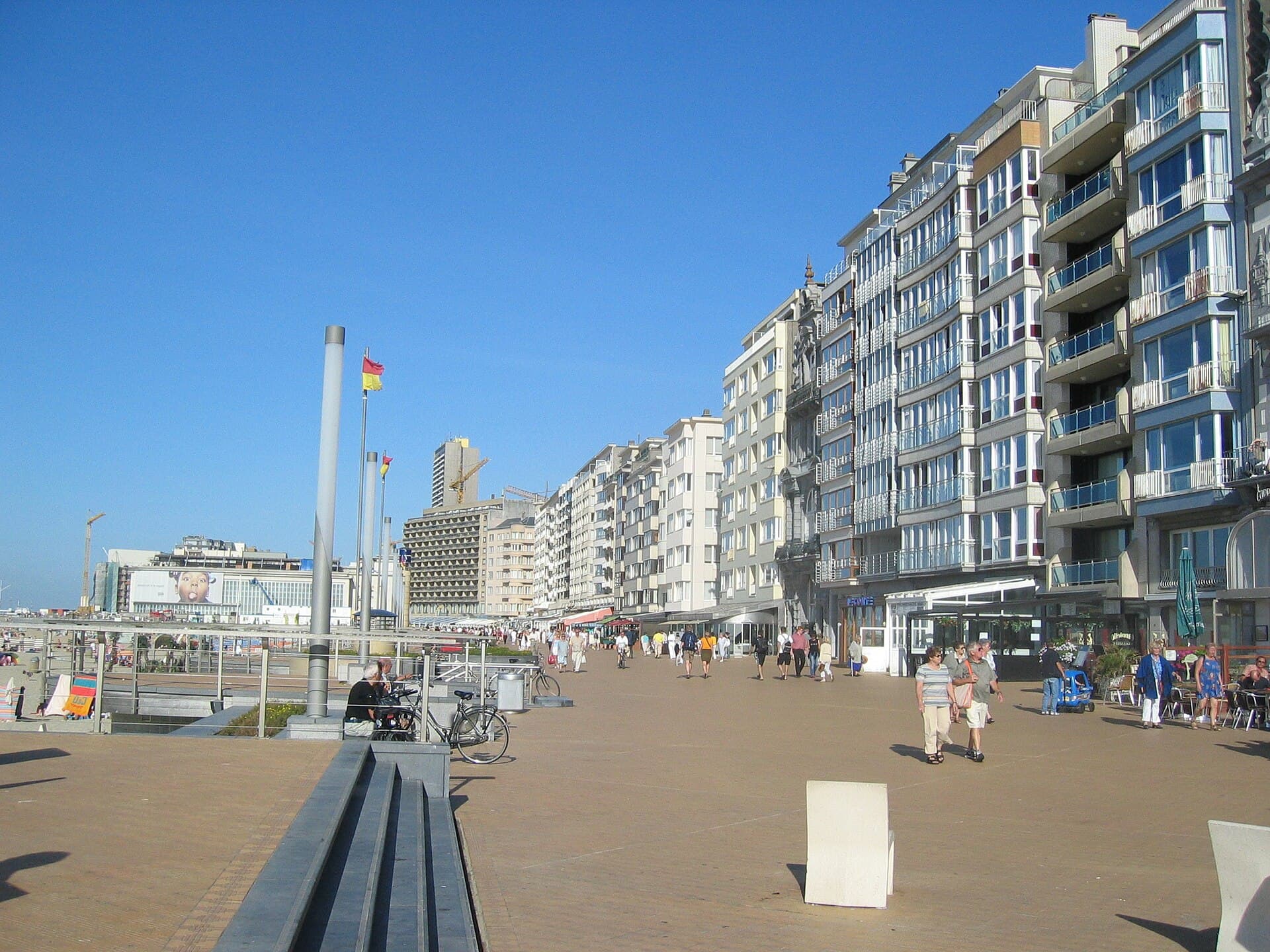 Gary Houston / CC0, via Wikimedia Commons
“Where the North Sea meets unexpected history and compelling art.”
Not the postcards. The stories even locals don't know — whispered in your ear, right where they happened.
These elegant seafront arcades were built for a very specific, royal purpose.
This impressive sailing ship, now a museum, once played a surprising role beyond training sailors.
Amidst the city's lively atmosphere, a quiet cemetery holds monumental secrets.
Discover every secret of Ostende
Every address, every reveal in full — in your ear, right where it happened.
You pick your stops. You walk. The voice reveals what the others miss.
No tours available yet. Check back soon — we're preparing them.
Ostend, or Oostende in Dutch, is Belgium's largest coastal city, a dynamic hub where the North Sea meets a rich array of history, culture, and contemporary life. Often referred to as the "Queen of the Belgian Coast," Ostend has long been a favored destination, evolving from a modest fishing village into a bustling port and a lively resort town. With over 9 kilometers (5.5 miles) of wide, sandy beaches, an active promenade, and a working harbor, it offers a distinct blend of coastal tranquility and urban energy.
Beyond its expansive shoreline, Ostend presents a compelling mix of historic landmarks, modern art, and a celebrated culinary scene, particularly known for its fresh seafood. The city's unique appeal lies in its ability to cater to diverse interests, from families seeking a beach holiday to history enthusiasts and art lovers. It's a place where you can explore centuries-old fortifications, admire large-scale street art, and savor local delicacies, all within a compact and walkable urban environment.
Ostend's origins trace back to the Early Middle Ages, when it was a small fishing village situated on the eastern end of an island called Testerep. The name "Oostende" itself means "East End." Around 1265, the settlement gained town status, allowing its inhabitants to hold markets. However, the North Sea's unpredictable nature posed a constant threat, leading residents to relocate the town further inland and construct dikes for protection in 1395.
The 17th century saw Ostend's harbor grow in importance. A pivotal moment in its early history was the Siege of Ostend (1601-1604) during the Eighty Years' War, a brutal conflict that resulted in approximately 80,000 casualties and left the city in ruins. Despite this devastation, Ostend rebounded. In 1722, when the Dutch closed the port of Antwerp, Ostend's harbor became a crucial alternative for sea access, and Emperor Charles VI of Austria granted the town a trade monopoly with Africa and the Far East, leading to an economic boom.
Ostend's transformation into a fashionable seaside resort began in the 19th century. The opening of a railway line to Brussels in 1838 and the launch of the first regular ferry service to Dover, England, in 1846, made the city more accessible. Belgian Kings Leopold I and Leopold II were particularly fond of Ostend, frequently spending their summers there. Their patronage led to the construction of significant landmarks, including the Hippodrome Wellington horse racing track and the Royal Galleries, solidifying Ostend's reputation as the "Queen of the Belgian sea-side resorts."
The 20th century brought new challenges. Ostend was occupied by German forces during both World War I and World War II, serving as a submarine base and a coastal fortress. It endured extensive bombing raids, making it the most bombed city in Belgium and resulting in the destruction of many historic buildings. After World War II, the city underwent significant reconstruction, which shaped its modern appearance, characterized by a mix of Belle Époque architecture and 20th-century apartment blocks. Today, Ostend thrives as a diverse and cosmopolitan city, embracing its past while looking towards a dynamic future.
Begin your exploration at the Albert I Promenade, a lively seafront walkway stretching alongside Ostend's wide sandy beach. Here, you'll encounter contemporary art installations like the striking red "Rock Strangers" sculptures. A walk along the harbor arm leads to a human-sized whelk statue, offering expansive city views. The Visserskaai, the fishermen's quarter, is a primary destination for its seafood stalls offering fresh catches like small shrimps and fat pink prawns.
Delve into history at Fort Napoleon, a polygonal fortress built during the Napoleonic era to defend against British attacks, later used as a German headquarters in World War I. Nearby, the Atlantic Wall Open Air Museum in Raversijde preserves a section of the formidable German coastal defenses from World War II, with over 60 bunkers and gun positions connected by trenches. For maritime enthusiasts, the Mercator, a 1932 training ship, now serves as a floating museum, offering insights into seafaring history.
Art lovers can explore the James Ensor House, the former residence and studio of the renowned Belgian painter. The Mu.ZEE museum showcases Belgian art from 1880 to the present day. Additionally, Ostend is an open-air gallery thanks to The Crystal Ship project, featuring numerous large-scale murals and street art installations throughout the city.
Ostend is a year-round destination, offering different experiences depending on the season. For warm-weather activities and enjoying the beach, the peak season is from late June to early September, with August often having the clearest skies and highest tourism scores. Spring and autumn offer milder temperatures and fewer crowds, ideal for exploring the city's cultural attractions and enjoying nature walks. Winter brings a cozier atmosphere, with festive markets and a quieter seaside experience, including the Ostend Christmas Market.
Ostend is easily accessible by various modes of transport. Direct trains from Brussels take just over an hour, making it a convenient day trip or weekend destination. For those driving, the E40 motorway connects Ostend to major Belgian cities. Ostend-Bruges International Airport also serves regional and seasonal flights.
Once in Ostend, the city is compact and largely walkable, with many attractions near the beach or city center. The coastal tram offers a convenient way to explore Ostend and neighboring towns along the North Sea. Bike rentals are widely available. The official languages are Dutch, French, and German, but English is widely spoken in tourist areas. Belgium uses the Euro (€) as its currency. Shops in Ostend are permitted to open on Sundays, often from 12:00 to 17:00, though not all retailers utilize this.