Oslo City Hall
This imposing brick edifice, celebrated for hosting the Nobel Peace Prize ceremony, holds a surprisingly frank depiction on its exterior.
Full story unlocks in the tour
 Orjanarvola / CC BY-SA 4.0, via Wikimedia Commons
“Where modern ingenuity meets ancient Viking spirit, all within reach of deep forests and a sparkling fjord.”
Not the postcards. The stories even locals don't know — whispered in your ear, right where they happened.
This imposing brick edifice, celebrated for hosting the Nobel Peace Prize ceremony, holds a surprisingly frank depiction on its exterior.
Despite Norway's lack of native tigers, Oslo is widely known as 'Tiger City.'
You are not just encouraged to admire the Oslo Opera House from afar; you are invited to literally walk across its surface.
Discover every secret of Oslo
Every address, every reveal in full — in your ear, right where it happened.
You pick your stops. You walk. The voice reveals what the others miss.
No tours available yet. Check back soon — we're preparing them.
Oslo, the capital of Norway, is a city that gracefully intertwines its profound historical origins with a forward-looking, contemporary sensibility. Situated at the northern end of the Oslo Fjord, the city serves as a dynamic center of culture, commerce, and innovation, encircled by extensive forests and dotted with numerous islands. It is a place where you can explore world-class museums in the morning and be kayaking in a fjord by afternoon, offering a singular combination of urban vibrancy and accessible nature.
Frequently described as one of the world's most livable and prosperous cities, Oslo has undergone significant transformation, particularly in recent decades. Its dedication to sustainability earned it the title of European Green Capital in 2019, reflecting its commitment to preserving green spaces and fostering environmentally friendly development. From its striking contemporary architecture, like the Opera House, to its active waterfronts such as Aker Brygge, Oslo presents a dynamic and evolving urban landscape.
Beyond its contemporary facade, Oslo holds a deep narrative, evident in its medieval fortress and the many cultural institutions that celebrate Norwegian art and history. It is a city that invites discovery, revealing its layers of past and present to those who wander its streets and waterways.
The area around the Oslofjord has been continuously inhabited since the last ice age, with early settlements dating back to the Stone and Bronze Ages. The city of Oslo itself was founded around 1040 under the name Ánslo, and formally established as a trading post in 1048 by King Harald Hardrada. Its strategic location deep within the Oslofjord provided natural protection for ships, fostering its growth as an important port and trading center. By 1070, it had become a bishopric, and around 1300, King Håkon V cemented its status as the capital of Norway, initiating the construction of the formidable Akershus Fortress in 1299.
However, Oslo's early history was marked by challenges. The Black Death in 1350 decimated half the population, and Norway's subsequent union with Denmark in 1397 led to Oslo losing its capital status for centuries, with Copenhagen becoming the union's capital. A pivotal moment arrived in 1624 when a devastating fire, fueled by the city's timber constructions, destroyed much of Oslo. King Christian IV of Denmark-Norway seized this opportunity to rebuild the city on a new site closer to Akershus Fortress, laying it out in a grid pattern inspired by contemporary city planning. He renamed the city Christiania in his honor, a name it would bear (later spelled Kristiania) until 1925 when its original name, Oslo, was restored.
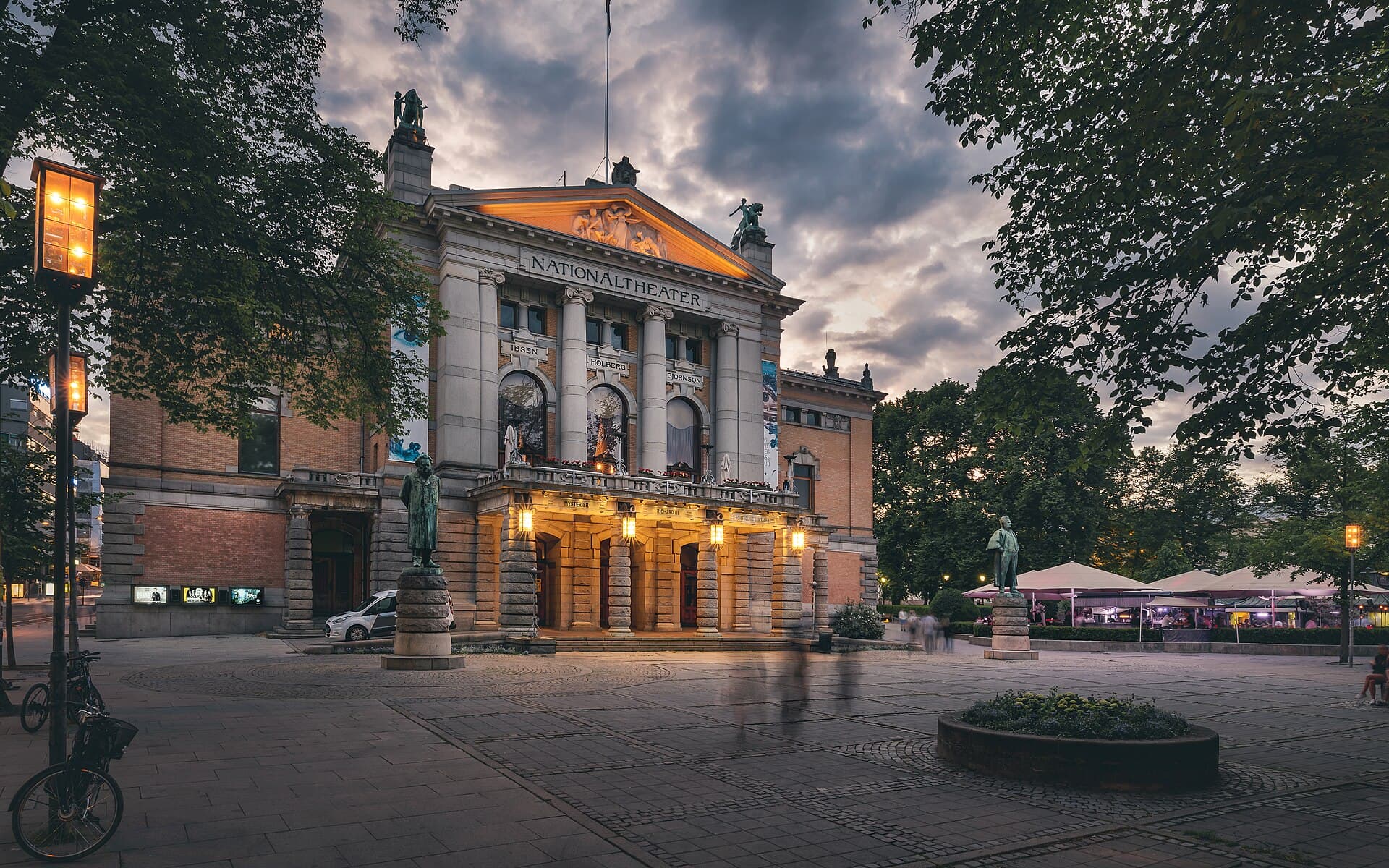
The 19th century brought rapid expansion and the introduction of neoclassical and romantic architectural styles, visible in grand buildings like the National Theatre and the University of Oslo. After Norway's full independence in 1905, Oslo continued to grow, and its City Hall, completed in 1950, became a monumental symbol of Norwegian culture and democracy, famously hosting the Nobel Peace Prize ceremony. Post-World War II, Oslo absorbed surrounding municipalities, creating the sprawling city seen today. The discovery of oil in the North Sea further propelled Oslo's economy, transforming it into one of the world's most prosperous cities. Modern Oslo is characterized by innovative urban planning, with projects like the Fjord City initiative revitalizing the waterfront and showcasing a seamless dialogue between urban development and nature.
Begin your exploration at the Oslo Opera House, an architectural marvel where you can walk on its sloping roof for expansive views of the city and fjord. Nearby, the Barcode Project displays striking contemporary architecture. Stroll along Karl Johans gate, Oslo's main thoroughfare, leading to the Royal Palace, which is open for tours during the summer. Do not overlook the Akershus Fortress, a medieval stronghold offering insights into Oslo's strategic past and excellent views.
For art enthusiasts, the Munch Museum houses a significant collection of Edvard Munch's works, including multiple versions of "The Scream." Immerse yourself in the singular artistry of Vigeland Park, the world's largest sculpture park by a single artist, Gustav Vigeland, featuring over 200 sculptures exploring the human condition. The Nobel Peace Center offers inspiring exhibits on peace laureates. For a deeper dive into Norwegian history and culture, visit the Norsk Folkemuseum on the Bygdøy peninsula, an open-air museum with historic buildings and a stave church. For a taste of local life, explore the Grünerløkka district, known for its cafes, shops, and street art.
Oslo is a captivating destination year-round, with each season offering a distinct experience. The peak season is from May to August, when the weather is pleasantly warm, with temperatures typically ranging from 16-22°C (60s-70s°F), and daylight hours are exceptionally long. This period is ideal for outdoor activities, exploring parks, and enjoying the city's lively atmosphere and festivals. For those interested in winter sports or a festive, snow-covered cityscape, December to February offers average daytime temperatures around -2°C (28°F), with Christmas markets adding a magical touch. Spring (March-May) and autumn (September-October) provide milder weather, fewer crowds, and beautiful natural scenery as flowers bloom or leaves change color.
Oslo's public transportation system is efficient and comprehensive, encompassing trams, buses, a metro, and ferries, all easily navigable with the RuterBillett app or an Oslo Pass. The Oslo Pass is highly recommended for visitors planning to explore multiple attractions, as it offers free entry to most museums and unlimited use of public transport, including ferries to the Bygdøy museums. While taxis are available, they can be expensive. From Oslo Airport (OSL), the Flytoget Airport Express Train offers a quick 20-minute journey to Oslo Central Station.
English is widely spoken throughout Oslo, so communication is generally not an issue for international visitors. The local currency is the Norwegian Krone (NOK). When it comes to healthcare, Norway has an almost free public system with high standards, covering all residents. Visitors should check their travel insurance for coverage. Oslo is known for being an expensive city, so budgeting accordingly is advisable. Consider enjoying lunch specials or purchasing alcohol from government-run Vinmonopolet stores to manage costs.