Orihuela Cathedral Bell Tower
The Cathedral of El Salvador and Santa María holds a secret within its quadrangular tower, beyond the clock and bells.
Full story unlocks in the tour
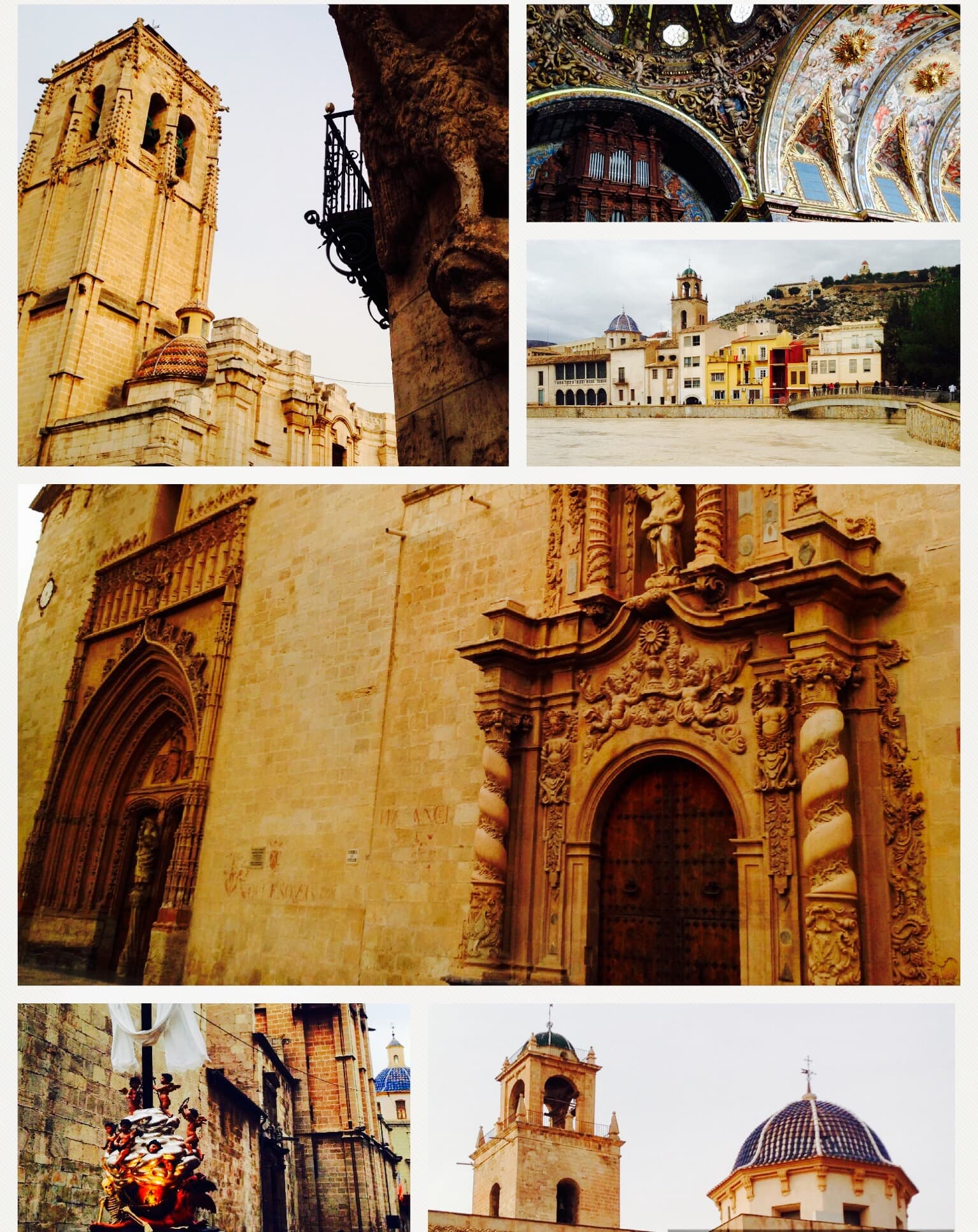 Olecense / CC BY-SA 4.0, via Wikimedia Commons
“Where citrus groves meet ancient stones, and history breathes through Baroque facades.”
Not the postcards. The stories even locals don't know — whispered in your ear, right where they happened.
The Cathedral of El Salvador and Santa María holds a secret within its quadrangular tower, beyond the clock and bells.
Among the solemn religious sculptures carried through Orihuela's streets during Holy Week, one figure stands out for its unusual appearance.
During the Christian Reconquista, a local woman played a pivotal role in retaking Orihuela from Moorish rule, using a clever deception.
Discover every secret of Orihuela
Every address, every reveal in full — in your ear, right where it happened.
You pick your stops. You walk. The voice reveals what the others miss.
No tours available yet. Check back soon — we're preparing them.
Orihuela, a city in the Alicante province of Spain, offers a blend of historical depth and Mediterranean allure. Situated along the Segura River and surrounded by fertile plains of orange and lemon groves, the city lies approximately 20 kilometers inland from the coast. It functions as the cultural and heritage capital of the Alicante province, a place with a profound past that comes alive in its architecture and traditions.
The city's historical core, designated a Historic and Artistic Monument Complex in 1969, contains a collection of churches, palaces, and museums. Orihuela's identity is shaped by centuries of diverse influences, from Roman and Visigothic to Moorish and Christian, creating a distinctive atmosphere. It is a place where ancient avenues lead to grand cathedrals and former universities, inviting visitors to explore its layered history and local life.
Beyond the monumental city, the broader municipality of Orihuela extends to 18 kilometers of coastline, known as Orihuela Costa. This coastal area features beaches, coves, and marinas, offering opportunities for sun, sea, and various water activities. The contrast between the inland city and the relaxed coastal resorts provides a varied experience for travelers.
The history of Orihuela stretches back to antiquity, with archaeological evidence indicating human presence from the Chalcolithic era. During the Roman period, it was known as Orcelis. The city reached a significant peak during the Visigothic era, becoming the capital of the province of Aurariola in 576 CE.
A pivotal moment occurred in 713 CE with the Treaty of Theodomir, which allowed the Visigothic Count Theodomir to maintain an autonomous principality, the Kora of Tudmir, under Muslim rule. Orihuela became its capital, controlling important trade routes and developing an advanced agricultural system with irrigation canals. This period fostered a unique blend of Mozarab Christian and Muslim traditions.
The Christian Reconquista saw Orihuela retaken in 1243 by Castilian troops. It later became part of the Kingdom of Valencia in 1296 and was declared a city in 1437. In 1507, Emperor Charles V made Orihuela the capital of its own province, and in 1564, a diocese was created, solidifying its status as a major religious and university center.
The 17th and 18th centuries marked a "Golden Age" for Orihuela's architecture, with the construction of luxurious palaces and richly adorned temples, many in the Baroque style. However, the city also faced challenges, including being sacked during the War of the Spanish Succession in 1706 and suffering damage from an earthquake in 1829. Despite these setbacks, Orihuela continued to evolve, eventually becoming part of the Alicante province in 1833.
The 20th century brought renewed recognition of its heritage, with the birth of the renowned poet Miguel Hernández in 1910, whose house is now a museum. In 1969, the historic center was declared an Artistic-Historical Site, initiating active preservation efforts. Today, Orihuela is recognized for its extensive historical and artistic heritage, attracting visitors to its ancient monuments and cultural traditions.
Orihuela's historic center is a map of architectural styles and cultural landmarks. Begin at the Cathedral of El Salvador and Santa María, a Gothic structure from the 13th century, built upon Visigothic and Hispano-Arab foundations. Its museum houses paintings by Velázquez and José de Ribera.
Nearby, the Episcopal Palace showcases Baroque architecture and holds a collection of sacred art. The Convent of Santo Domingo, also known as "el Escorial de Levante," is the largest monument in the Valencian Community. It features two cloisters, a Baroque church, and a uniquely decorated tower.
Explore the Miguel Hernández House-Museum, the birthplace of the celebrated poet, which preserves furniture and photographs from his life. For a glimpse into the city's ancient past, visit the Wall Museum (Museo de la Muralla), located in the basement of the Casa del Paso, revealing Almohad towers, Arab baths, and Islamic and Christian homes.
Other notable sites include the Church of Santiago Apóstol with its Gothic tower and 17th-century paintings, and the Church of Santas Justa y Rufina, known for its Gothic bell tower adorned with gargoyles. Do not miss the expansive views from the ruins of Orihuela Castle on Mount San Miguel, where you can see remnants of medieval walls and towers.
Orihuela enjoys a mild climate year-round, with approximately 2,800 hours of sunshine annually. The best time for warm-weather activities and beach visits is from mid-June to early September, when daily high temperatures are consistently above 85°F (29°C) and the sea is warm. For those who prefer fewer crowds and milder weather, the shoulder seasons of May, June, September, and October are ideal. These months offer pleasant temperatures for exploring the city's historic sites and enjoying outdoor activities like hiking and cycling.
Orihuela is easily accessible by road, located near the A-7 motorway between Alicante and Murcia. The city also has a train station, Orihuela Miguel Hernández, offering high-speed rail services, including a direct connection to Madrid.
When exploring the historic center, comfortable walking shoes are recommended due to the uneven streets. Sunscreen is advisable in all seasons due to the strong Mediterranean sun. While in Orihuela, consider trying local cuisine, such as baked rice or paella. The city offers a variety of accommodation options, both in the historic center and along the Orihuela Costa. For those interested in local events, Orihuela is particularly known for its Holy Week processions and the Moors and Christians festivals in July.