Örebro Castle
This imposing fortress, standing sentinel on its own islet, holds a secret about its current appearance.
Full story unlocks in the tour
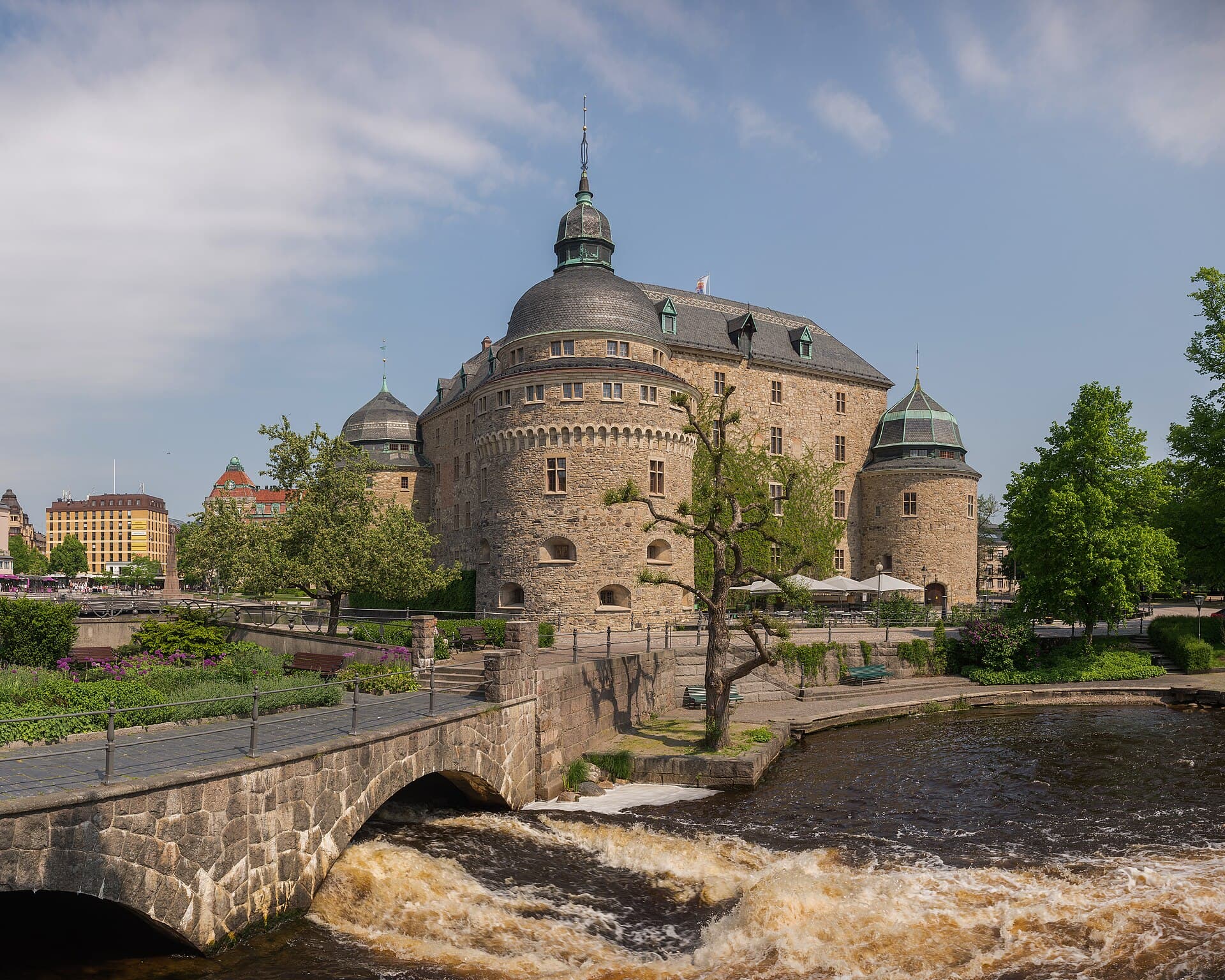 ArildV / CC BY-SA 3.0, via Wikimedia Commons
“Where medieval might meets modern Swedish charm, on a river's bend.”
Not the postcards. The stories even locals don't know — whispered in your ear, right where they happened.
This imposing fortress, standing sentinel on its own islet, holds a secret about its current appearance.
The city's main church, a fixture since the Middle Ages, once had a rather fiery incident that literally melted its bells.
Örebro's distinctive mushroom-shaped water tower is more than just a functional structure; it's an architectural pioneer.
Discover every secret of Örebro
Every address, every reveal in full — in your ear, right where it happened.
You pick your stops. You walk. The voice reveals what the others miss.
No tours available yet. Check back soon — we're preparing them.
Örebro, a city where history gracefully intertwines with contemporary Swedish life, is situated by the Svartån River as it flows into Lake Hjälmaren. Known as one of Sweden's oldest towns, its strategic location made it a significant commercial and political hub throughout the Scandinavian Middle Ages. Today, with a population of approximately 126,000, Örebro maintains a welcoming, walkable atmosphere despite being one of the country's larger urban centers.
The city's name itself, derived from Old Norse words 'ör' (gravel bank) and 'bro' (bridge), speaks to its origins around a natural river crossing. From its medieval castle to its engaging open-air museum, Örebro offers a captivating blend of historical grandeur and modern amenities, including a prominent university and a lively cultural scene.
Örebro's story begins in the 13th century, with the construction of a bridge over the Svartån River and the emergence of a trading settlement. The city received its Royal Charter and official city privileges no later than 1404, quickly establishing itself as a vital commercial center in the Scandinavian Middle Ages.
Örebro Castle has always been the city's natural focal point, strategically situated on an islet in the Svartån, effectively dividing the town into northern and southern parts. The castle's oldest section, a defensive tower, dates back to the latter half of the 13th century, likely built during the reign of King Magnus IV. Over the centuries, it transformed from a simple fortress into a grand Renaissance palace under Duke Charles (later King Charles IX) in the 1560s.
Örebro played a pivotal role in Swedish history. It was the residence of Engelbrekt Engelbrektsson, a leader of a 1434 rebellion against Denmark, and the birthplace of 16th-century church reformers Olaus and Laurentius Petri. The Örebro Synod, a milestone in the Swedish Reformation, was held at the castle in 1529. Perhaps one of its most significant political moments occurred in 1810, when the national diet meeting in Örebro elected French Marshal Jean-Baptiste Bernadotte as Crown Prince of Sweden, founding the current royal dynasty.
Despite its historical importance, Örebro remained relatively small until the latter half of the 19th century. A devastating fire in 1854 destroyed much of the city center, leading to a complete replanning and modernization. This period also saw rapid growth as Örebro became a national center for the shoe-manufacturing industry. In more recent history, the local higher education institution was granted university status in 1999, further solidifying Örebro's role as an educational and knowledge hub.
A visit to Örebro would be incomplete without exploring Örebro Castle, a magnificent 14th-century fortress turned Renaissance palace that dominates the city center from its island in the Svartån River. Guided tours offer a deep dive into its 700-year history, which includes tales of royalty, prisoners, and even spectral residents.
Step back in time at Wadköping Open-Air Museum, a delightful collection of historic wooden houses, some dating back to the 16th century, that were relocated here to preserve Örebro's architectural legacy. Wander through workshops, museums, and bakeries, and discover vintage shops.
For expansive city views, ascend Svampen (The Mushroom) water tower, which offers an observation deck and a restaurant. Immerse yourself in greenery at Stadsparken (City Park), voted Sweden's most beautiful park in 2004, featuring a garden cafe and ample space for relaxation. Do not overlook St. Nicolai Church, a medieval Gothic and Romanesque church in the heart of downtown, where Swedish rebel leader Engelbrekt Engelbrektsson is likely interred. For those who love the outdoors, the surrounding natural beauty offers opportunities for hiking, biking, and SUP on Lake Hjälmaren, Sweden's fourth-largest lake, or exploring the 'southernmost wilderness' of Tiveden National Park.
The best time to visit Örebro is during the summer months, from June to August. During this period, the weather is mild to pleasantly warm, with average daytime temperatures ranging from 20°C to 23°C (68°F to 73°F), making it ideal for outdoor activities and sightseeing. While summer sees the most precipitation, rainfall is generally moderate and spread across several days. Spring and autumn offer cooler, transitional weather, with crisp nights, while winters are cold and snowy, providing a different, cozy Scandinavian experience.
Örebro is well-connected, with Örebro Airport (ORB) located approximately 10-12 kilometers southwest of the city center. It is Sweden's fourth-largest cargo airport and also handles passenger flights, including routes to London-Stansted with Ryanair. Shuttle buses (Flygbuss) operate between the airport and Örebro Central Station, or you can opt for local buses 600/620 from a stop about 2 km away. Örebro Central Station also provides train connections via the Mälaren Line and Western Main Line.
Within the city, biking is a popular mode of transportation, with pleasant trails along the Svartån River. Swedish is the official language, but almost all Swedes learn English from an early age, making communication easy for English speakers. The currency is the Swedish Krona (SEK). Sweden observes Central European Time (CET), which is UTC+1, with Daylight Saving Time (CEST, UTC+2) in effect during summer.