Piast Tower
The Piast Tower rises, a singular guardian of a forgotten era in Opole.
Full story unlocks in the tour
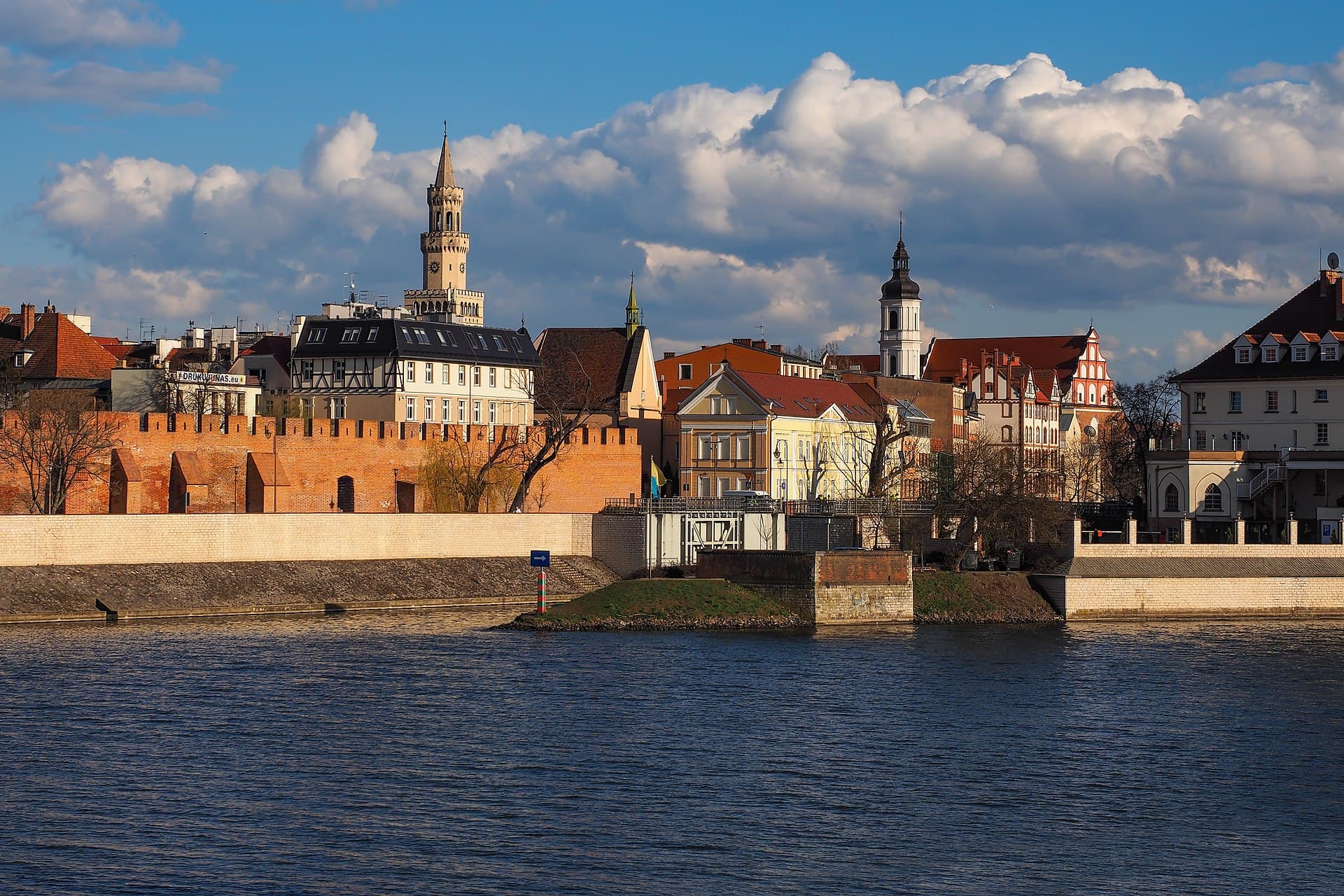 SuperGlob / CC BY 3.0, via Wikimedia Commons
“Opole: A city where ancient currents of the Odra River meet the enduring melodies of its spirit.”
Not the postcards. The stories even locals don't know — whispered in your ear, right where they happened.
The Piast Tower rises, a singular guardian of a forgotten era in Opole.
This grand cathedral holds a sacred object that profoundly shaped Opole's very character.
Within the venerable walls of a university building, certain occurrences remain without explanation.
Discover every secret of Opole
Every address, every reveal in full — in your ear, right where it happened.
You pick your stops. You walk. The voice reveals what the others miss.
No tours available yet. Check back soon — we're preparing them.
Opole, a city in southern Poland, rests along the Odra River, its foundations laid upon a series of islands and riverbanks. This regional capital of the Opole Voivodeship carries a distinct character, shaped by centuries of cultural exchange and enduring resilience. The city's silhouette is defined by its historic architecture, from medieval towers that pierce the sky to the stately facades of its university buildings.
Walking through Opole reveals a narrative of transformations, where Slavic, German, and Polish influences have intertwined. The city's heart beats with a calm rhythm, inviting visitors to explore its green spaces, riverside promenades, and the quiet dignity of its marketplaces. Opole offers a gentle exploration, a place where the past lingers in the present, not as a relic, but as a living part of its identity.
## Early Beginnings and Piast Rule Opole's origins trace back to a Slavic settlement on Ostrówek Island in the 8th century, a strategic point along the Odra River. By the 10th century, it had become a significant stronghold within the emerging Polish state under the Piast dynasty. The city gained its town rights in 1217, becoming the capital of the Duchy of Opole. Under the Piasts, particularly Duke Casimir I, Opole flourished as a center of trade and culture. The Piast Tower, a solitary guardian, stands as a testament to this foundational era, once part of a grander castle that shaped the city's early defenses and administration.
## Shifting Allegiances and German Influence Over the centuries, Opole's fortunes were tied to larger geopolitical currents. Following the fragmentation of Poland, Opole, along with much of Silesia, came under Bohemian rule in the 14th century, then passed to the Habsburg Monarchy in 1526. In 1742, after the Silesian Wars, Opole became part of Prussia. During this period, the city, known as Oppeln, experienced significant German cultural and administrative influence. Industrialization brought new growth, particularly in the 19th century, with the development of railway lines and industries like cement production. The city's architecture from this era reflects this period of Prussian and German development, evident in its public buildings and some residential areas.
## The 20th Century and Return to Poland The 20th century brought profound changes to Opole. After World War I, a plebiscite was held in Upper Silesia, with Opole voting to remain with Germany. However, the devastation of World War II dramatically altered its fate. Opole suffered considerable damage during the war. Following the Potsdam Agreement in 1945, Opole, along with the majority of Silesia, was incorporated into Poland. The German population was largely expelled, and Poles, many from territories lost to the Soviet Union, resettled in the city. Since then, Opole has steadily rebuilt and reasserted its Polish identity, while still acknowledging its complex multicultural past. Today, it stands as a significant regional center, a university city, and a place that thoughtfully integrates its layered history into its contemporary life.
Begin your exploration at the Piast Tower, the enduring symbol of Opole’s medieval past, offering expansive views of the city and river. Wander to the Cathedral of the Holy Cross, an imposing structure whose interiors reveal centuries of devotion and artistry. The Franciscan Church and Monastery, with its serene cloister, offers a moment of quiet reflection.
Discover the Opole Venice, a charming area along the Młynówka canal, where historic buildings meet the water's edge, creating picturesque reflections. Explore the Market Square, a lively heart of the city, surrounded by colorful townhouses and the elegant Town Hall. For a deeper dive into regional heritage, the Museum of Opole Silesia presents collections spanning archaeology, ethnography, and art. The Opole Zoo, located on Bolko Island, provides a pleasant escape into nature.
The best times to visit Opole are during the spring (April to June) and early autumn (September to October). These seasons offer mild temperatures, fewer crowds, and the city's parks and riverside areas are particularly inviting. Summers are generally warm and pleasant, though they can be busier. Winters are cold, with occasional snow, which can lend a quiet beauty to the historic architecture.
Opole is well-connected by train to major Polish cities like Wrocław and Katowice. The city center is compact and easily navigable on foot. Public transportation, primarily buses, serves the wider urban area. While Polish is the official language, English is often spoken in tourist-oriented establishments. The local currency is the Polish Złoty (PLN). Tipping is customary in restaurants and for services. Be aware of local customs regarding church visits, dressing respectfully.