Mirabella Fortress
This 13th-century fortress, beyond its commanding views, safeguards a secret from Omiš's pirate era.
Full story unlocks in the tour
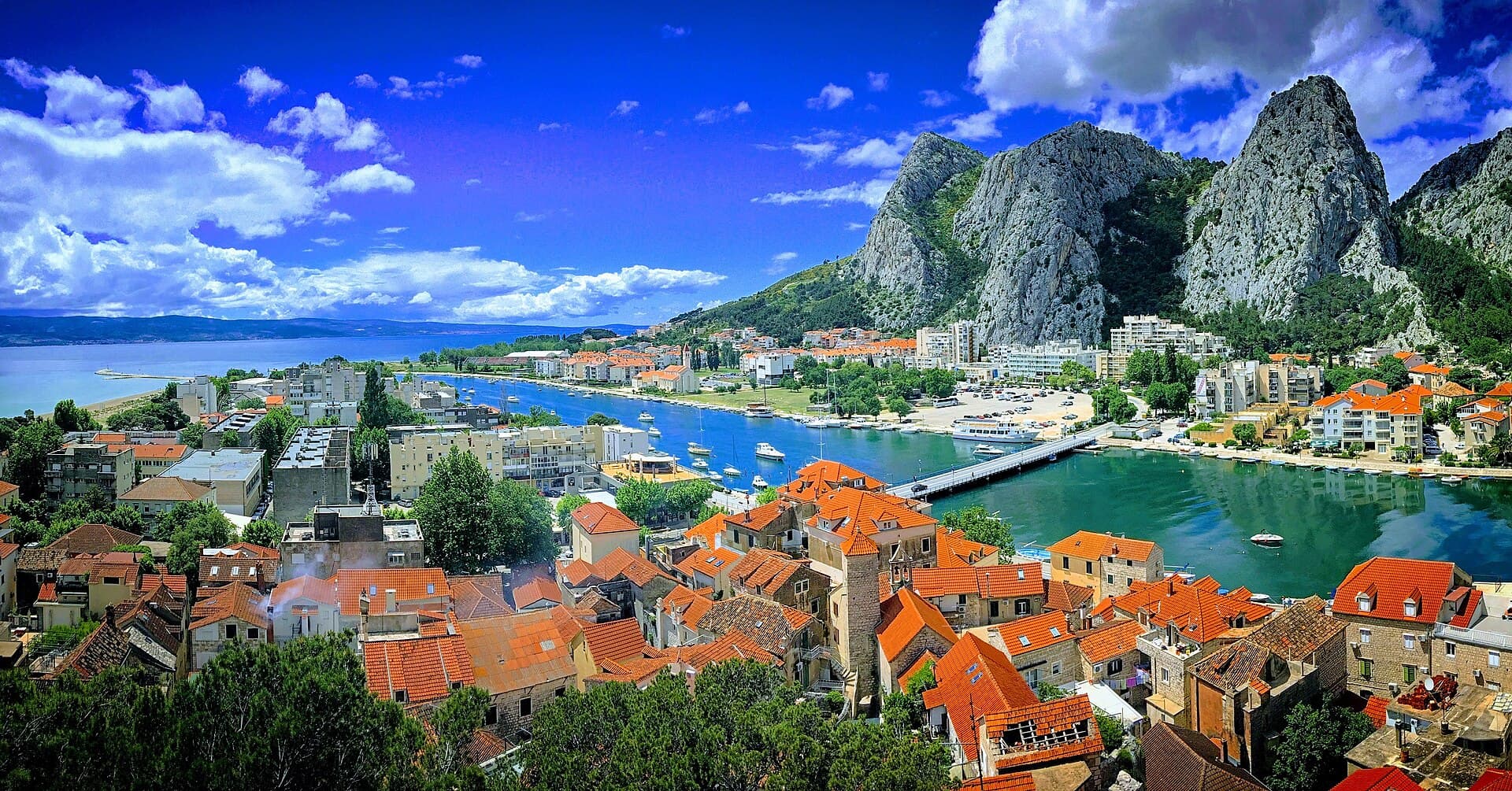 Sergei Gussev / CC BY 2.0, via Wikimedia Commons
“Where corsairs once held sway, exhilaration now beckons.”
Not the postcards. The stories even locals don't know — whispered in your ear, right where they happened.
This 13th-century fortress, beyond its commanding views, safeguards a secret from Omiš's pirate era.
The Cetina River is more than just a picturesque backdrop; it was integral to the Omiš pirates' defensive strategies.
Wandering the slender lanes of Omiš, you might encounter a curious inscription etched onto a dwelling.
Discover every secret of Omiš
Every address, every reveal in full — in your ear, right where it happened.
You pick your stops. You walk. The voice reveals what the others miss.
No tours available yet. Check back soon — we're preparing them.
Omiš, a coastal Croatian town, is dramatically situated where the Cetina River carves a canyon through limestone mountains before merging with the Adriatic Sea. This distinctive topography, with its towering precipices and a river flowing into the sea, has shaped Omiš's character for centuries. Once a formidable pirate domain, Omiš today presents a fusion of historical intrigue and thrilling outdoor pursuits.
The town's compact old quarter, with its slender passageways and stone architecture, reflects its Venetian heritage, while the surrounding natural landscape invites exploration. From the remnants of corsair strongholds surveying the town to the clear waters of the Cetina River, Omiš offers a captivating journey for those seeking both adventure and a glimpse into a tumultuous past.
## From Ancient Settlement to Corsair Republic Omiš possesses a history spanning over two millennia, with its origins traced to the ancient settlement of Oneum at the base of Omiška Dinara mountain. Over time, inhabitants migrated closer to the sea, a strategic decision that would define the town's medieval identity.
During the 12th and 13th centuries, Omiš transformed into a feared corsair republic, governed by the powerful Kačić dukes. These daring pirates controlled the Adriatic Sea from Omiš to Dubrovnik, exacting tribute from passing vessels, including those of Venice, Dubrovnik, Kotor, and even papal galleons. Their secret weapon was the 'Sagittae'—fast, light ships crafted for rapid assaults and swift retreats into the Cetina River gorge, where larger enemy vessels could not follow.
By the 15th century, Omiš came under Venetian dominion, which significantly influenced its current architectural form with slender alleys and numerous public squares within its defensive walls. Despite Venetian control, Omiš maintained some autonomy, paying taxes to Venice while frequently engaging in skirmishes against the Turks. A local heroine, Mila Gojsalić, is celebrated for her role in defeating the Turks, with a sculpture by Ivan Meštrović commemorating her in Poljica.
Following the fall of the Venetian Republic, Omiš experienced periods under Austrian and French administration in the early 19th century, before ultimately becoming part of Yugoslavia and finally, in 1991, the independent Republic of Croatia. The town's corsair legacy, however, remains a central aspect of its identity, evident in its well-preserved strongholds.
Begin your journey in the close-knit Old Town of Omiš, a web of slender thoroughfares and public squares where historical structures stand as enduring testaments to its past. A brief, undemanding ascent from the main square leads to Mirabella Fortress (Peovica), a 13th-century Romanesque edifice that provided pirates with a strategic vantage point and a swift escape into the Cetina gorge. From its summit, you will gain expansive views of Omiš, the Cetina River, and the island of Brač.
For a more demanding climb and even wider panoramas, trek to Fortica Fortress (Starigrad), positioned 260 meters above Omiš. From this elevation, the islands of Brač, Hvar, and Šolta are visible, along with the Cetina River mouth and the surrounding Poljica region. The Cetina River itself is a significant draw, offering picturesque boat excursions into its dramatic canyon. These tours provide a distinct perspective of the towering cliffs and abundant foliage that characterize the landscape. Do not overlook the Parish Church of St. Michael, an important architectural heritage site displaying a blend of Gothic, Renaissance, and Baroque styles.
The shoulder seasons of spring (March to May) and autumn (September to November) are ideal for visiting Omiš. During these months, temperatures are mild, ranging from 11-19°C (52-66°F) in October, making it comfortable for outdoor activities like hiking and cycling. The town is also less crowded than in the peak summer months. Summer (June to August) offers warm weather and longer days, perfect for enjoying the beaches and water-based activities, though it is the most popular and busiest time. Winter (December to February) brings a quieter atmosphere and more affordable accommodation, suitable for those seeking relaxation.
Omiš is approximately 25 kilometers southeast of Split and is readily accessible by car or bus via the D8 coastal road. If driving, parking is available near the town bridge, typically costing around 1 EUR per hour, though free spaces can be scarce during peak season. Buses connecting Split with Makarska or Dubrovnik frequently stop in Omiš, with local buses to Split running every half hour.
The town center is small and easily explored on foot, with most attractions, including Mirabella Fortress, within easy reach. For adventure activities such as rafting, canyoning, or ziplining on the Cetina River, it is advisable to book in advance, especially during high season. Local tourist information centers can provide details on guided hikes, workshops, and other events. Accommodation options range from hotels to apartments, with prices generally lower than in more famous resorts.