The old fishermen's quarter (Bairro dos Pescadores)
Olhão's distinct cubist houses, with their flat roofs, offered more than just a unique design.
Full story unlocks in the tour
 Jose A. / CC BY 2.0, via Wikimedia Commons
“Where the Ria Formosa's waters murmur and history breathes.”
Not the postcards. The stories even locals don't know — whispered in your ear, right where they happened.
Olhão's distinct cubist houses, with their flat roofs, offered more than just a unique design.
Behind the main church, an older, smaller chapel holds a quiet, profound link to the town's seafaring past.
Among the town's enduring legends, one speaks of an enchanted Moorish woman who still walks the streets after dark.
Discover every secret of Olhão
Every address, every reveal in full — in your ear, right where it happened.
You pick your stops. You walk. The voice reveals what the others miss.
No tours available yet. Check back soon — we're preparing them.
Olhão, formally known as Olhão da Restauração, is a city and municipality in the Algarve region of southern Portugal. Situated close to the regional capital Faro, it forms part of a larger urban expanse stretching from Faro to Tavira. Unlike some of its more polished coastal neighbors, Olhão retains a raw, genuine character, deeply embedded in its identity as a working fishing port. The town's low-slung, whitewashed houses, often marked by salt and time, create a labyrinth of narrow alleys, displaying a Moorish-influenced, cubist architectural style that distinguishes it from other Algarve settlements.
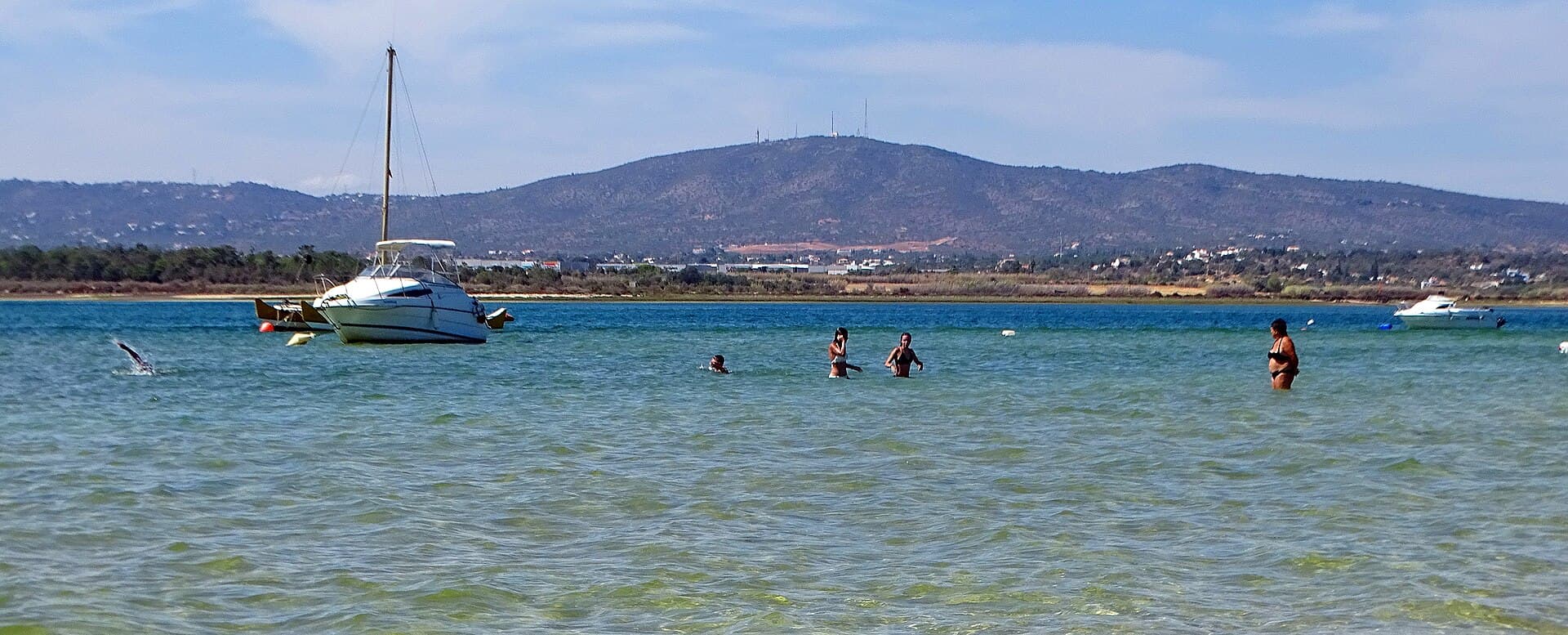
Olhão’s essence is inextricably bound to the sea and the Ria Formosa Natural Park, an expansive lagoon system of salt marshes, tidal flats, and barrier islands that extends for 60 kilometers along the coastline. This protected wetland provides sanctuary for diverse birdlife and offers a serene contrast to the town's active harbor. Travelers to Olhão are often drawn by its authentic Portuguese spirit, the lively pulse of its markets, and the promise of fresh seafood brought directly from the Atlantic.
Olhão's story reaches back to prehistoric times, with the earliest written mention, referencing 'Olham,' dating to 1378. The town's expansion in the 17th century was significantly shaped by the abundant water in the estuary, drawing numerous fishermen despite official warnings from Faro against coastal settlements. By the mid-17th century, the Fort of São Lourenço do Bugio was constructed to defend the coast and estuary from pirate attacks. In 1695, due to its increasing importance, residents successfully petitioned to separate from the parish of Quelfes, leading to the establishment of the parish of Nossa Senhora do Rosário de Olhão.
Olhão's most celebrated historical moment occurred in 1808 during the Napoleonic occupation of Portugal. The town became the origin of a local rebellion, with fishermen successfully expelling French forces from the Algarve, marking one of the first acts of Portuguese resistance during the Peninsular War. Following this triumph, a remarkable mission unfolded: 17 courageous fishermen embarked in a small wooden boat, the Bom Sucesso, across the Atlantic to Brazil. Their perilous journey, undertaken without maps or modern instruments, aimed to inform the exiled Portuguese royal family, then in Brazil, that the French invaders had been defeated and the Algarve was free. This daring feat earned Olhão the proud designation 'da Restauração' (of the Restoration) and a royal charter, elevating its status from a mere locality to 'Vila de Olhão da Restauração'. A replica of the Bom Sucesso now rests by the waterfront, a lasting testament to this extraordinary bravery.
The 19th century witnessed Olhão's prosperity, becoming a full-fledged municipality in 1826. The town's fishing industry expanded, particularly with tuna and sardines, and in 1882, the first cannery opened. Olhão transformed into a significant center for sardine and tuna canning, exporting its products across Europe and North Africa. This flourishing industry brought economic growth and employment, making Olhão the Algarve's largest coastal town. However, this prosperous era eventually waned in the mid-20th century with the collapse of the sardine canning industry. Today, while fishing remains crucial, the town has diversified its maritime economy to include clam farming and the broader shellfish trade, and tourism has emerged as a growing sector.
Olhão offers a blend of authentic local life and natural splendor. The Municipal Markets, housed in two striking red-brick pavilions from 1916, serve as a central gathering point. The eastern hall contains the largest fish market in the Algarve, while the western hall offers local fruits, vegetables, bread, and handcrafted items. Arrive before 9 AM, particularly on a Saturday, for the widest selection and to experience the market at its most animated.
Behind the markets lies the Bairro dos Pescadores, the old fishermen's quarter, a maze of whitewashed cube houses and narrow passages with a distinct North African ambiance. Explore the town's murals and sculptures, which depict scenes of fishing life and local lore. The Igreja Matriz de Nossa Senhora do Rosário, an 18th-century church, is another notable structure.
From the harbor, ferries and water taxis provide access to the Ria Formosa's barrier islands: Ilha da Armona, Ilha da Culatra, and Ilha do Farol. These islands present kilometers of untouched golden sands and an opportunity to experience a different aspect of Algarve life. Consider a boat tour of the Ria Formosa Natural Park to observe its diverse ecosystem and birdlife, including flamingos.
Olhão enjoys a mild Mediterranean climate, making it an appealing destination year-round. The warm season, from late June to early September, is ideal for beach excursions and water activities, though it can be busy. Spring and autumn provide pleasant temperatures, perfect for walking and birdwatching, as migratory species pass through the Ria Formosa. Winters are mild and often sunny, allowing for outdoor pursuits without the summer crowds. If you appreciate seafood, plan your visit for mid-August to coincide with the annual Olhão Seafood Festival.
Olhão is easily reached, located just 15 minutes from Faro Airport. From the airport, you can take a bus to central Faro and then an onward bus or train to Olhão, or opt for a taxi or Uber, which can be economical for groups. Public transport from the western Algarve typically involves traveling via Faro. Within Olhão, the town itself is walkable, with its historic center and waterfront readily explored on foot. To reach the barrier islands and explore the Ria Formosa, ferries and water taxis depart regularly from the harbor. Ferry tickets are inexpensive and paid in cash at the kiosk. For exploring the wider Algarve region, renting a car is recommended. Olhão's evening atmosphere is generally calm and local, with waterfront bars offering a relaxed setting.