The Six-Bucket Well (Puits à Six Seaux)
This Renaissance well, with its intricate carvings and multiple buckets, holds a surprising tale of survival.
Full story unlocks in the tour
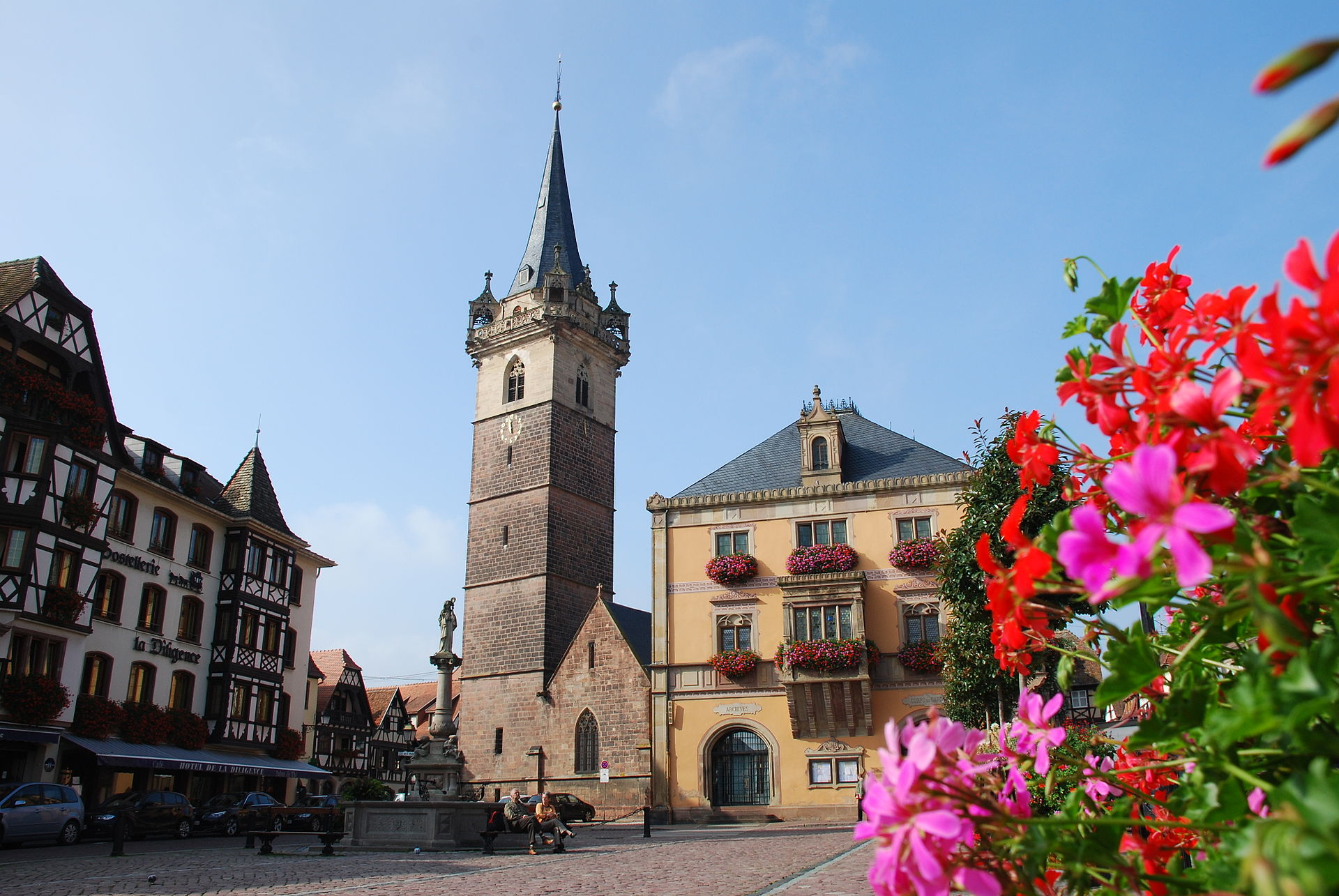 OTCOM / Public domain, via Wikimedia Commons
“Where medieval ramparts guard Renaissance charm and Alsatian stories unfold.”
Not the postcards. The stories even locals don't know — whispered in your ear, right where they happened.
This Renaissance well, with its intricate carvings and multiple buckets, holds a surprising tale of survival.
A narrow, unassuming lane in Obernai holds a subtle inscription that speaks volumes about its past residents.
The oldest house in Obernai, dating back to the 13th century, was more than just a grand residence for Alsatian nobility.
Discover every secret of Obernai
Every address, every reveal in full — in your ear, right where it happened.
You pick your stops. You walk. The voice reveals what the others miss.
No tours available yet. Check back soon — we're preparing them.
Obernai, a captivating town at the foot of Mont Sainte-Odile on the Alsace Wine Route, offers a journey through centuries of history. Just 25 kilometers southwest of Strasbourg, it is a blend of medieval heritage and Alsatian hospitality. The town's historic center, encircled by well-preserved medieval ramparts, transports visitors to a bygone era with its narrow streets and traditional half-timbered houses, painted in a spectrum of colors.
As the second most visited destination in the Bas-Rhin department after Strasbourg, Obernai strikes a balance between its role as a tourist hub and a place where local life thrives. Its strategic location makes it an ideal base for exploring the picturesque Alsace region, from its vineyards to its villages. Obernai is also recognized as one of France's "Plus Beaux Détours," an association highlighting smaller towns with exceptional, yet relatively undiscovered, tourist appeal.
The town's character is defined by its architectural treasures, including Gothic churches, Renaissance wells, and lively squares that have witnessed centuries of activity. Obernai is particularly enchanting during its Christmas markets, when festive lights illuminate the streets and the aroma of mulled wine fills the air, creating a magical atmosphere.
## From Roman Crossroads to Imperial City Obernai's origins trace back to a Roman crossroads, later becoming a Merovingian royal villa. The town, initially known as "Ehenheim," was first mentioned in 778. Its name evolved to Oberehnheim in the 13th century to differentiate it from Niederehnheim (Niedernai), with the Latin "superior" becoming the German "ober" in the 16th century.
Around 1240, with the support of the Hohenstaufen family, Obernai gained city status, allowing it to erect fortifications, establish its own judicial and fiscal systems, and host markets and fairs. In 1280, it became a Free Imperial City, answering directly to the emperor. This period marked a time of prosperity for Obernai.
## The Décapole Alliance and Renaissance Flourishing In 1354, Obernai joined the Décapole, an influential alliance of ten free imperial cities in Alsace, formed to protect against the ambitions of powerful neighbors like the Bishop of Strasbourg. Obernai was the sixth largest city within this alliance in terms of power and wealth. The 15th and 16th centuries represented a golden age for Obernai, characterized by flourishing craftsmanship and viticulture, with wine being a significant export.
This era left a lasting architectural legacy, evident in buildings such as the Hôtel de Ville (Town Hall), constructed between 1523 and 1610, the Halle aux Blés (Corn Exchange) from 1554, the Kapellturm belfry, and the Puits à Six Seaux (Six-Bucket Well) from 1579. Many private buildings also showcase the Renaissance style.
## French Annexation and Modern Revival The prosperity of Obernai was interrupted by the Thirty Years' War (1618–1648), during which the town was occupied and ransomed. In 1679, following the Treaties of Westphalia, Louis XIV annexed the ten cities of the Décapole to the Crown of France, and Obernai lost its autonomy, becoming a royal town. The 18th century brought another period of economic recovery, with Obernai seeing 306 master craftsmen across 35 different trades for a population of 5,000.
The 19th century saw significant urban transformations, including the destruction of the city gates and the development of roads and railways. Obernai was annexed by Germany in 1871. The town was largely spared from destruction during World War II. From the 1960s onward, Obernai experienced remarkable economic and tourist growth, with its population doubling in twenty years and becoming an important employment hub. Today, Obernai maintains its traditional Alsatian character while also being home to several major industries.
Begin your exploration in the historic center, where wandering reveals medieval half-timbered houses and Renaissance buildings. The Market Square (Place du Marché) is the town's heart, hosting a weekly market since 1301. Here, you will find the Hôtel de Ville (Town Hall), the Halle aux Blés (Corn Exchange), and the Sainte-Odile Fountain. The distinctive Kapellturm (Belfry), a 60-meter-high tower, is unique in Alsace and offers expansive views.
Do not miss the Six-Bucket Well (Puits à Six Seaux) on Rue Chanoine Gyss, a 16th-century Renaissance monument. The Church of Saints Peter and Paul (Église Saints-Pierre-et-Paul), a neo-Gothic structure from 1872, is one of Alsace's largest churches, impressive with its size and interior artworks. Walk along the medieval ramparts, a 1.4 km loop offering a peaceful break and unique views of the town's rooftops and watchtowers.
For a broader perspective, head to Mont National for a panoramic view of Obernai and the surrounding vineyards. Just a 15-minute drive away, Mont Sainte-Odile is a significant pilgrimage site with a monastery and exceptional views of the Alsace plain. Consider visiting a local winery for a tasting, as Obernai is ideally situated on the Alsace Wine Route.
The best time to visit Obernai for warm-weather activities is from mid-June to mid-September, when average daily high temperatures are above 21°C (71°F). July is typically the warmest month, with average highs around 25°C (77°F). For a milder experience with fewer crowds and colorful flower boxes, early September is recommended. The Christmas markets, generally from late November to the end of the New Year celebrations, offer a magical atmosphere.
Obernai is easily accessible. It has its own SNCF train station, located on the Strasbourg–Obernai–Barr–Sélestat TER line, with the journey from Strasbourg taking only 30 minutes. Once in Obernai, the historic center is best explored on foot. For those arriving by car, there are parking options available, such as the large free parking lot (Parking des Ramparts) outside the city walls.
Accommodation options range from centrally located hotels like the Hôtel de la Diligence and Hôtel de la Cloche to those a short walk from the historic center, such as Hotel les Jardins d'Adalric. The local tourism office, located behind the main square's bell tower, is a valuable resource for maps and information on excursions. While the town is compact, planning at least half a day for the historic center is advisable, with more time if you intend to explore Mont Sainte-Odile or the Yonaguni Spa.