Oban Distillery
Beneath the iconic pagoda chimney of Oban Distillery, a secret lies in plain sight, revealing a surprising connection to the town's very foundations.
Full story unlocks in the tour
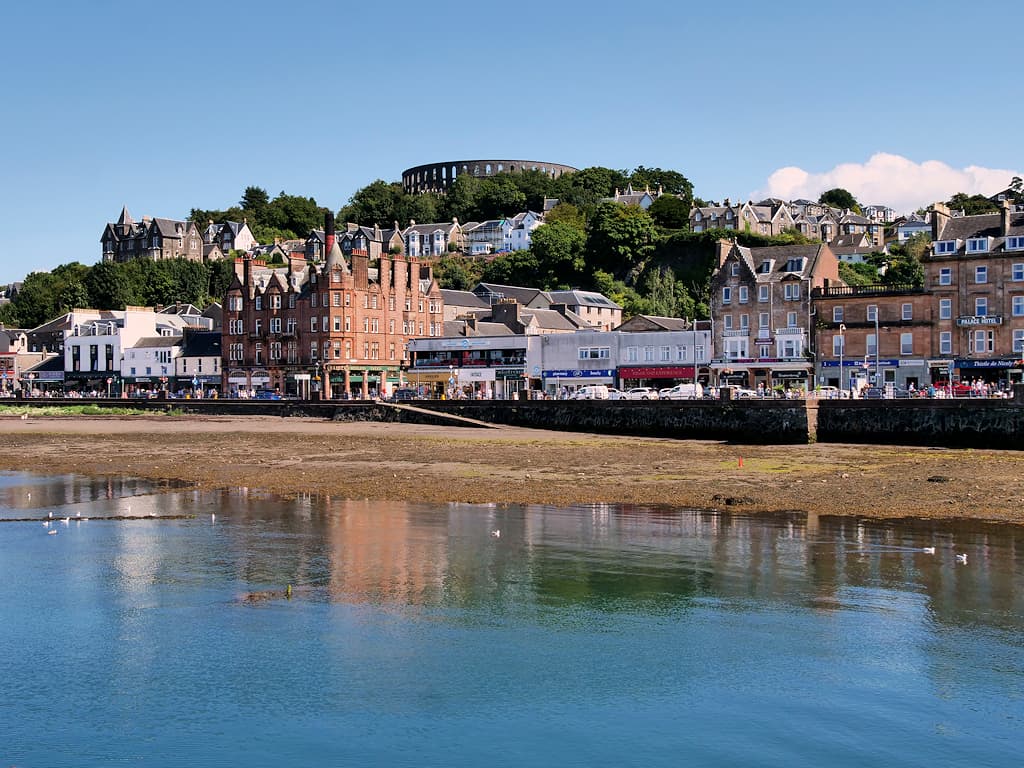 David Dixon / CC BY-SA 2.0, via Wikimedia Commons
“Where the Highlands meet the sea, and every journey begins with a dram.”
Not the postcards. The stories even locals don't know — whispered in your ear, right where they happened.
Beneath the iconic pagoda chimney of Oban Distillery, a secret lies in plain sight, revealing a surprising connection to the town's very foundations.
This Roman Colosseum-esque structure dominates the Oban skyline, but its true purpose was less about ancient empires and more about local prosperity.
The town's name, 'Oban,' sounds distinctly Scottish, yet it shares a surprising linguistic link with a historical form of currency from a faraway land.
Discover every secret of Oban
Every address, every reveal in full — in your ear, right where it happened.
You pick your stops. You walk. The voice reveals what the others miss.
No tours available yet. Check back soon — we're preparing them.
Oban, often called the "Gateway to the Isles," is a lively resort town and seaport on Scotland's west coast, set within the Argyll and Bute council area. Despite its relatively modest population of just over 8,500 residents, it swells considerably during the tourist season, accommodating up to 25,000 people. Its horseshoe-shaped bay, sheltered by the island of Kerrera and offering views toward the Isle of Mull, provides glorious sunsets. The town acts as a crucial transport hub, with ferries departing to many islands of the Inner and Outer Hebrides.
Beyond its role as a ferry port, Oban stands as a destination in its own right, celebrated for its fresh seafood, a well-regarded whisky distillery, and excellent vistas of the Inner Hebrides. The town's strategic location also makes it a convenient base for exploring the castles, glens, lochs, and mountains of the west coast. Whether you seek outdoor adventure, historical discovery, or culinary pleasures, Oban offers a blend of comfort and exploration.
The area around Oban Bay has been inhabited since Mesolithic times, with archaeological evidence of cave dwellers found within the town itself. The strategic significance of the location is further illuminated by Dunollie Castle, which surveys the bay's entrance and has been fortified since the Bronze Age.
Before the 19th century, Oban was a small village with limited industries like fishing, trading, shipbuilding, and quarrying. A significant turning point arrived in 1794 with the establishment of the Oban Distillery, around which the modern town began to coalesce. This development led to Oban's rapid expansion as it started shipping whisky, wool, slate, and kelp to larger ports.
Oban received a royal charter, elevating it to a burgh of barony in 1811. The town's allure grew after Sir Walter Scott's visit in 1814 and the subsequent publication of his poem, The Lord of the Isles, drawing more visitors. In 1833, it was designated a Parliamentary Burgh. The arrival of the Callander and Oban Railway in 1880 further invigorated the town's prosperity, revitalizing local industries and tourism.
During World War II, Oban served as a critical base for Merchant and Royal Navy ships in the Battle of the Atlantic. It also played a role in the Cold War as the landing point for the first Transatlantic Telephone Cable (TAT-1), which carried the "Hot Line" between the US and USSR presidents. Since the 1950s, tourism has become the primary industry, cementing Oban's position as a significant ferry port and a popular destination.
One of Oban's most distinctive landmarks is McCaig's Tower, a large, circular granite structure resembling the Roman Colosseum, visible from much of the town. Construction began in 1897, funded by local banker John Stuart McCaig. His intention was twofold: to provide employment for local stonemasons during economically challenging times and to create a lasting monument for his family. Work ceased in 1902 upon McCaig's death, as his family successfully challenged his will in court, preventing further construction.
Begin your exploration at McCaig's Tower, a prominent, unfinished granite structure offering sweeping views across the bay to Kerrera and Mull. Descend to the waterfront and stroll along the Esplanade, where you can observe ferries, fishing boats, and yachts, and look for seals and otters. The Oban Distillery, one of Scotland's oldest and smallest, stands right in the town center and offers tours and tastings. For a glimpse into local history, visit Dunollie Castle, a ruined 15th-century stronghold of Clan MacDougall, accessible via a walk along the promenade. The adjacent 1745 House Museum details the clan's history. Oban is also the primary gateway for island hopping, with frequent ferry services to destinations like Mull, Iona, Coll, Tiree, Colonsay, and Islay. Consider a day trip to the Isle of Mull, catching a bus to the colorful harbor town of Tobermory. For wildlife enthusiasts, boat trips offer opportunities to spot marine life and visit seal colonies.
The best time to visit Oban stretches from late spring to early autumn (May to September). During these months, the weather is generally milder, with longer daylight hours, making it ideal for outdoor activities and sightseeing. May and September offer a good balance of pleasant weather and fewer crowds compared to the peak summer months of July and August. July is typically the warmest month, with average highs around 15-17°C (59-63°F). While rain is frequent year-round, May is statistically the driest month. Winter offers a quieter experience, with festive events like the Oban Winter Festival in November.
Oban is well-connected by public transport. ScotRail operates services to Oban on the scenic West Highland Line from Glasgow Queen Street, a journey of approximately three hours. The train station is centrally located, adjacent to the ferry terminal. Citylink and West Coast Motors provide bus services connecting Oban to Glasgow and other surrounding areas. The main bus stop is on Shore Street. For those flying, Oban Airport (OBN) is located about 6 miles (9 km) northeast of Oban, near North Connel. It offers scheduled flights to the islands of Coll, Colonsay, Islay, and Tiree, as well as scenic flights. Taxis are available, with ranks in front of the railway station and Station Square; Uber does not operate in Oban. Car hire is available from local companies like Flit and Hazelbank Motors. The local currency is the Great British Pound (GBP).