Nyborg Castle
Before the Great Belt Bridge, traversing between Funen and Zealand was a lengthy affair. Yet, Nyborg Castle's placement was once the very reason for its considerable influence.
Full story unlocks in the tour
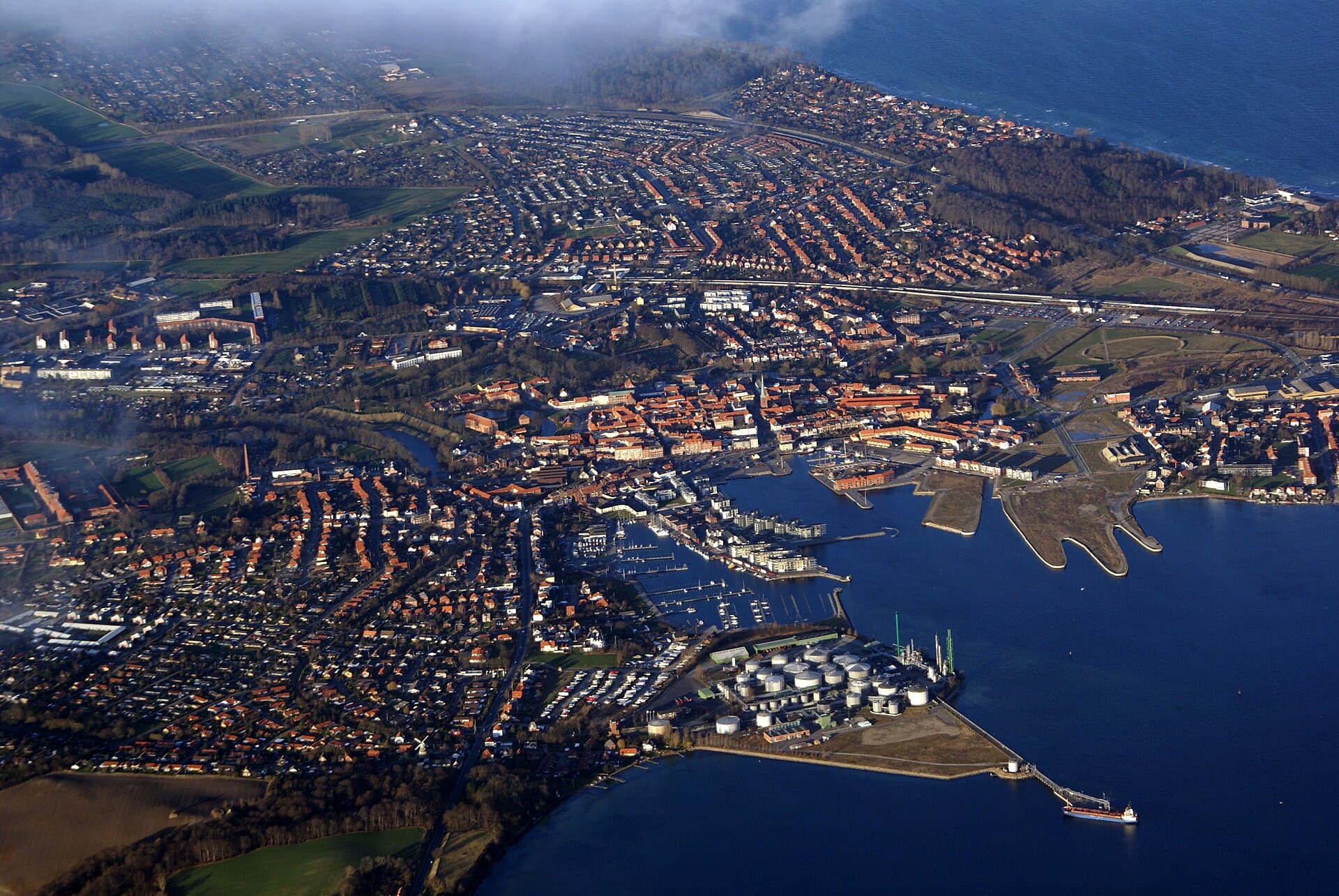 Thue C. Leibrandt / CC BY-SA 3.0, via Wikimedia Commons
“Where Denmark's first constitution was signed, and medieval kings held court.”
Not the postcards. The stories even locals don't know — whispered in your ear, right where they happened.
Before the Great Belt Bridge, traversing between Funen and Zealand was a lengthy affair. Yet, Nyborg Castle's placement was once the very reason for its considerable influence.
The modern marvel of the Great Belt Bridge dramatically shortened travel times, but it also altered how visitors engage with Nyborg.
Nyborg's central market square has a surprisingly dramatic origin, tied directly to royal ambition.
Discover every secret of Nyborg
Every address, every reveal in full — in your ear, right where it happened.
You pick your stops. You walk. The voice reveals what the others miss.
No tours available yet. Check back soon — we're preparing them.
Nyborg, a historic town on the eastern coast of Funen, Denmark, serves as a gateway to the island, greeting travelers arriving via the impressive Great Belt Bridge. With roots stretching back to the 12th century, Nyborg's identity is deeply intertwined with its medieval castle, which was first mentioned in 1193. This strategic location by the Great Belt strait made it a pivotal center for the Danish kingdom, once even serving as a de facto capital.
Today, Nyborg offers a blend of historical depth and coastal allure. The town maintains an intimate atmosphere, inviting leisurely exploration of its ancient streets, half-timbered houses, and well-preserved ramparts. While many travelers might pass through on their way to other Danish destinations, those who linger discover a town that quietly reveals its significant past and offers a serene experience by the water.
The city's historical significance is still palpable, from the imposing presence of Nyborg Castle to the quaint market square. It's a place where the echoes of kings and parliaments resonate, providing a tangible connection to Denmark's foundational history.
Nyborg's origins are inextricably linked to the construction of its namesake castle, Nyborg Castle, around 1193. The town itself was first mentioned in 1202, growing up around this royal fortification. Its strategic position on the Great Belt, controlling the crossing between Funen and Zealand, quickly elevated its importance within the Danish kingdom.
### The Seat of the Danehof From its foundation until 1413, Nyborg Castle was the primary meeting place for the Danehof, Denmark's medieval parliament. This assembly of Danish nobility gathered to decide crucial state matters, effectively making Nyborg the political heart of Denmark during this period. A monumental moment in Danish history occurred here in 1282 when King Eric V Klipping signed Denmark's first constitution, the "Great Charter" (Håndfæstning), within the castle walls, limiting the monarch's power.
### Royal Residence and Fortification Nyborg's royal connections deepened in 1525 when Frederick I declared it his official residence, making it the de facto capital of Denmark until 1560. During this time, Christian III significantly expanded both Nyborg Castle and the town, transforming them into a formidable fortress with a new banqueting hall and a grand tournament ground in front of the castle. The King's Quay was also built, allowing royal entourages to arrive in style.
### Decline and Revival The Dano-Swedish Wars in the mid-17th century took a heavy toll on Nyborg. The city was captured and the castle severely damaged, with many of its buildings later dismantled to construct Odense Palace in 1722. The 1700s marked a low point, exacerbated by fires and plagues. However, the 19th century brought a resurgence as Nyborg became a crucial link across the Great Belt with the introduction of steamboat ferries in 1828, boosting its economy and trade.
### Modern Era and Restoration After serving military purposes until 1913, Nyborg Castle became a museum. Today, it is undergoing extensive restoration and expansion, a project initiated in 2011 to preserve this important cultural heritage and make its history more accessible. The castle is expected to reopen in 2028, with new exhibitions and an interpretation project developed in collaboration with Moesgaard Museum.
The historical heart of Nyborg revolves around its imposing Nyborg Castle. Currently undergoing a significant restoration and expansion project, the castle is set to reopen in 2028. Once completed, visitors will be able to explore its revitalized King's Wing, a new interpretation building, and an elevated Watchtower, offering fresh perspectives on its 800-year history as a royal residence and the seat of Denmark's first parliament, the Danehof.
Adjacent to the castle, the Church of Our Lady (Vor Frue Kirke), a Gothic brick building from the late 14th to early 15th century, stands as another architectural highlight. Its characteristic pointed windows and stepped gables are typical of Danish ecclesiastical architecture of that era. Nearby, Borgmestergården (The Mayor's Yard), a Renaissance merchant's house with its distinctive half-timbered construction, now houses a branch of the Østfyns Museum, offering insights into the lives of wealthy townspeople.
Beyond these central sites, a stroll along Nyborg's well-preserved defensive ramparts provides panoramic views of the city and the Great Belt Strait. In summer, the ramparts also host Nyborg Voldspil, Denmark's oldest open-air theater, featuring musicals and operettas. For those interested in local spirits, Nyborg Destilleri offers tours and tastings of its whisky, gin, and rum.
The most pleasant time to visit Nyborg is during the summer months, from June to August, when temperatures average a comfortable 20–21°C. This period is ideal for exploring historical sites, enjoying walks along the waterfront, and participating in outdoor activities. The city comes alive with festivals and fairs during the summer season. Spring (April and May) and early autumn (September) also offer mild weather, with temperatures ranging from 7°C to 15°C in spring and around 17.8°C in September, making them suitable for walks and cultural events. While precipitation is distributed throughout the year, visitors should be prepared for the possibility of rain in any season.
Nyborg is easily accessible, serving as an important transport hub connecting the island of Funen with Zealand via the Great Belt Bridge. From Copenhagen, direct trains to Nyborg run hourly, with a journey time of approximately 70 to 90 minutes. Buses are also available from Copenhagen, taking around 1 hour and 30 minutes. If flying, Copenhagen Airport (CPH) is the largest international hub, with direct train connections to Nyborg.
Once in Nyborg, the town center is highly walkable, and exploring by bicycle is also a popular option, with well-kept paths. For local information, the tourist office at Torvet 2B provides city maps and guides. Denmark uses the Danish Krone (DKK), and while prices for alcohol and entertainment can be higher than the European average, a range of dining options is available, including harbor-side restaurants. The climate is temperate maritime, so layering clothing is recommended, even in summer, due to potential cool breezes from the Great Belt.