Grazia Deledda's Childhood Home
The childhood home of Italy's only female Nobel laureate in Literature holds a surprising detail about her early writing life.
Full story unlocks in the tour
 Paola Asproni (P900) / CC BY-SA 4.0, via Wikimedia Commons
“Where ancient traditions and artistic spirit intertwine in Sardinia's rugged heart.”
Not the postcards. The stories even locals don't know — whispered in your ear, right where they happened.
The childhood home of Italy's only female Nobel laureate in Literature holds a surprising detail about her early writing life.
Monte Ortobene offers panoramic views and a serene escape, but the grand statue at its summit has a unique, tactile tradition.
The Ciusa Museum showcases the powerful sculptures of Francesco Ciusa, but one of his most significant works has a complicated history involving its destruction and partial reconstruction.
Discover every secret of Nuoro
Every address, every reveal in full — in your ear, right where it happened.
You pick your stops. You walk. The voice reveals what the others miss.
No tours available yet. Check back soon — we're preparing them.
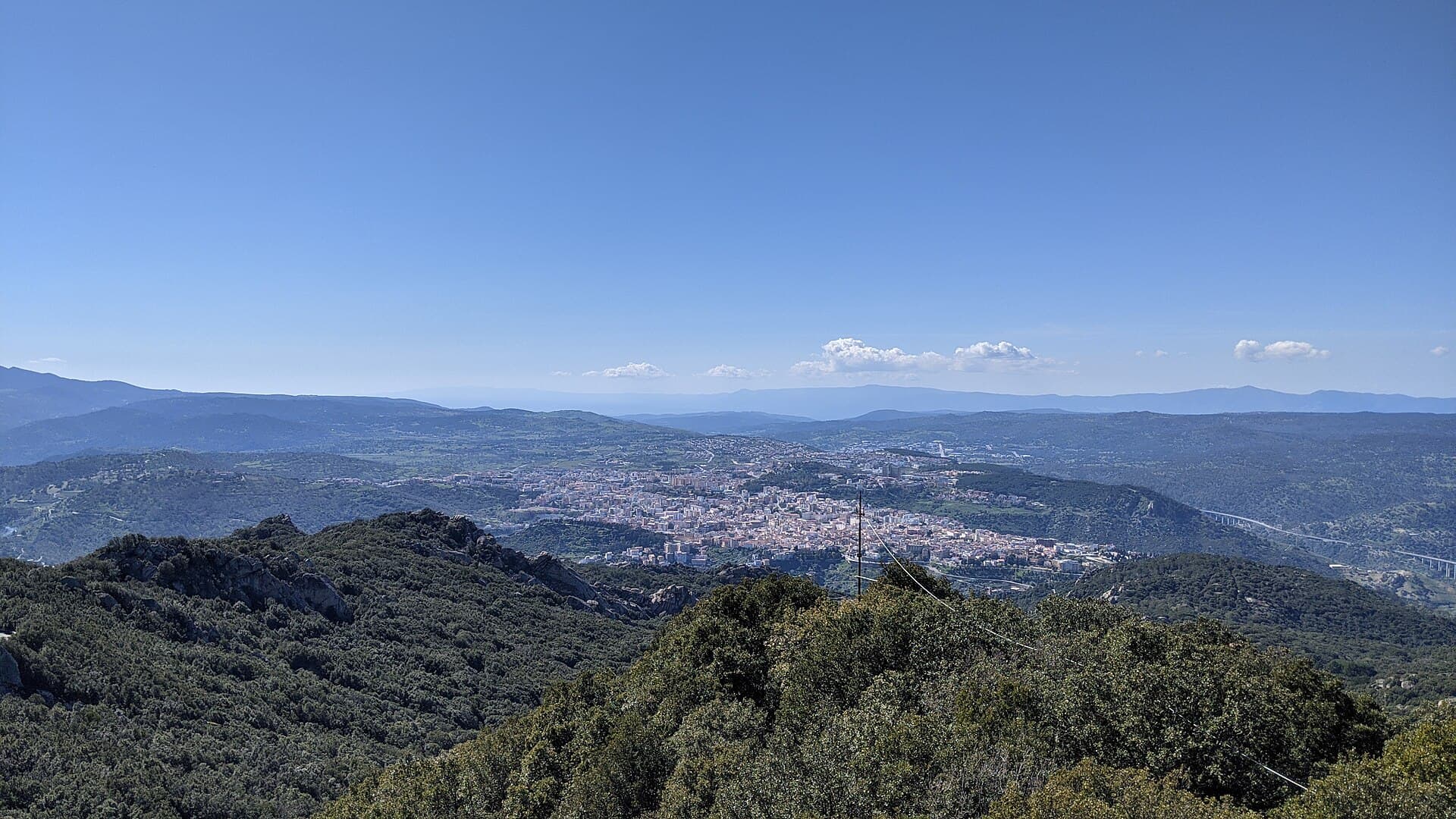
Nuoro, often called the 'Sardinian Athens,' is a city in central-eastern Sardinia, Italy, situated at the base of Monte Ortobene. It stands as a significant cultural center, celebrated for its literary and artistic heritage. This mountainous city offers a glimpse into the authentic heart of Sardinia, far from the coastal resorts, and serves as a gateway to the traditional Barbagia mountain villages.
The city's elevation provides clear, crisp air and expansive views that stretch across valleys to the distant sea. Nuoro's compact center is easily explored on foot, revealing historic streets, inviting eateries, and shops featuring traditional textiles and embroidery. It's a place where culture is woven into daily life, offering a blend of Nordic clarity and Mediterranean warmth.
The Nuoro area holds a deep history, with the earliest traces of human settlement dating back to the third millennium BC. Archaeological discoveries include Domus de Janas, ancient rock-cut tombs, and fragments of ceramics from the Ozieri culture. The region was a significant center of the Nuragic civilization, which thrived in Sardinia from approximately 1500 BC to 250 BC. Over 30 Nuragic sites have been identified, including a village with more than 150 huts near Tanca Manna, just outside Nuoro.
The city was first documented as Nugorus in the 12th century. During the Middle Ages, Nuoro was part of the Judicate of Torres and Arborea. It remained a town of moderate importance through Aragonese and Spanish rule, facing hardship from famine and plague in the late 17th century.
Nuoro's fortunes shifted after its annexation to the Kingdom of Sardinia, becoming an administrative center and earning city status in 1836. A period of significant development followed 1927 when Nuoro was elevated to a provincial capital. This era saw major urban planning, including the construction of notable Fascist-era architecture like the Town Hall and the Palazzo di Giustizia.
Throughout the 19th and 20th centuries, Nuoro cultivated a lively cultural fervor, earning it the moniker 'Sardinian Athens.' It became home to influential artists, poets, painters, and sculptors, including Nobel laureate Grazia Deledda, poet Sebastiano Satta, and sculptor Francesco Ciusa, whose works significantly impacted Italian art in the 1900s.
Begin your exploration in Nuoro's historic center, characterized by its medieval layout, narrow streets, and traditional stone houses. Wander through the ancient quarters of Seuna and San Pietro, connected by Via Garibaldi, a lively pedestrian street lined with shops and cafes.
Nuoro is a city of museums. The Sardinian Ethnographic Museum (Museo della Vita e delle Tradizioni Popolari Sarde) is a comprehensive institution showcasing traditional Sardinian life, including costumes, tools, and musical instruments. The Grazia Deledda Museum, housed in the Nobel laureate's childhood home, offers a glimpse into late 19th to early 20th-century life in Nuoro, furnished as it would have been during her time. For art enthusiasts, the MAN Art Museum (Museo d'Arte Provincia di Nuoro) presents rotating exhibitions of 20th-century Sardinian artists and contemporary works. The Ciusa Museum is dedicated to the renowned Nuorese sculptor Francesco Ciusa, displaying his powerful bronze sculptures, including 'The Return' and 'The Mother of the Killed.'
Outside the city center, a short drive leads to Monte Ortobene, a granite peak offering expansive views of Nuoro and the surrounding valleys. At its summit stands the 7-meter-high bronze statue of Christ the Redeemer. The mountain also features parks like Sedda Ortai and archaeological sites with Domus de Janas tombs.
The best times to visit Nuoro are from mid-April to mid-June and from September to early October, when the weather is generally pleasant and mild. Summers, from June to August, are hot and sunny, with temperatures sometimes reaching 38-40°C (100-104°F), making it ideal for those who enjoy warm weather and outdoor activities like hiking. The city also hosts the Sagra del Redentore festival at the end of August, a lively event with religious processions and traditional folk performances. Winters, from December to February, are mild with alternating sunny and rainy periods, and temperatures ranging from 5-12°C (41-54°F).
Nuoro is accessible by bus from major Sardinian cities like Cagliari, Olbia, and Sassari, and a train line connects it to Macomer. However, renting a car is highly recommended for exploring the city and its surrounding Barbagia region, offering flexibility for day trips to nearby villages and natural sites. Within Nuoro, the city center is pedestrian-friendly, making it enjoyable to explore on foot. Local buses also provide convenient transportation around the city.
Accommodation options include hotels and bed & breakfasts, many located in the central area. When packing, comfortable walking shoes are essential for navigating the city's streets and mountain trails. Even in milder seasons, a light jacket can be useful for evenings or higher altitudes. For summer visits, sunscreen, sunglasses, and a hat are advisable, especially if planning coastal excursions.