Dai-ichi Takimotokan
This celebrated ryokan, a cornerstone of Noboribetsu, began with a deeply personal struggle for healing.
Full story unlocks in the tour
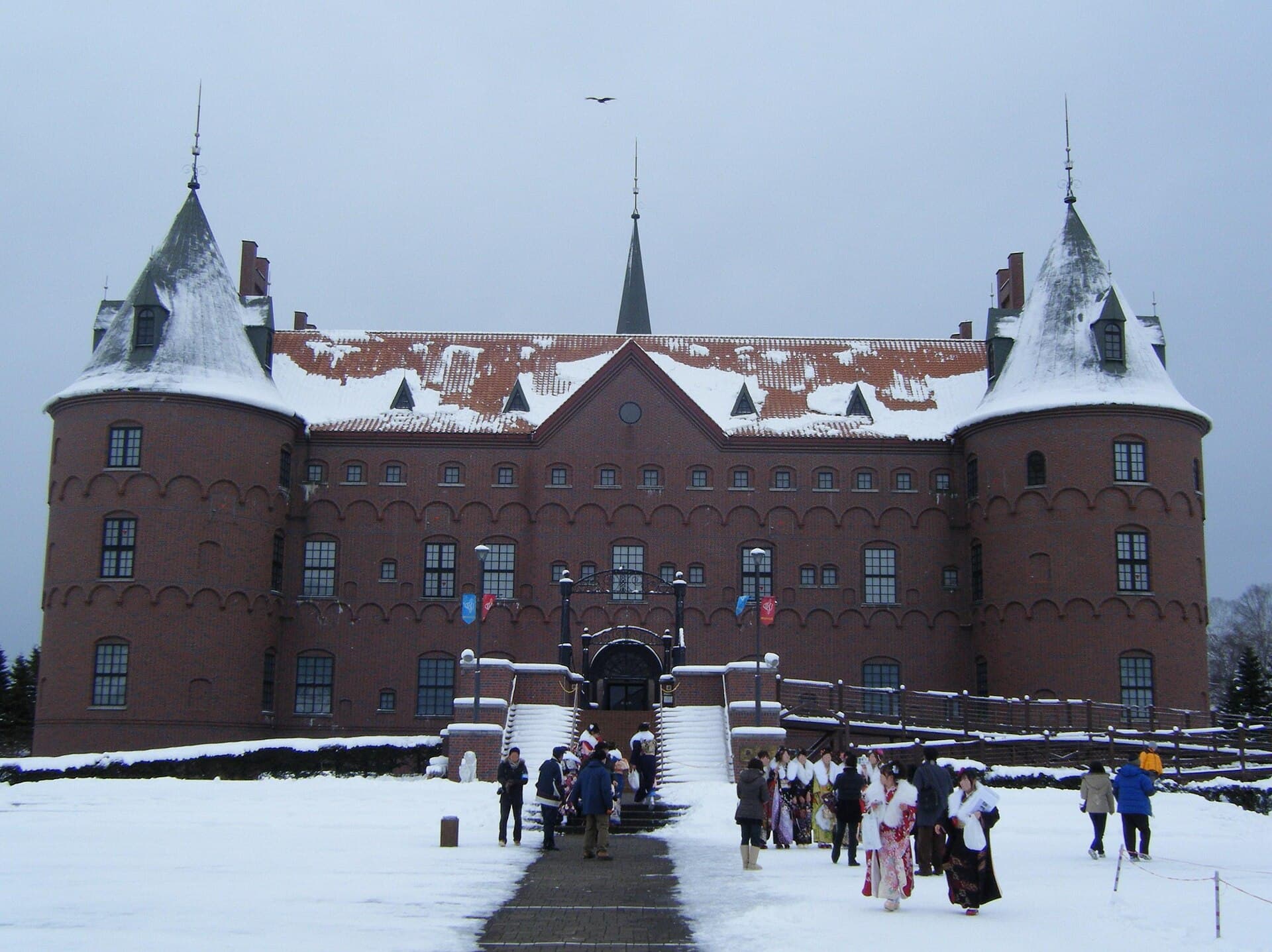 User:欅 / CC BY-SA 3.0, via Wikimedia Commons
“Where the earth breathes fire, and ancient spirits guard healing waters.”
Not the postcards. The stories even locals don't know — whispered in your ear, right where they happened.
This celebrated ryokan, a cornerstone of Noboribetsu, began with a deeply personal struggle for healing.
After traversing the dramatic 'Hell Valley,' a unique reward awaits within a forest stream, blending nature's embrace with therapeutic warmth.
Beyond the dramatic landscapes, lively figures are dispersed throughout town, serving as protectors with an intriguing origin.
Discover every secret of Noboribetsu
Every address, every reveal in full — in your ear, right where it happened.
You pick your stops. You walk. The voice reveals what the others miss.
No tours available yet. Check back soon — we're preparing them.
Noboribetsu, a city in Hokkaido, Japan, stands as one of the nation's foremost hot spring destinations. The town of Noboribetsu Onsen, situated inland from the main city, functions as a center of geothermal activity and therapeutic waters. This area, a part of Shikotsu-Toya National Park, is characterized by a striking volcanic landscape, featuring steaming vents, bubbling hot springs, and sulfurous streams.
The name Noboribetsu itself originates from the Ainu word 'Nupur-pet,' meaning 'cloudy river' or 'river of deep color,' a reference to the milky appearance of the river waters once tinted by the mineral-infused hot springs. This distinctive environment has drawn visitors for centuries, from the indigenous Ainu people who utilized the springs for medicinal purposes, to contemporary travelers seeking relaxation and rejuvenation. The town presents a singular blend of natural marvels, traditional Japanese hospitality, and whimsical local folklore centered around its 'hellish' volcanic features and protective demons.
Noboribetsu Onsen is readily accessible, making it a favored destination for both day excursions and overnight stays. Whether exploring the dramatic Hell Valley, bathing in one of the nine distinct types of mineral-rich hot springs, or delving into the local culture, Noboribetsu offers an experience that lingers in memory.
The history of Noboribetsu is deeply woven with the indigenous Ainu people, who inhabited Hokkaido long before Japanese settlers arrived. The Ainu recognized and employed the hot springs for their medicinal qualities, a practice that predates recorded Japanese settlement. The very name 'Noboribetsu' is derived from the Ainu term 'Nupur-pet,' meaning 'cloudy river' or 'river of deep color,' referring to the hot springs coloring the river waters a milky white.
The official establishment of a modern settlement began during the Meiji era (1868-1912). However, the onsen's development can be traced back to the Edo period (1603-1868). In 1857, an Omi merchant named Hanbei Okada, who was mining sulfur in Jigokudani, constructed a bathhouse for common laborers. A pivotal moment occurred in 1858 when Kinzo Takimoto, a carpenter, established the first onsen inn, which would evolve into the celebrated Dai-ichi Takimotokan. He built this facility after his wife, Sata, found a miraculous remedy for her severe skin condition by bathing in the local hot springs.
News of the hot springs' healing properties spread swiftly, and Noboribetsu gained national recognition. During the Russo-Japanese War (1904-1905), the springs were even utilized as a recovery site for wounded and ill soldiers, further solidifying their reputation as a therapeutic destination. Infrastructure development, including the completion of a road connecting the coast to the mountain hot springs area in 1891 and the launch of a horse-drawn railway line in 1915 (later modernized), significantly eased access for travelers.
In 1953, Kinzo Takimoto's descendants renamed their inn to Dai-ichi Takimotokan in his honor, preserving the history and heritage of the hot spring destination. The city of Noboribetsu was formally incorporated in 1970, evolving from earlier villages and towns. Today, Noboribetsu continues its legacy, drawing millions of visitors annually to its diverse and restorative hot springs.
The primary attraction in Noboribetsu is Jigokudani, or "Hell Valley," a dramatic volcanic crater that serves as the main source of the town's hot spring waters. Here, visitors can explore a landscape of steaming vents, bubbling pools, and sulfurous streams using a network of boardwalks and hiking trails.
Beyond Hell Valley, a walk along forest trails leads to Oyunuma Pond, a sulfuric pond with a milky appearance, and the Oyunumagawa Natural Footbath, where one can soak feet in warm, mineral-rich river water. For a glimpse into the region's wildlife, the Noboribetsu Bear Park, accessible by ropeway, offers an opportunity to observe Hokkaido's brown bears. The Noboribetsu Date Jidaimura is a historical theme park that recreates an Edo-period town, featuring performances by ninja and samurai.
Throughout Noboribetsu Onsen town, you will encounter colorful 'oni' (Japanese demon) statues, which are considered protectors of the hot springs. During the summer, the Noboribetsu Hell Festival celebrates this folklore with parades and performances. For marine life enthusiasts, the Noboribetsu Marine Park Nixe, designed like a Danish castle, houses an aquarium with various sea creatures and daily shows.
Noboribetsu welcomes visitors throughout the year, with each season offering a distinctive atmosphere. Winter (December–March) is especially favored, as the snow-covered landscape creates a magical contrast with the rising steam from the hot springs, and outdoor onsen bathing becomes particularly enjoyable. Autumn (late September to October) presents a spectacular display of red and gold foliage around Hell Valley. Spring and summer provide lush greenery, comfortable hiking weather, and fewer crowds, with summer also bringing local festivals and fireworks.
Noboribetsu Onsen, located in Hokkaido, benefits from excellent public transport connections. From Sapporo, travelers can take the JR Limited Express Hokuto or Suzuran to JR Noboribetsu Station (approximately 75-90 minutes). From there, a local Donan bus journey of about 15 minutes reaches the Noboribetsu Onsen bus terminal, conveniently located near most hotels and attractions. Direct buses from Sapporo Station are also available, taking about two hours. New Chitose Airport is approximately 70 kilometers away, offering direct train or bus connections to Noboribetsu.
Accommodation options range from luxurious ryokan (traditional Japanese inns) to more economical hotels. Booking in advance is advisable, particularly during peak seasons. When visiting in winter, appropriate footwear is essential due to potentially icy boardwalks. It is also wise to carry some cash for bus fares and smaller purchases. The Noboribetsu Tourist Association provides maps and helpful pamphlets.