The Arena of Nîmes
This ancient amphitheater held gladiatorial contests, but its post-Roman life was even more surprising.
Full story unlocks in the tour
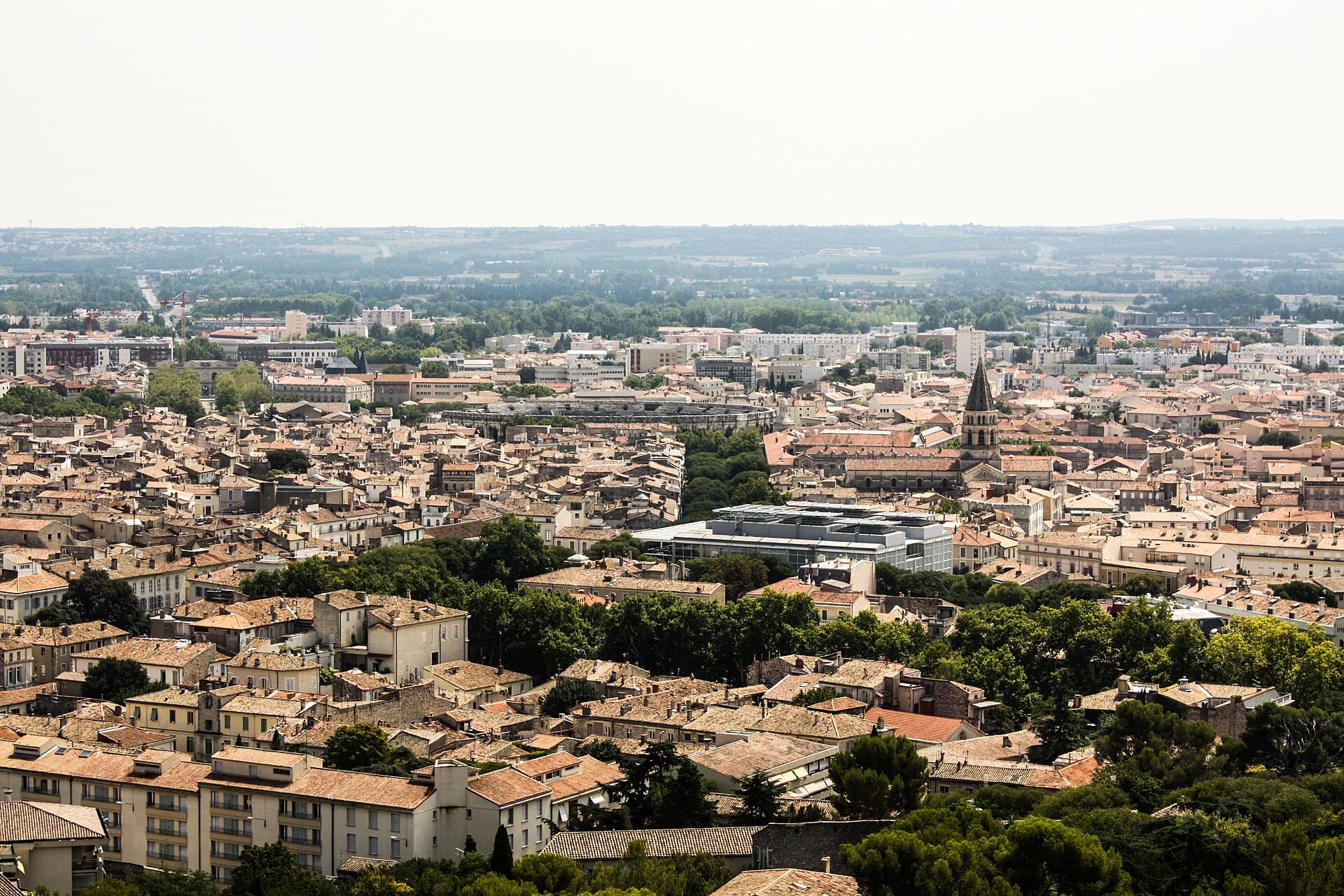 Shadowgate from Novara, ITALY / CC BY 2.0, via Wikimedia Commons
“Where Roman grandeur meets modern Provençal charm.”
Not the postcards. The stories even locals don't know — whispered in your ear, right where they happened.
This ancient amphitheater held gladiatorial contests, but its post-Roman life was even more surprising.
Nîmes' distinctive symbol—a crocodile chained to a palm tree—has a surprising origin story tied to a major historical event.
The fabric that became globally famous for blue jeans actually has its roots in this southern French city.
Discover every secret of Nîmes
Every address, every reveal in full — in your ear, right where it happened.
You pick your stops. You walk. The voice reveals what the others miss.
No tours available yet. Check back soon — we're preparing them.
Nîmes, affectionately known as 'the French Rome,' is a compelling city in the Occitanie region of southern France. It is celebrated for its remarkably preserved Roman monuments and a relaxed Mediterranean atmosphere. With its sun-drenched squares, terracotta rooftops, and leafy esplanades, Nîmes invites visitors to explore the grandeur of its Roman past alongside the rhythm of contemporary life. It's a city where the echoes of ancient civilizations harmonize with chic cafés and lively markets, offering a distinct blend of cultural depth and southern French allure.
Beyond its ancient heritage, Nîmes presents a dynamic contemporary scene. This is a city where one can savor rosé beside a Roman arena, wander through pedestrian streets, and discover that the very word 'denim' has roots in its textile history. Nîmes is a destination that combines historical resonance with a welcoming ambiance, making it an ideal base for exploring the wider Gard department and nearby attractions like the Pont du Gard.
The history of Nîmes reaches back to the 6th century BCE, when the Celtic tribe of the Volcae Arecomici established a fortified settlement around a sacred spring. They venerated a water god named Nemausus, from whom the city eventually derived its name. The true flourishing of Nîmes commenced with the arrival of the Romans. In 121 BCE, the Gaulish tribe submitted to Rome, and the city became a Roman colony, Colonia Nemausus, sometime before 28 BCE. Veterans of Julius Caesar's legions, particularly those from his Nile campaigns, were granted land in the plain of Nîmes, contributing to the city's rapid expansion.
Emperor Augustus initiated a major construction program in Nîmes, transforming it into a vital hub along the Via Domitia, the ancient Roman road connecting Italy to Spain. This strategic location facilitated the flow of goods, culture, and power, making Nîmes a crucial point in the vast Roman network. During this period, monumental structures like the Nîmes Amphitheater, the Maison Carrée temple, and the Pont du Gard aqueduct were constructed, tangible proof of Nîmes' significance as a Roman colony. The city was organized around the cardo and decumanus, intersecting at the forum, and held a population estimated at 50,000–60,000, a number it would not reach again until the mid-19th century.
Following the decline of the Roman Empire, the city experienced successive barbarian invasions, slowing its development. The Arena, originally designed for gladiatorial shows, was repurposed as a fortress by the Visigoths in the 5th century and later housed an entire community. By the 16th century, Nîmes became a significant Protestant stronghold in France, a period marked by religious tensions and events like the Michelade in 1567. Despite these upheavals, order was restored, and Nîmes diversified its industries.
The 17th and 18th centuries saw Nîmes flourish as a textile industry center. The city became known for producing a sturdy cotton fabric called 'serge de Nîmes,' which eventually gave rise to the word 'denim.' This textile innovation later served as the basis for modern blue jeans. In the 1730s, to address water shortages for its growing textile manufacturers, the ancient Nemausus spring was excavated, leading to the creation of France's first public gardens, the Jardins de la Fontaine.
Today, Nîmes continues to celebrate its profound heritage while embracing modern life. The city's Roman monuments are exceptionally preserved and integrated into its daily fabric. In September 2023, the Maison Carrée was recognized as a UNESCO World Heritage site. The city is also a lively cultural center, hosting festivals, concerts, and events, often within its ancient arenas. Nîmes seamlessly blends its Roman grandeur with contemporary culture, offering a distinct and authentic experience in the south of France.
Nîmes offers an abundance of sights, primarily centered around its remarkably preserved Roman heritage. The Arènes de Nîmes is an awe-inspiring Roman amphitheater, one of the best-preserved in the world. Constructed in the 1st century AD, it once held 24,000 spectators for gladiator contests and spectacles, and still hosts concerts and events today. An audio tour allows you to explore its corridors and learn about its history.
The Maison Carrée, a Roman temple from the late 1st century BCE, stands as one of the finest surviving examples of Roman temple architecture globally, dedicated to Gaius and Lucius Caesar. It was designated a UNESCO World Heritage site in September 2023. Nearby, the Jardins de la Fontaine are France's first public gardens, created in the 18th century around the ancient sacred spring that first drew Romans to the area. Within the gardens, you will find the ruins of the Temple of Diana and the Tour Magne, a Celt-Roman tower offering sweeping city views.
Do not miss the Musée de la Romanité, a modern archaeological museum across from the Arena, with a rooftop terrace providing expansive views of the city's ancient landmarks. The Pont du Gard, a UNESCO-listed Roman aqueduct, is a short trip outside the city, an extraordinary feat of engineering that once supplied water to Nîmes. For a taste of local life, explore the Nîmes Old Town with its pedestrian streets, appealing squares, and the Place du Marché featuring the crocodile fountain.
The best times to visit Nîmes are during spring (April–June) and early autumn (September–October). During these months, the weather is warm and pleasant, ideal for exploring the city's outdoor attractions without the intense heat of summer. Summers (July–August) can be very hot, with temperatures often exceeding 30°C (86°F), but the city comes alive with festivals and events, including the Festival de Nîmes concerts in the Roman amphitheater. Winter is generally mild, offering a quieter experience for museum visits.
Nîmes is easily accessible by train, with the central SNCF station just a five-minute walk from the Arena. High-speed TGV services connect Nîmes to major French cities, including Paris in under three hours. Nîmes-Alès-Camargue-Cévennes Airport (FNI) is located 9 kilometers from the city center, with shuttle bus services and taxis available. The city center is compact and very walkable, making it easy to explore most monuments on foot.
Consider purchasing the Nîmes City Pass, which offers free access to the three Roman monuments (Arena, Maison Carrée, Tour Magne), the Roman Museum, and other cultural sites. The 4- and 7-day versions also include access to the Pont du Gard. For dining, Nîmes offers a delicious mix of Mediterranean and regional flavors, with local specialties like brandade de morue (salt cod purée) and gardiane de taureau (bull meat stew). Many restaurants have outdoor terraces, perfect for warm evenings.