Parnidis Dune
The Parnidis Dune holds a unique sundial, its placement a quiet acknowledgment of a constant, subtle battle.
Full story unlocks in the tour
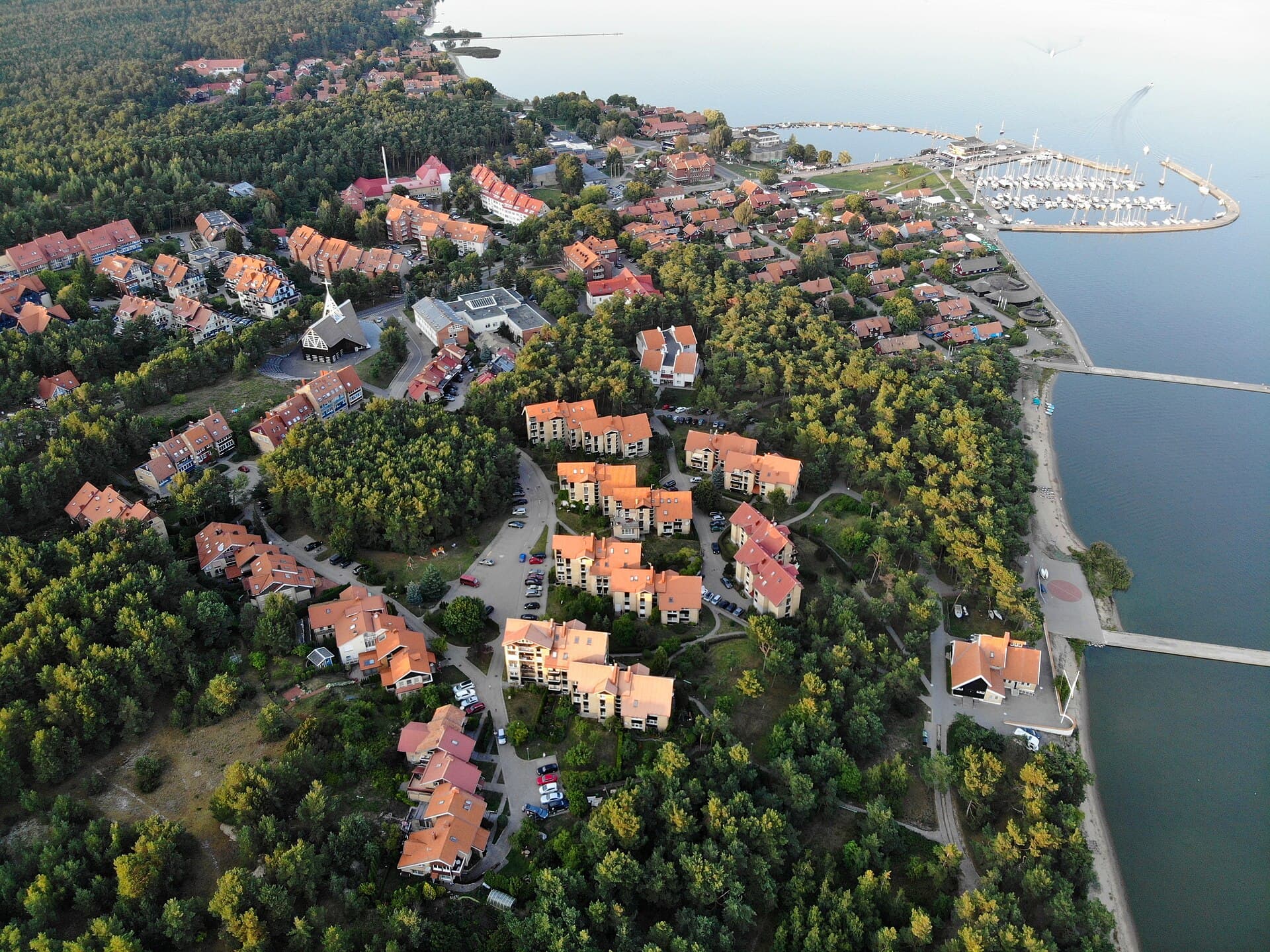 LinasD / CC BY-SA 4.0, via Wikimedia Commons
“Where shifting sands meet ancient pines and quiet traditions.”
Not the postcards. The stories even locals don't know — whispered in your ear, right where they happened.
The Parnidis Dune holds a unique sundial, its placement a quiet acknowledgment of a constant, subtle battle.
This slender strip of land is shared by two nations, a rare geographical and political arrangement.
Beyond their scenic beauty, Nida's surrounding forests offer a particular allure for locals as autumn arrives.
Discover every secret of Nida
Every address, every reveal in full — in your ear, right where it happened.
You pick your stops. You walk. The voice reveals what the others miss.
No tours available yet. Check back soon — we're preparing them.
Nida, a tranquil resort settlement on the Curonian Spit, offers a singular blend of natural grandeur and cultural legacy. This slender, 98-kilometer ribbon of sand dunes and pine forests separates the Curonian Lagoon from the Baltic Sea, forging a distinctive landscape. The town itself is marked by traditional wooden houses, adorned with colorful ethnographic motifs and flying Curonian pennants, reflecting its origins as a fishing village.
Known for its expansive white-sand beaches and towering sand dunes—some reaching up to 60 meters—Nida provides a serene escape. It is a place where the forces of sea, wind, and human activity have ceaselessly sculpted the environment, leading to both striking vistas and a history of endurance against the encroaching sands. The Curonian Spit, including Nida, was recognized as a UNESCO World Heritage Site in 2000 for its authentic features and the persistent efforts to preserve its unique ecosystem.
While a small town with around 1,500 permanent residents, Nida draws hundreds of thousands of visitors annually, particularly during the summer months. Its appeal lies in its unspoiled nature, opportunities for outdoor activities, and a relaxed atmosphere that attracts visitors from Lithuania, Germany, and beyond.
Nida's story is deeply interwoven with the shifting sands and the various geopolitical shifts that have shaped the Curonian Spit. The area was first settled by the Baltic tribe known as Curonians, with the settlement itself first noted in 1385 by the Teutonic Knights, who governed the region during the 14th century. The name "Nida" itself is thought to derive from an Old Prussian word meaning "fluent," likely referencing the drifting sands.
Throughout its existence, Nida has been compelled to relocate multiple times due to the relentless advance of sand dunes, which consumed earlier settlements. For instance, the original settlement was situated about 5 kilometers south of its current location. In the early 18th century, the old settlement was covered by the Parnidis dune, prompting the village to be moved to its present site in the 1730s.
Politically, Nida has experienced a complex journey. In the 15th century, the region was incorporated into the Kingdom of Poland. After the Thirteen Years' War, it was held by the Teutonic Knights until 1525, then by Ducal Prussia. It became part of the Kingdom of Prussia in the 18th century and later the German Empire in 1871. During this period, Nida was the largest village on the Curonian Spit, with both Lithuanian and German-language church services.
After World War I, Nida and the northern half of the Curonian Spit became part of the Klaipėda Region under the 1919 Treaty of Versailles, and subsequently incorporated into Lithuania in 1923. Despite this, it remained a predominantly German settlement until after World War II, when the German population was largely evacuated or expelled. Following the war, Nida became part of Soviet-occupied Lithuania and was developed as a private holiday resort for party officials, which inadvertently contributed to the preservation of its older buildings. In 1961, Nida became the administrative center of the Neringa municipality, which also includes the settlements of Juodkrantė, Pervalka, and Preila. In 2000, the Curonian Spit, including Nida, was designated a UNESCO World Heritage Site, recognizing its singular cultural and natural importance.
Nida offers a range of sights that illuminate its natural environment and cultural heritage. The Parnidis Dune is a prominent attraction, standing at 52 meters high and featuring a large astronomical sundial at its summit. From its observation deck, visitors can witness both the sunrise and sunset, and even glimpse into nearby Russia. The Parnidis Cognitive Path provides a structured way to explore this dune landscape.
The Nida Beach is a pristine expanse of white sand, often described as one of the finest in Northern Europe, offering ample space for relaxation and walks. A stroll along the Nida Promenade by the Curonian Lagoon offers scenic views and access to cafes. For a deeper immersion into local history, the Thomas Mann Memorial Museum is housed in the Nobel Prize-winning author's former summer residence, offering insights into his life and work. The Ethnographic Fisherman's Museum provides a glimpse into the traditional fishing way of life. Other places of interest include the Nida Lighthouse on Urbas Hill, which can be ascended in summer for panoramic views, and the Amber Gallery – Museum. Exploring Nida by bike is also popular, with paths winding through pine forests and along the lagoon.
The ideal time to visit Nida for warm-weather activities is from early July to late August, when temperatures are agreeable for swimming and outdoor pursuits. This period also marks the peak season, with lively festivals and extended daylight hours. However, for those seeking a quieter experience with fewer crowds, late May and September offer mild weather, colorful landscapes, and opportunities for birdwatching. While many attractions may close in the off-season, Nida in winter presents a stark, quiet beauty with snow-dusted dunes, appealing to those who prefer solitude.
To reach Nida, travelers typically first arrive in Klaipėda, Lithuania's third-largest city. From Klaipėda, a ferry crosses the Curonian Lagoon to Smiltynė. There are two ferry terminals in Klaipėda: the Old Ferry Terminal for pedestrians and cyclists, and the New Ferry Terminal for vehicles, pedestrians, and cyclists. Once across, an hourly bus service connects Smiltynė to Nida, with the journey taking less than two hours. Intercity buses also travel to Nida from cities like Kaunas and Vilnius.
Nida is a town best explored on foot or by bicycle, with rentals readily available. While many sights can be seen in a single day, a stay of two to three days is suggested to fully experience the area and its surrounding villages. It is advisable to reserve accommodation in advance, especially during the summer season. For those interested in local cuisine, smoked fish is a regional delicacy.