The Grotto beneath the Basilica of the Annunciation
Imagine a time before grand basilicas, when life unfolded in simple rock-cut dwellings. What unexpected discovery lies beneath Nazareth's most iconic church?
Full story unlocks in the tour
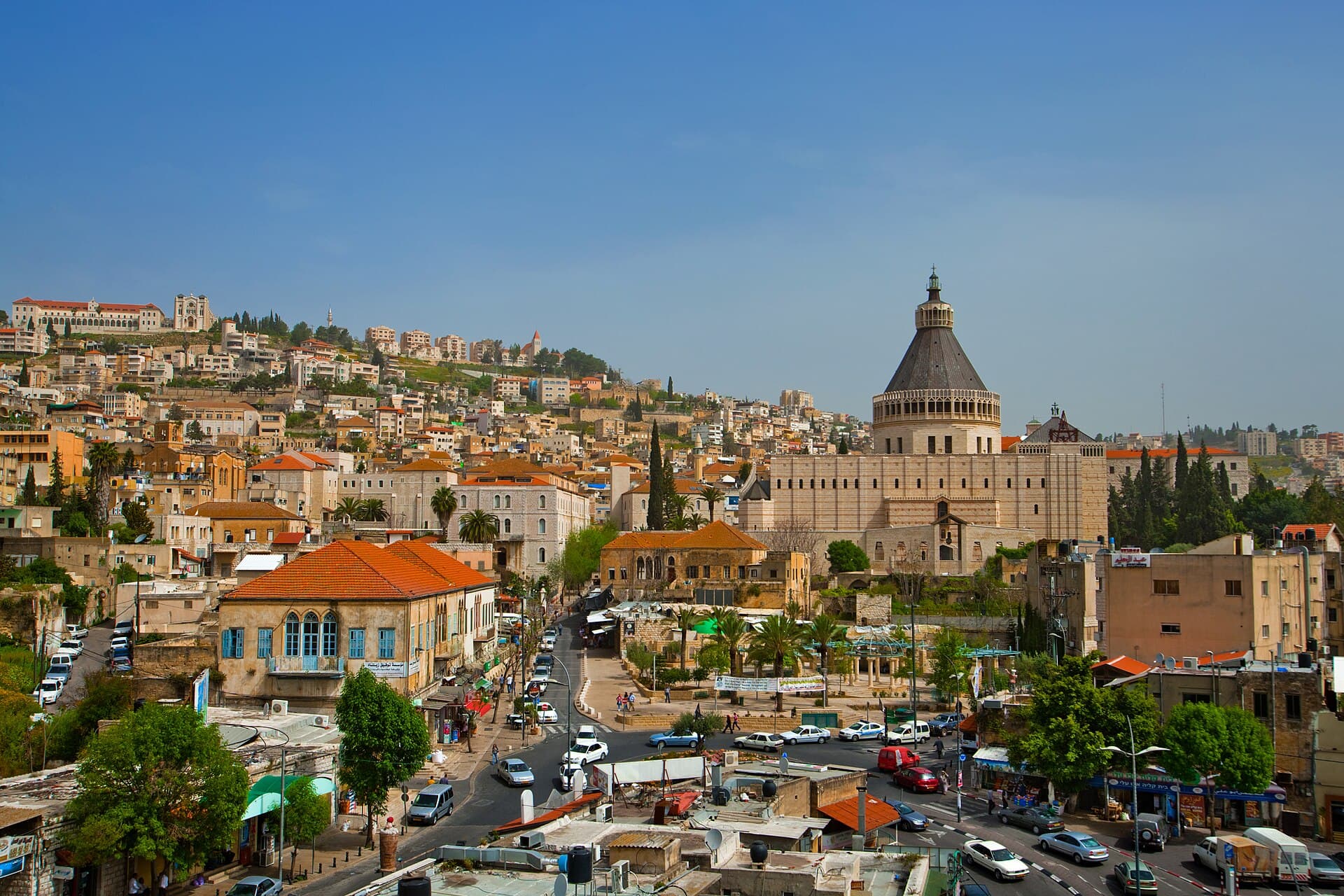 Israel_photo_gallery / CC BY-SA 2.0, via Wikimedia Commons
“Where ancient echoes meet lively life, Nazareth invites you to walk through layers of history and faith.”
Not the postcards. The stories even locals don't know — whispered in your ear, right where they happened.
Imagine a time before grand basilicas, when life unfolded in simple rock-cut dwellings. What unexpected discovery lies beneath Nazareth's most iconic church?
Before it became a renowned pilgrimage site, Nazareth was a small, unassuming village. What did its residents do to protect themselves and their livelihoods in uncertain times?
Beyond the spices and crafts, the Old City Market holds a secret about Nazareth's recent transformation. What unexpected partnership helped revive this historic city?
Discover every secret of Nazareth
Every address, every reveal in full — in your ear, right where it happened.
You pick your stops. You walk. The voice reveals what the others miss.
No tours available yet. Check back soon — we're preparing them.
Nazareth, situated in the Lower Galilee region of northern Israel, is a city that resonates with profound historical and religious significance. Known as the boyhood home of Jesus, it draws pilgrims and curious travelers from across the globe. Today, Nazareth is Israel's largest Arab city, a lively hub where a Muslim majority and a significant Christian minority coexist, creating a singular cultural blend.
Beyond its spiritual allure, Nazareth offers an animated atmosphere with active markets, old churches, and a deep culinary scene. The city's narrow, winding streets invite exploration, revealing layers of history from its origins as an agricultural village in the Middle Bronze Age to its current role as an economic and cultural center. It's a place where ancient traditions meet modern life, providing a captivating experience for every visitor.
## From Ancient Village to Christian Center Nazareth's history stretches back to the Middle Bronze Age, with archaeological discoveries including tombs from the Iron Age to the Hasmonean era. However, it was during the Roman and Byzantine periods that Nazareth emerged as a Jewish village, famously associated with Jesus' childhood and early life. The New Testament first mentions Nazareth, describing it as the home of Mary and the site of the Annunciation, where the angel Gabriel announced to Mary that she would give birth to Jesus.
Despite its biblical importance, Nazareth was considered an insignificant village in its time, not mentioned in the Old Testament or early rabbinic literature. The question, "Can anything good come out of Nazareth?" (John 1:46), reflects its obscure status. Archaeological evidence suggests the first-century settlement was a small agricultural community of perhaps 400 to 1,000 people, with houses and storage pits carved into the bedrock.
## Crusader Era and Ottoman Decline Christian influence in Nazareth grew after Christianity became the state religion of the Roman Empire in 313 CE. The first Christian holy places in Nazareth are mentioned after this period, with the town well (now St. Mary's Well) being the only site definitively identified as dating back to New Testament times. During the Crusades, Nazareth became a significant city. In 1099, the Norman-Sicilian crusader Tancred captured Galilee and established Nazareth as his capital, the Principality of Galilee. However, after the Crusaders' expulsion from Palestine in 1291, Christian influence waned, and the Ottoman Turks expelled all Christians from the city in the early 16th century.
## Revival and Modern Nazareth Christians were only permitted to return to Nazareth under Fakhr ad-Dīn II, emir of Lebanon, between 1590 and 1635. In the 18th century, Daher al-Umar further transformed Nazareth into a larger town by encouraging immigration. Today, Nazareth is the largest Arab city in Israel, serving as a cultural, political, religious, economic, and commercial center for Arab citizens. It is predominantly Muslim, with a substantial Christian minority, fostering a unique interreligious coexistence. The city has seen significant development, with a focus on tourism and infrastructure, transforming it from a day-trip destination into a place where visitors are encouraged to stay and explore its deep heritage.
Nazareth offers a compelling array of sites that blend religious history with local culture. The Basilica of the Annunciation stands as the city's most iconic landmark, built over the grotto where, according to Christian tradition, the Angel Gabriel appeared to Mary. This modern basilica showcases impressive architecture and mosaics from Christian communities worldwide.
Adjacent to the Basilica is St. Joseph's Church, believed to be built over the carpentry workshop of Joseph. For a different perspective on the Annunciation, visit the Greek Orthodox Church of the Annunciation, also known as St. Gabriel's Church, which is built over an underground spring, traditionally believed to be where Mary was fetching water when she received the news. This spring still feeds Mary's Well, a historic public fountain in the city.
Immerse yourself in first-century life at Nazareth Village, an open-air museum that recreates a Galilean village from Jesus' time with period-dressed actors and ancient farming techniques. Explore the maze-like alleys of the Nazareth Old City Market (Souq), a sensory experience filled with spices, traditional fabrics, and local crafts. For sweeping views of Nazareth and the Jezreel Valley, ascend Mount Precipice, also known as the Mount of the Leap, a site with biblical significance.
The best times to visit Nazareth are during the spring (February–April) and autumn (October–December). These seasons offer pleasant temperatures, blooming landscapes, and fewer crowds than the peak summer months. Summers (June-October) in Nazareth can be hot, with August being the hottest month, averaging 87°F (31°C). Winters (December-March) are cooler and wetter, with January being the coldest and rainiest month, averaging 45°F (7°C) and 3.3 inches of rain. If you're planning a trip around religious holidays, be aware that many Christian sites may close on Friday afternoons and reopen on Sunday, and Jewish festivals can bring crowds or temporary shutdowns.
Getting to Nazareth is straightforward, with intercity buses connecting from major cities like Jerusalem, Tel Aviv, and Haifa to Nazareth Central Bus Station. From there, the Old City is an uphill walk or a short taxi ride. The Old City itself is best explored on foot, so comfortable shoes are essential for navigating its winding paths. If driving, it's advisable to park outside the Old City due to narrow lanes.
Nazareth operates on the New Israel Shekel (NIS), and while major credit cards are widely accepted, it's useful to carry some cash for smaller purchases in the souq. Tipping 10-15% is customary in restaurants if a service charge isn't included, and a small tip for hotel porters is appreciated. Israel uses 220 volts AC 50 Hz electricity, so travelers from countries with different standards will need a converter and adapter. Tap water is generally safe to drink.