Ofotfjorden
Beneath the tranquil surface of the Ofotfjord, a silent fleet lies in wait, a testament to a pivotal moment in global conflict.
Full story unlocks in the tour
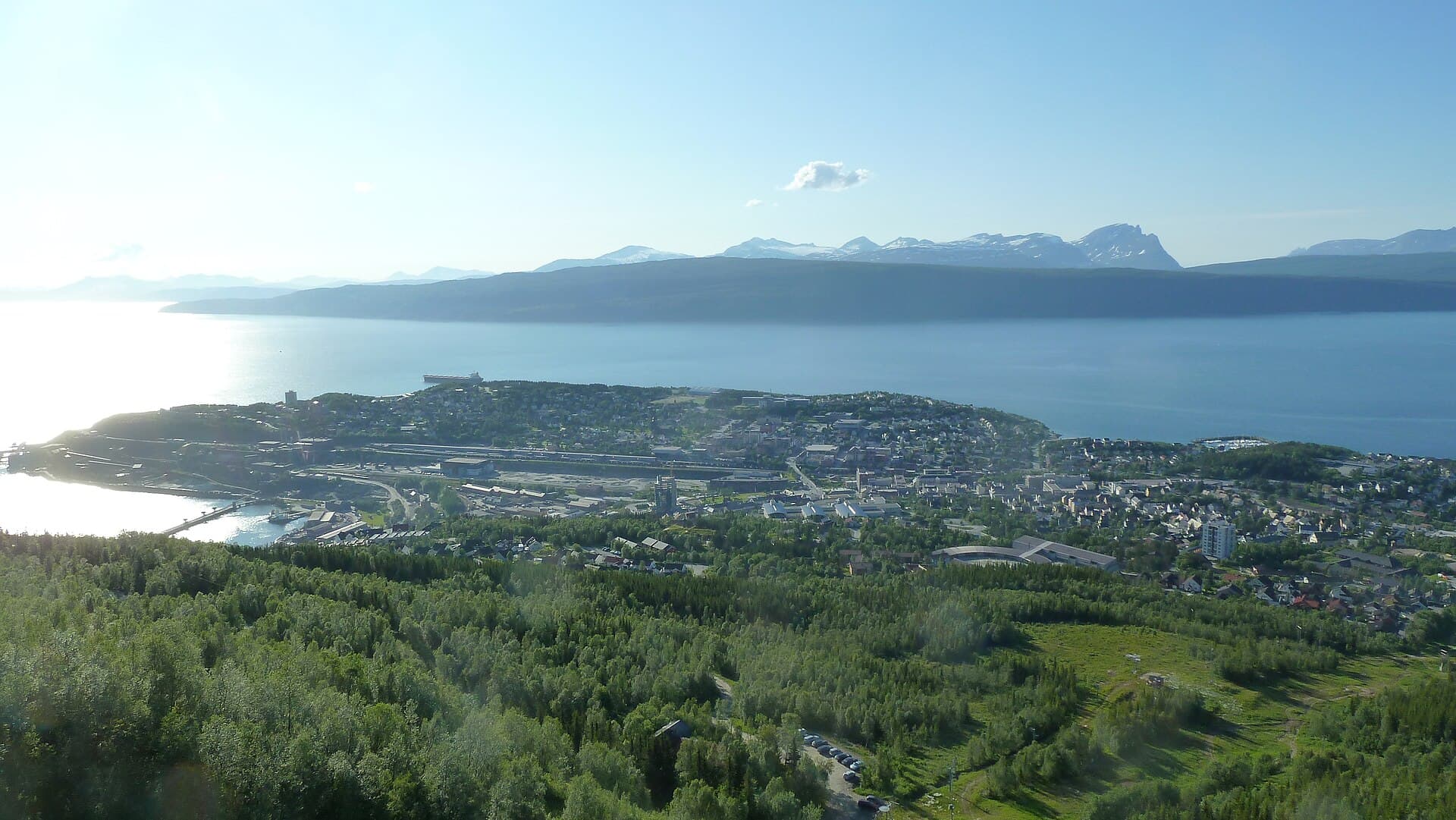 J. K. H. Friedgé / CC BY-SA 3.0, via Wikimedia Commons
“Where Arctic light meets wartime shadows, and iron ore shaped a nation.”
Not the postcards. The stories even locals don't know — whispered in your ear, right where they happened.
Beneath the tranquil surface of the Ofotfjord, a silent fleet lies in wait, a testament to a pivotal moment in global conflict.
The cable car up Narvikfjellet offers sweeping views, but it also ascends a landscape that once saw an unusual military maneuver.
The Narvik War Museum houses artifacts from a conflict that saw a unique 'first' for the Allied forces.
Discover every secret of Narvik
Every address, every reveal in full — in your ear, right where it happened.
You pick your stops. You walk. The voice reveals what the others miss.
No tours available yet. Check back soon — we're preparing them.
Narvik, a city in Northern Norway, rests above the Arctic Circle at 68° North, defined by its dramatic fjords and towering mountains. This unique geography creates a landscape where urban life blends with alpine terrain, offering a rare sense of closeness between nature and everyday activity. From the city center, views extend across the harbor to the surrounding peaks, with trails, ski slopes, and viewpoints accessible almost at street level. Narvik is a place of stark contrasts, where the ethereal glow of the Northern Lights in winter gives way to the endless daylight of the Midnight Sun in summer.
More than just a scenic outpost, Narvik's identity is deeply intertwined with its industrial past and its pivotal role in World War II. The city was developed as an ice-free port for the Swedish iron ore mines in Kiruna, a purpose it continues to serve today. This strategic importance led to Narvik becoming a focal point of the Norwegian Campaign in 1940, a period of intense battles that left an indelible mark on the city. Today, Narvik invites exploration in every direction, at any time of year, offering a blend of raw Arctic experiences and poignant historical reflection.
The modern history of Narvik begins in the 1870s, driven by the discovery of vast iron ore deposits in Kiruna, Sweden. The challenge was transportation; Sweden's nearest port, Luleå, was ice-bound in winter and too shallow for large vessels. The solution lay in Norway, with the construction of the Ofotbanen railway line from Kiruna to the ice-free port of Narvik on the Ofotfjorden. This engineering feat transformed Narvik, then a small village, into a crucial industrial hub.
Narvik was officially established as a kjøpstad (market town) on January 1, 1902. Its strategic importance as a year-round conduit for Swedish iron ore, vital for industrial economies, did not go unnoticed as Europe plunged into World War II. In April 1940, Germany launched Operation Weserübung, an invasion of Norway, with Narvik as a primary target. Control of Narvik's port and the railway was critical for Germany's war industry, which depended on the Swedish iron ore.
The town became the scene of fierce naval and land battles between German forces and Allied troops from Norway, Britain, France, and Poland. The Battles of Narvik, fought from April to June 1940, were some of the largest and most dramatic engagements of the Norwegian Campaign. While the Allies initially recaptured Narvik in May 1940, marking the first Allied infantry victory of the war, they were forced to withdraw due to the deteriorating situation in France. Narvik was re-occupied by German forces and remained under occupation until the end of the war. The town itself suffered extensive damage from bombing during the conflict but was subsequently rebuilt, resuming its role as a vital ore port.
Begin your exploration at the Narvik War Museum, a modern and interactive space detailing the dramatic Battles of Narvik in 1940 and the subsequent occupation. Exhibits feature artifacts, photographs, and digital displays that offer insight into this pivotal period of World War II.
For expansive views of the city, Ofotfjorden, and surrounding mountains, take the Narvikfjellet cable car. At 656 meters above sea level, the Mountain Restaurant offers a vantage point to appreciate the Arctic landscape, whether under the Midnight Sun or the Northern Lights. The same mountain transforms into a ski resort in winter and offers hiking trails in summer.
Experience the Ofoten Line aboard the Arctic Train, a scenic railway journey from Narvik towards the Swedish border. This route, originally built for iron ore transport, traverses a wild and dramatic landscape from fjord to alpine mountains. Also consider a trip to Polar Park, the world's northernmost animal park, home to Arctic wildlife such as lynx, moose, bears, and wolves.
For a unique natural spectacle, visit The Geyser near the Tøttadalen hiking trails between June 1st and August 31st. Powered by immense pressure, it shoots water 75 meters into the air daily at 13:00 and 21:00.
Narvik offers distinct experiences depending on the season. For warm-weather activities like hiking and enjoying the Midnight Sun, the best time to visit is from early July to mid-August, when average daily high temperatures are above 14°C. July is the warmest month, with an average high of 16°C. For winter sports and the best chance to see the Northern Lights, the period from September through March is optimal, with maximum darkness in December and January. The coldest months are January and February, with average low temperatures around -8°C. Precipitation is frequent year-round, so waterproof and windproof clothing is recommended.
The local currency in Narvik is the Norwegian Krone (NOK). Norway is largely a cashless society, with major credit and debit cards widely accepted for most purchases. While exchanging foreign cash can be challenging, ATMs are available in towns and cities. It's advisable to have some Norwegian currency upon arrival. When using an ATM, opt to be charged in NOK for a more favorable exchange rate.
Narvik is accessible by plane via Evenes Airport, as well as by bus, car, or train. The Arctic Route offers daily bus services between Tromsø and Narvik during winter (December to March). Public transport within Narvik is available. The official language is Norwegian.