Narva Castle's Hermann Tower
The Hermann Tower, a sentinel of Narva, holds a secret reflecting the city's turbulent past.
Full story unlocks in the tour
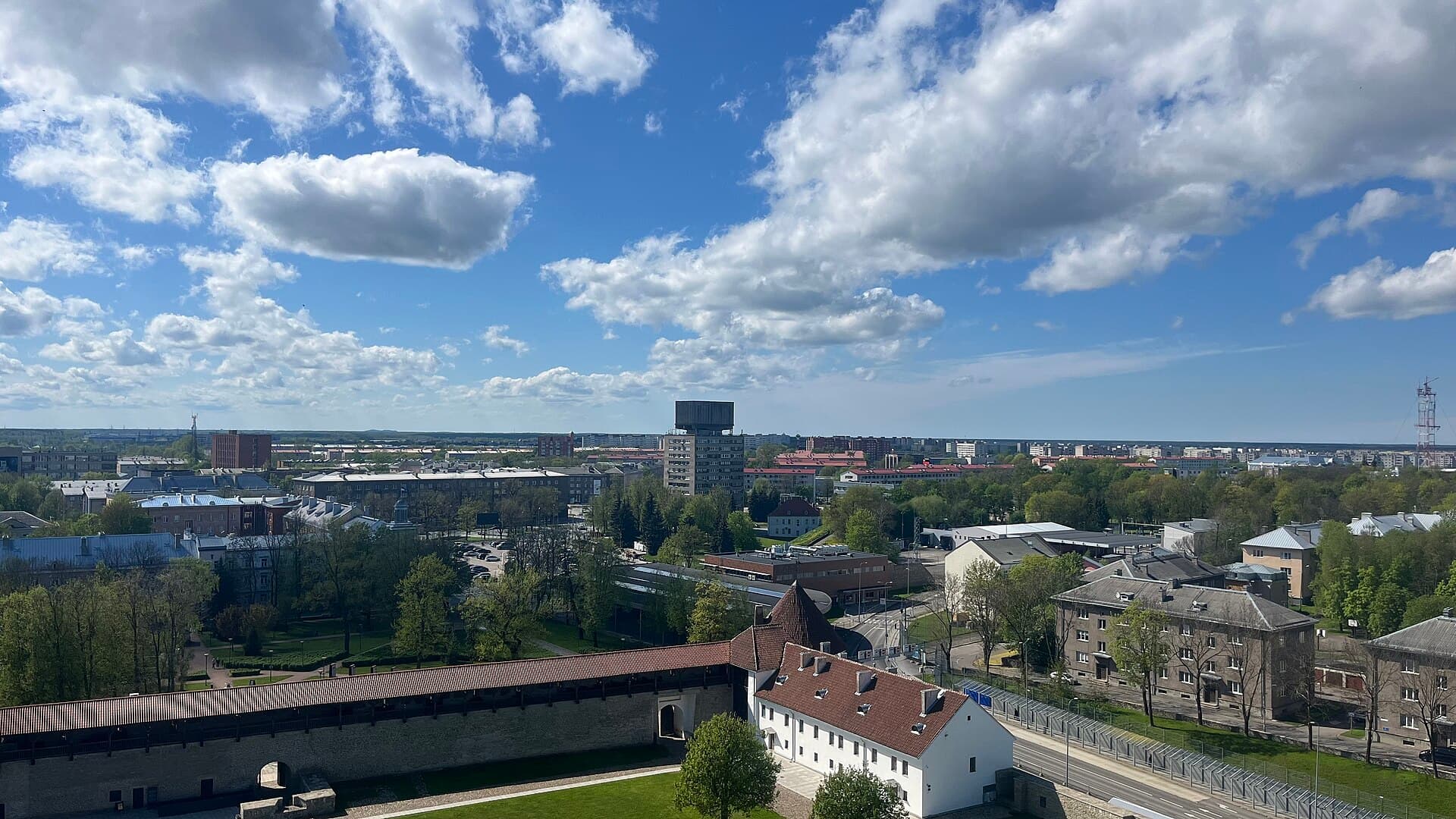 WeaponizingArchitecture / CC BY 4.0, via Wikimedia Commons
“Where Europe meets Russia, a city reborn from the ashes of history.”
Not the postcards. The stories even locals don't know — whispered in your ear, right where they happened.
The Hermann Tower, a sentinel of Narva, holds a secret reflecting the city's turbulent past.
Once celebrated as the 'Baroque Pearl of the Baltics,' Narva's historic core conceals a deliberate erasure of its past.
This former industrial titan, once among the world's largest cotton mills, shares a surprising link to Estonia's early labor movements.
Discover every secret of Narva
Every address, every reveal in full — in your ear, right where it happened.
You pick your stops. You walk. The voice reveals what the others miss.
No tours available yet. Check back soon — we're preparing them.
Narva, Estonia's third-largest city, stands as a compelling borderland, a place where East and West converge along the Narva River. This strategic location has shaped its identity, making it a crossroads of trade routes and cultures for centuries. The city offers a unique blend of historical depth and modern resilience, a testament to its repeated destruction and rebirth. Visitors to Narva can experience a tangible sense of being at the edge of the European Union, with Russia visible just across the river.
The city's narrative is one of constant flux, having been under Danish, Livonian, Swedish, Russian, and Estonian rule. Despite the extensive damage it suffered, particularly during World War II, Narva has preserved key landmarks and continues to rebuild its connection to its extensive past. From the formidable Narva Castle to the tranquil river promenade, the city invites exploration and reflection on its enduring spirit.
## From Danish Stronghold to Baroque Pearl Narva's documented history begins in 1240 with its mention in the Danish land register, receiving city status in 1345. Initially a Danish possession, it was sold to the Livonian Order in 1346. During this period, the construction of Hermann Castle began, which would become the city's primary defensive structure. The castle's strategic importance was further highlighted in 1492 when Ivan III of Moscow ordered the construction of Ivangorod Fortress directly across the river, initiating a centuries-long architectural rivalry across the Narva River.
## Swedish Era and the Great Northern War Narva flourished during the Swedish period in the 17th century, earning the moniker "Baroque Pearl of the Baltics" due to its distinctive architecture. However, this prosperity was interrupted by the Great Northern War. In 1700, Charles XII of Sweden achieved a significant victory over Peter the Great's Russian forces in the Battle of Narva. Yet, four years later, Peter the Great returned, conquering the city and incorporating it into the Russian Empire, where it remained for two centuries.
## 20th Century and Post-War Transformation After World War I, Narva became part of the newly independent Republic of Estonia in 1918. The city, with a 65% Estonian population in 1934, faced immense destruction during World War II. Soviet bombings in March 1944 razed the historic old town, leaving almost nothing intact. In a controversial post-war policy, Soviet authorities prohibited many of Narva's original Estonian inhabitants from returning and instead resettled the city with Russian-speaking workers. This demographic shift resulted in Narva becoming an overwhelmingly Russian-speaking city, a legacy that continues to define its cultural landscape today. The Kreenholm Manufacturing Company, a major industrial complex established in 1857, played a significant role in the city's industrial development and post-war resettlement.
Begin your exploration at Narva Castle, also known as Hermann Castle, the city's most prominent landmark. This well-preserved defensive structure, housing the Narva Museum, offers insights into the city's history from the 13th century onwards. Ascend the 51-meter-high Hermann Tower for sweeping views of Narva, the Kreenholm factory, and the Ivangorod Fortress across the river in Russia. Adjacent to the castle, the Northern Yard recreates a 17th-century artisan district, complete with workshops.
A walk along the Narva River Promenade offers striking views of both Narva Castle and the Ivangorod Fortress, which stand just 150 meters apart. The promenade features summertime kiosks, a fountain, a sundial, and sculptures, providing an ideal setting for a leisurely stroll. Seek out the "Five Krooni View" observation deck, offering the distinctive perspective seen on the old Estonian five krooni bill. Explore the Victoria Bastion's casemates, a part of Narva's 17th-century fortifications, and the Dark Garden, the city's oldest park, situated atop the bastion. For architectural interest, visit Narva Alexander's Cathedral, a Neo-Gothic Lutheran church built in the late 19th century, which features a restored bell tower and a large light installation depicting Narva's history. The newly renovated Narva Town Hall also offers a virtual reality tour showcasing the city before its wartime destruction.
Narva experiences a Northern European climate with distinct seasons. The best time for warm-weather activities is from late June to mid-August, when temperatures are comfortable and daylight hours are long. Summer also brings festivals and concerts. Spring and autumn offer milder temperatures and fewer crowds, ideal for exploring the city at a more relaxed pace. Winter, from November to March, transforms Narva into a snowy landscape, with December and January being the coldest months. While cold, winter provides a unique, atmospheric experience, and late September through March offers opportunities to witness the aurora borealis, depending on solar activity and clear skies.
Narva is easily accessible by train or bus from Tallinn, with the train journey taking approximately two hours and twenty minutes. Renting a car also provides flexibility for exploring the region. While Narva is a compact city, an overnight stay is recommended to fully experience its attractions. Accommodation options range from centrally located hotels to budget-friendly guesthouses. The local currency is the Euro. Estonian and Russian are widely spoken. The Narva-Ivangorod border crossing is currently open for pedestrians from 7:00 AM to 7:00 PM (Estonian time), but closed to vehicles due to reconstruction on the Russian side, expected to last until the end of 2025. It is advisable to check current border regulations before planning a crossing.