Nara Park
You've seen the iconic bowing deer, but there's a particular morning ritual that gathers them in a truly remarkable way.
Full story unlocks in the tour
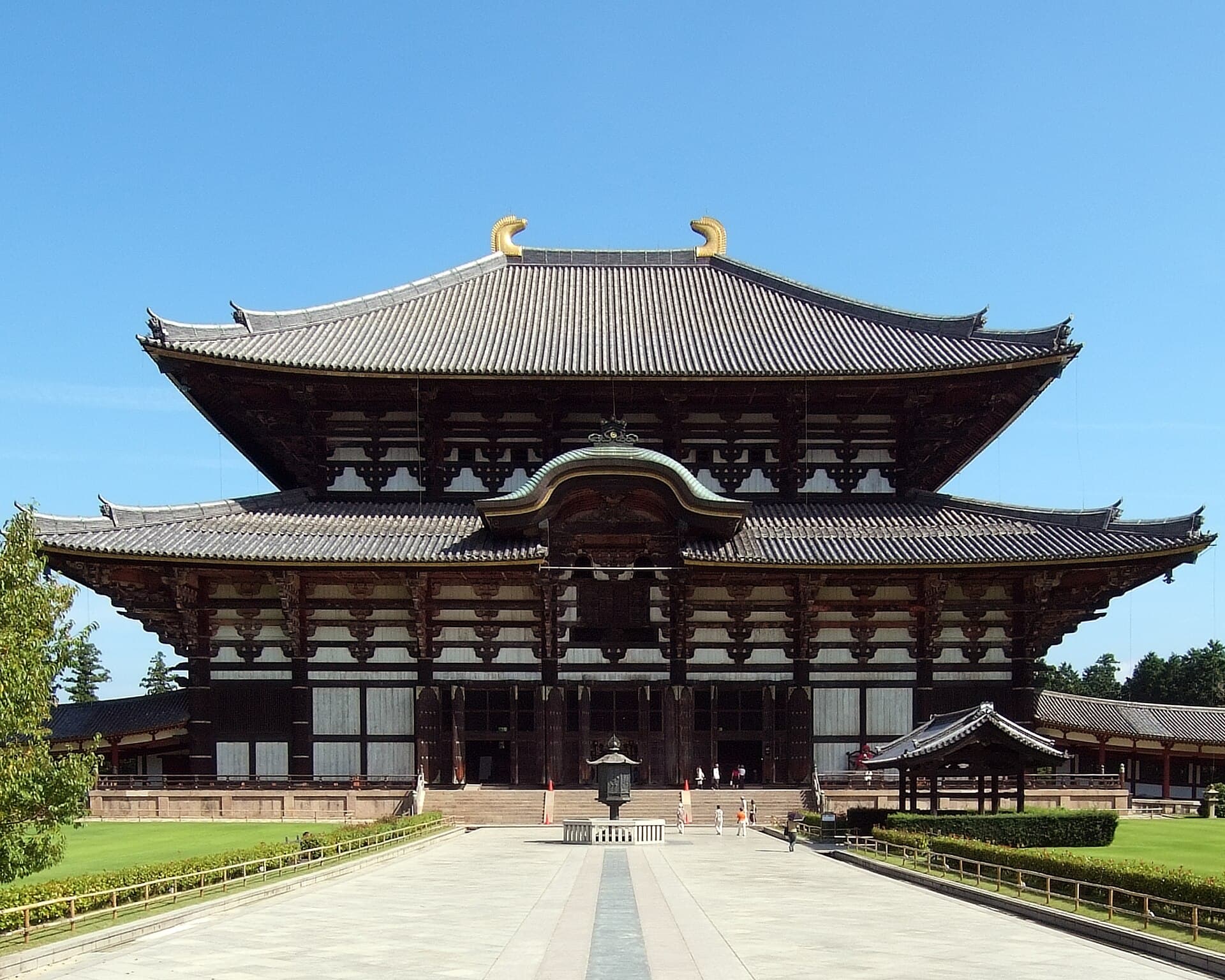 Wiiii / CC BY-SA 3.0, via Wikimedia Commons
“Where sika deer, considered divine messengers, wander freely through ancient temple grounds and hushed gardens.”
Not the postcards. The stories even locals don't know — whispered in your ear, right where they happened.
You've seen the iconic bowing deer, but there's a particular morning ritual that gathers them in a truly remarkable way.
Beyond the Great Buddha, this revered hall guards a secret statue, a fierce protector revealed only once a year.
In a city of celebrated gardens, one offers classical beauty and profound solitude, often feeling like your own private retreat.
Discover every secret of Nara
Every address, every reveal in full — in your ear, right where it happened.
You pick your stops. You walk. The voice reveals what the others miss.
No tours available yet. Check back soon — we're preparing them.
Nara, Japan's inaugural permanent capital, offers a journey into the country's ancient heart. Unlike the clamor of modern metropolises, Nara maintains a more deliberate rhythm, where the echoes of history and the pulse of nature intertwine. Here, UNESCO World Heritage sites stand as enduring testaments to a profound past, coexisting with an unexpected and endearing local population: over a thousand free-roaming sika deer, believed to be messengers of the gods.
Stepping into Nara means encountering monumental wooden structures, serene gardens, and pathways illuminated by thousands of lanterns. It's a city that invites you to slow your pace, to observe the gentle bow of a deer, and to reflect on centuries of spiritual and cultural development.
While often experienced as a brief excursion from Kyoto or Osaka, Nara rewards a deeper exploration, revealing layers of charm beyond its most famous inhabitants.
Nara's story begins in 710 AD when it was established as Heijo-kyo, Japan's first permanent capital. This marked a pivotal shift, establishing a centralized government and fostering a golden age of cultural and artistic development. For 74 years, Nara flourished as the political and spiritual heart of Japan, drawing inspiration from the sophisticated Tang Dynasty of China. During this period, Buddhism gained significant traction, leading to the construction of grand temples and the creation of exquisite Buddhist art that still defines the city today.
One of the most significant figures of this era was Emperor Shomu, who championed Buddhism and initiated the construction of Todai-ji Temple and its colossal Great Buddha statue in the 8th century. This monumental undertaking was not merely a religious endeavor; it was also a means to unify the country and protect it from disasters. The scale of the project was immense, requiring vast resources and skilled artisans, and its completion solidified Nara's status as a major Buddhist center.
The growing influence of powerful Buddhist monasteries eventually led the capital to relocate to Nagaoka and then Kyoto in 784 AD, but Nara's legacy as the birthplace of Japanese imperial culture endured. Despite losing its political prominence, the city's temples and shrines continued to be revered, preserving a remarkable collection of ancient architecture, sculptures, and artifacts.
Over the centuries, Nara faced periods of conflict and reconstruction. Many of its wooden structures, vulnerable to fire, have been rebuilt multiple times, always adhering to their original designs. The five-story pagoda of Kofuku-ji Temple, for instance, has been rebuilt several times, with the current structure dating back to 1426. These reconstructions are a testament to the enduring cultural and spiritual significance of these sites. Today, Nara is home to eight UNESCO World Heritage Sites collectively known as the "Historic Monuments of Ancient Nara," encompassing temples, shrines, and the primeval forest of Mount Kasuga. The city continues to be a living museum, offering a tangible connection to Japan's foundational years.
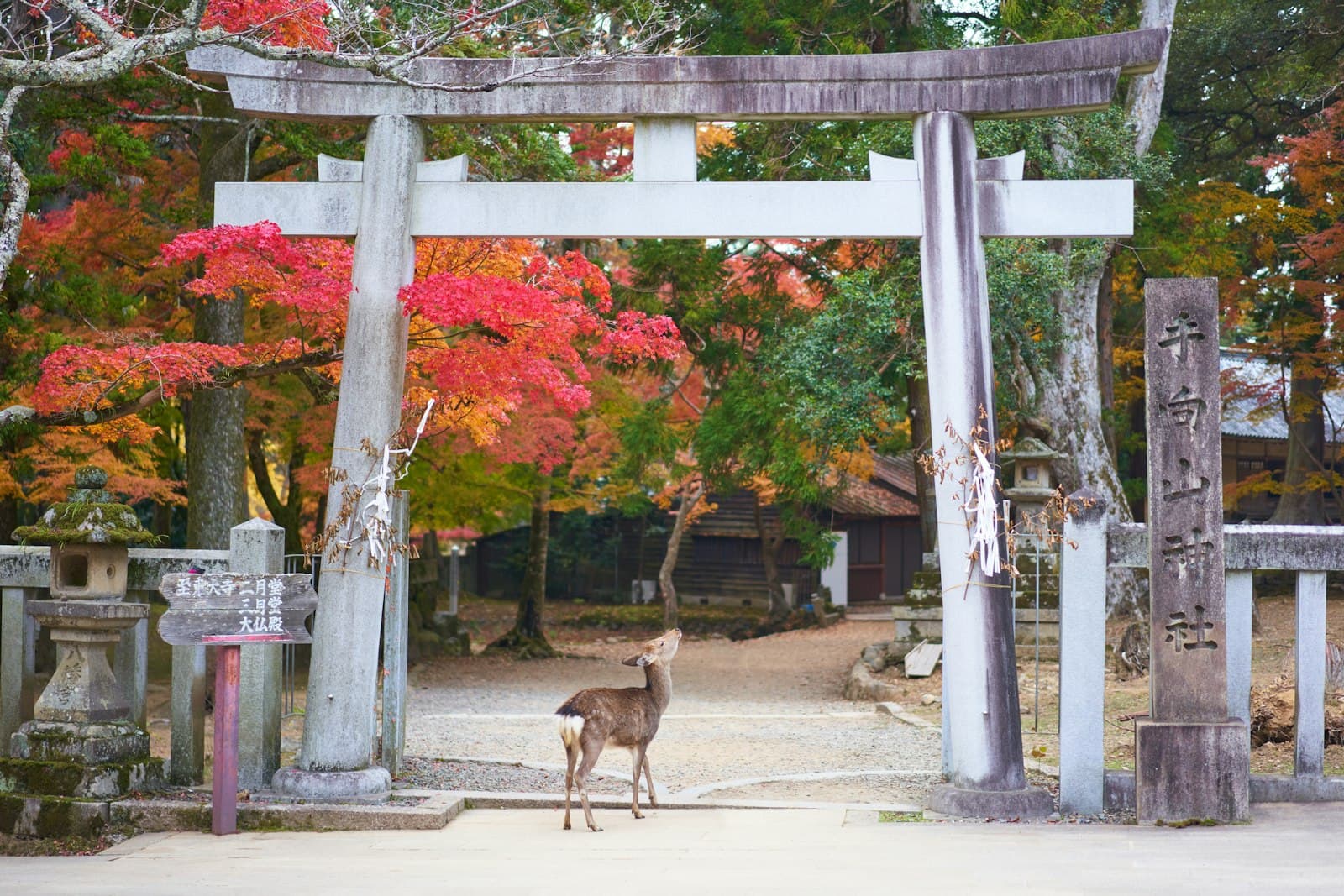
Nara's primary attractions are largely concentrated around Nara Park, making it an ideal city for exploration on foot. The park itself is a destination, home to over 1,200 sika deer, considered messengers of the gods, who roam freely and will often bow for a cracker.
At the heart of the park stands Todai-ji Temple, a UNESCO World Heritage site and one of Japan's most important Buddhist temples. Its Great Buddha Hall (Daibutsuden) is one of the world's largest wooden buildings, sheltering a massive bronze statue of Vairocana Buddha. Do not overlook the impressive Nandaimon Gate, one of Japan's largest wooden gates, which heralds the approach to the temple.
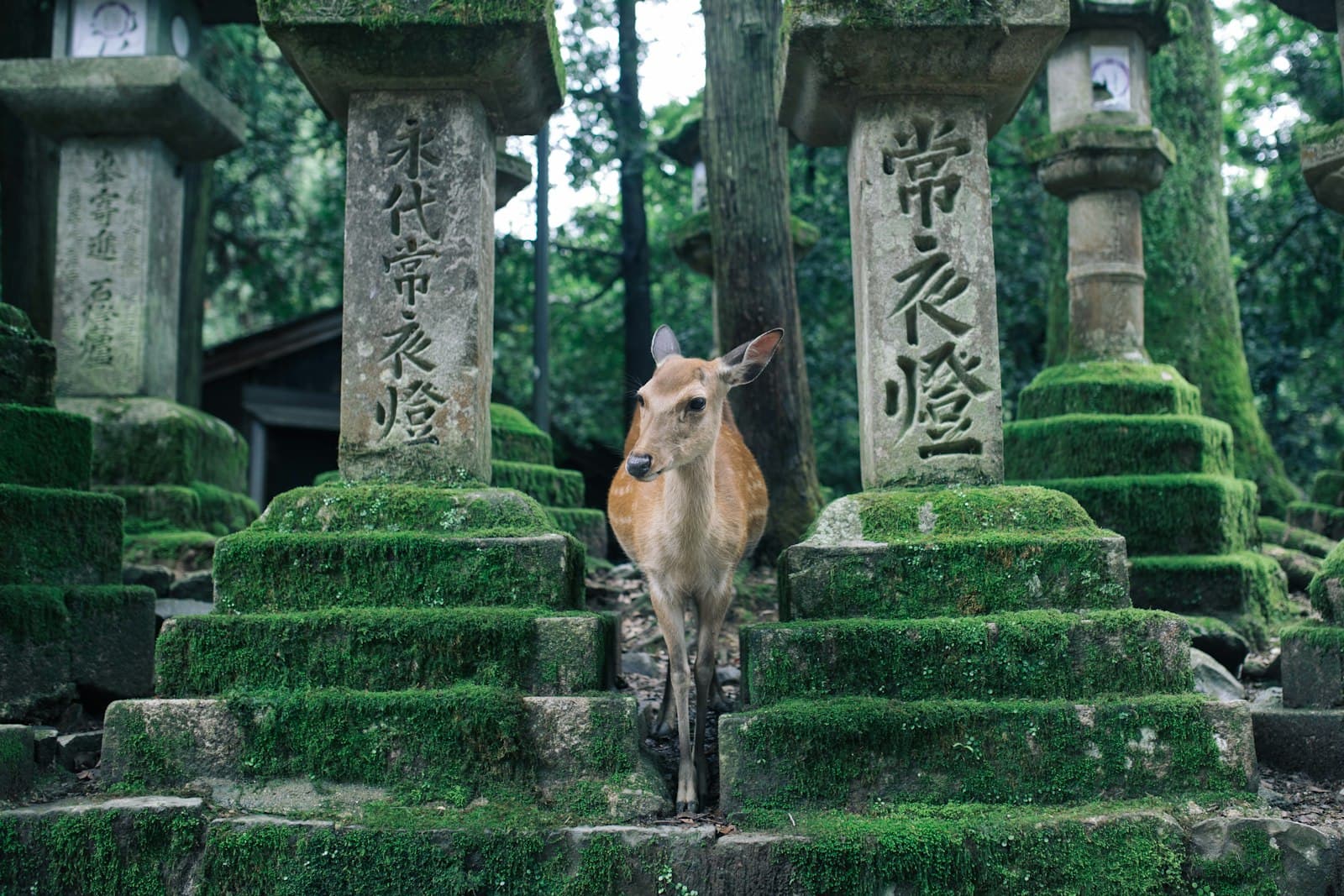
Nearby, Kasuga Taisha Shrine is a mystical Shinto shrine known for its thousands of stone and bronze lanterns illuminating pathways and hanging from its buildings. The vermillion architecture within the inner courtyard is particularly striking, and a darkened room filled with glowing lanterns offers an otherworldly experience.
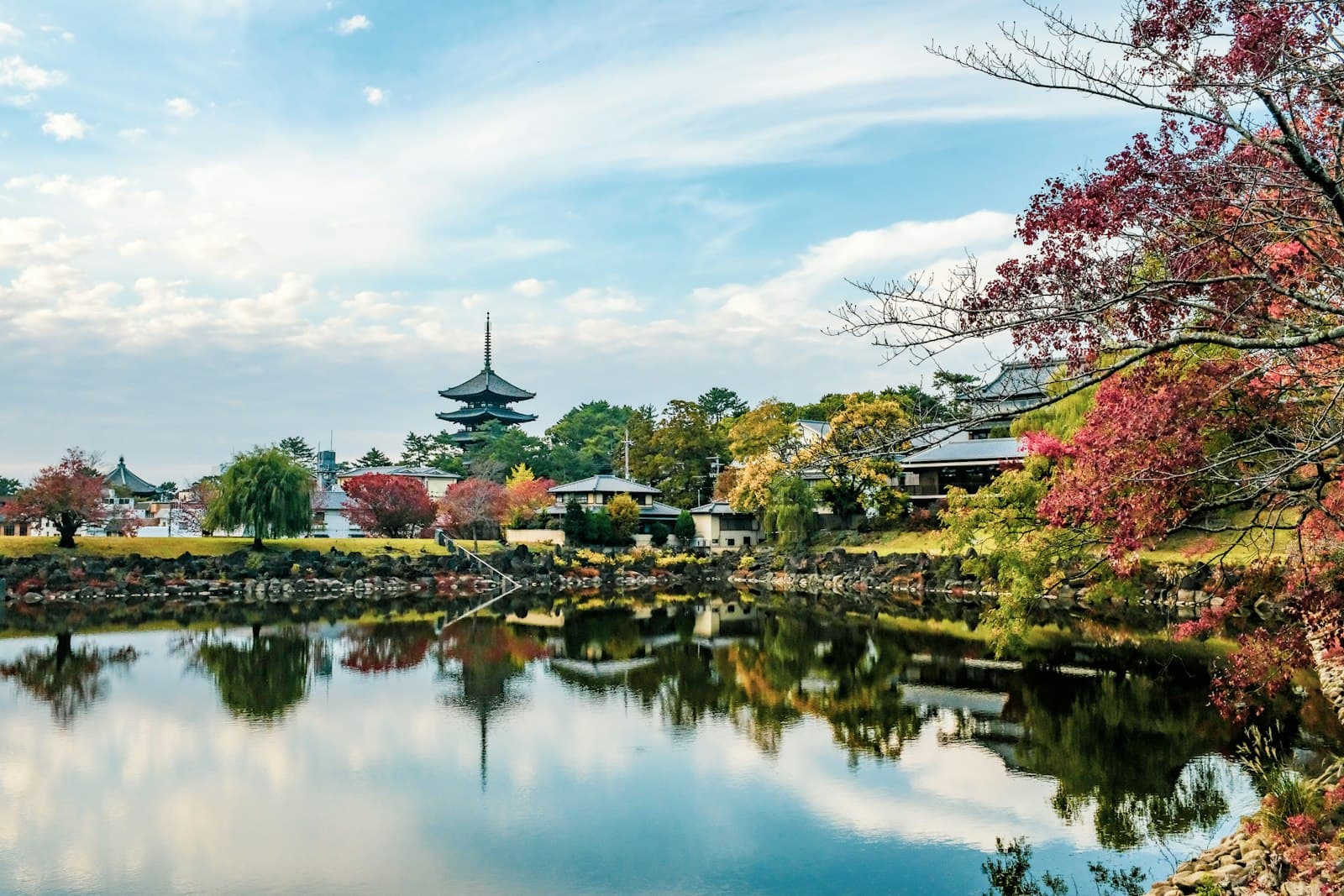
Kofuku-ji Temple, with its skyward-reaching five-storied pagoda, is another iconic Nara landmark. The pagoda is Japan's second-tallest wooden pagoda and is beautifully mirrored in Sarusawa-ike Pond. The temple complex includes the newly renovated Central Golden Hall and a museum housing a celebrated collection of Buddhist art.
For a quieter escape, explore the traditional merchant neighborhood of Naramachi. Its narrow alleyways are lined with preserved machiya (traditional wooden townhouses), many now converted into intimate shops, cafes, and museums, offering a glimpse into Edo-era Japan. Consider visiting the Lattice House (Naramachi Koshi-no-Ie) for a peaceful experience.
Finally, for a moment of profound tranquility, the Yoshikien Garden offers three distinct Japanese gardens—a pond garden, a moss garden, and a tea ceremony garden—with free admission for foreign visitors. The Nara National Museum is also worth a stop for its extensive collection of Japanese Buddhist art.
Nara welcomes visitors year-round, each season unveiling a distinct character. The most pleasant times to visit are spring (March to May) and autumn (October to November) due to mild temperatures and comfortable weather. Spring brings the delicate cherry blossoms, typically unfurling from late March to early April, with peak viewing around April 1st. Autumn showcases brilliant fall foliage, usually peaking from late November to early December. These peak seasons, however, also draw larger crowds.
Summer (June to August) is warm and humid, with a rainy season from mid-June to late July, though it does not rain every day. Winter (December to February) is cool but often bright and dry, with fewer crowds, making it a peaceful time for exploration. To avoid the busiest periods, steer clear of major Japanese holidays like New Year's (late December to early January), Golden Week (late April to early May), and Obon (August).
Nara is a compact city, and most of its primary attractions, particularly those within Nara Park and Naramachi, are easily reached on foot. Comfortable walking shoes are essential, especially as some routes may involve gentle inclines.
For sights further afield, like those in the Nishinokyo District (Yakushi-ji Temple and Toshodai-ji Temple) or Ikaruga (Horyu-ji Temple), an extensive bus network operated by Nara Kotsu is available. Loop buses frequently connect JR Nara and Kintetsu-Nara Stations with the main sightseeing spots. Consider a Nara Bus Pass for unlimited rides. Bicycles also offer a delightful way to explore at your own pace, with rental stations readily available.
There are two main train stations: JR Nara Station and Kintetsu-Nara Station. Kintetsu-Nara Station is a shorter walk to the main attractions, while JR Nara Station is convenient for Japan Rail Pass holders. Taxis are also readily available.