Little Lotus Garden (Xiao Lian Zhuang)
This expansive private estate belonged to Nanxun's wealthiest man, Liu Yong. Yet, its purpose extended beyond a mere garden.
Full story unlocks in the tour
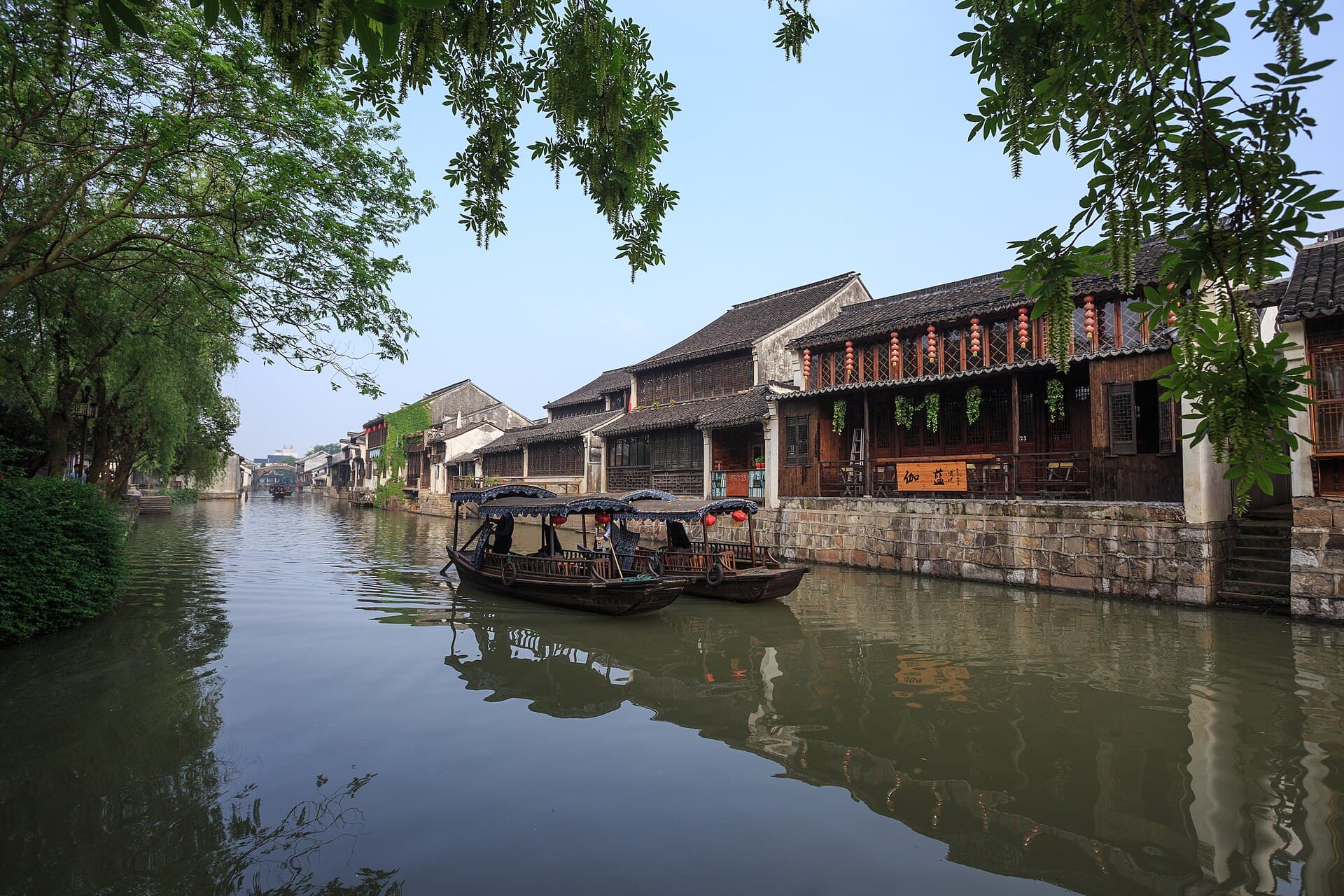 Zhangzhugang / CC BY-SA 4.0, via Wikimedia Commons
“Where ancient canals mirror a cosmopolitan heritage.”
Not the postcards. The stories even locals don't know — whispered in your ear, right where they happened.
This expansive private estate belonged to Nanxun's wealthiest man, Liu Yong. Yet, its purpose extended beyond a mere garden.
This 400-meter stretch of Ming Dynasty houses along the canal is often considered the soul of Nanxun. Still, their original function might surprise you.
Revered as the 'foremost private residence of the Jiangnan region,' this mansion marries Chinese and Western styles. However, its original owner resided there for only a few years.
Discover every secret of Nanxun
Every address, every reveal in full — in your ear, right where it happened.
You pick your stops. You walk. The voice reveals what the others miss.
No tours available yet. Check back soon — we're preparing them.
Nanxun, a historic water town in Zhejiang, China, offers a compelling journey into a past where East encountered West with surprising grace. Unlike some of its more commercialized counterparts, Nanxun retains an inhabited atmosphere, where the rhythm of daily life unfolds alongside old canals and traditional architecture. Here, you might observe locals washing clothes in the waterways or hear the gentle clatter of Mahjong tiles, providing a glimpse into a community that has genuinely preserved its heritage.
Positioned on the Hangjiahu Plain of the Yangtze River Delta, Nanxun's strategic location and thriving silk industry during the Ming and Qing dynasties brought immense prosperity and a singular cosmopolitan flair. This legacy is visibly etched into its landscape, with grand mansions and gardens displaying a distinctive blend of traditional Chinese design and European architectural styles. It is a place where history resonates from every stone bridge and intricate carving, inviting visitors to explore a serene anomaly among China's ancient water towns.
Nanxun's origins can be traced back to the Southern Song Dynasty, with the town officially established around 1252 AD. Its name, "Nanxun," meaning "South of the Xun River," reflects its proximity to the Xunxi River and its concentration of merchants. However, it was during the Ming and Qing Dynasties that Nanxun truly flourished, becoming a pivotal center for silk production and trade. The high-quality "Jili Lake Silk" was a particularly valuable commodity, generating substantial prosperity for the town's merchants.
This affluence led to the emergence of an incredibly wealthy and surprisingly cosmopolitan merchant class. These prosperous families, sometimes referred to as the "Four Elephants," invested their fortunes not only in grand traditional Chinese mansions but also in importing Western architectural elements. This singular blend of Eastern and Western styles, incorporating elements like French balconies, Romanesque columns, stained glass from France, and marble from Italy, distinguishes Nanxun from other water towns in the region. Structures like the Red House (Liu's Family Compound) and Zhang Shiming's Former Residence stand as prominent examples of this fascinating architectural fusion.
Nanxun's significance extended beyond its economic prowess. It was considered a "Land of Culture" and a "Hometown of Poetry and Books," producing notable figures such as Zhang Jingjiang, a prominent figure of the Republic of China, and the poet Xu Chi. The town's intricate network of canals, with a total length of 4.5 kilometers, served as the lifeblood of its commerce and daily life, connecting it to the larger Beijing-Hangzhou Grand Canal. Despite enduring numerous historical changes and revolutions, Nanxun has largely retained its original features and traditional culture, making it a well-preserved example of a Jiangnan water town. The town's dedication to preserving its heritage is evident in its ancient residences, gardens, streets, and water systems, which remain from the Ming and Qing dynasties.
Begin your exploration at the Baijianlou (Hundred Room Corridor), a 400-meter stretch of well-preserved Ming Dynasty houses lining the canal. This area offers a glimpse into local life and is particularly evocative in the morning mist or at sunset.
Next, visit the Little Lotus Garden (Xiao Lian Zhuang), the private estate of Liu Yong, one of Nanxun's wealthiest silk merchants. This expansive garden features a large lotus pond, pavilions, and rockeries, and is especially lively when the lotus flowers are in bloom during summer.
Nearby, explore the Jiaye Tang Library, built by Liu Chengan, Liu Yong's grandson. This private library, established in 1920, once housed an impressive collection of rare and ancient books.
Do not overlook Zhang Shiming's Former Residence, an opulent mansion displaying a striking blend of Chinese and French architectural styles. Its intricate carvings and stained glass windows offer a unique visual experience.
Another example of East-meets-West architecture is the Liu's Family Compound, also known as the Red House, with its red brick buildings, French balconies, and Romanesque columns.
For a different perspective, consider an awning boat ride along the canals. These traditional hand-rowed boats offer a peaceful way to observe the town's old bridges, white-walled houses, and willow-draped banks.
Finally, explore Tongjin Bridge and Guanghui Bridge, two iconic stone arch bridges that are ideal for photography, especially at sunset.
The most comfortable seasons to visit Nanxun are spring (March to May) and autumn (September to November). During these periods, the weather is mild, with pleasant temperatures suitable for walking and exploring. Spring brings blooming flowers and verdant willows, while autumn offers cool, clear skies and lively ginkgo and maple leaves. If you wish to see the renowned lotus flowers in full bloom at the Little Lotus Garden, summer (June to August) is the ideal time, though it can be hot and humid. To avoid crowds, plan your visit for a weekday, as weekends and Chinese public holidays can be busy.
Nanxun is accessible via high-speed train to Huzhou Station, followed by a 40-minute Didi (Chinese Uber) ride, or by direct bus from major cities like Shanghai or Hangzhou. While entry to the town area is generally free, a combo ticket (around 100 RMB) is required for access to the historic buildings and attractions. Attractions typically operate from 8:00 AM to 5:00 PM, though the town itself is open 24/7, offering a chance to experience local life after hours.
For payments, cash is rarely accepted by vendors or ticket booths; it is essential to have Alipay or WeChat Pay set up and linked to an to an international credit card before your arrival. While some larger establishments may accept international credit cards, smaller stalls often only take mobile payments or cash. For navigation, the core area is manageable, with English and Chinese road signs, and a scenic spot service hotline is available for assistance.