Yongzhou
Before its current name, this city once faced a dramatic siege that nearly erased it from the map.
Full story unlocks in the tour
 EditQ / CC BY-SA 4.0, via Wikimedia Commons
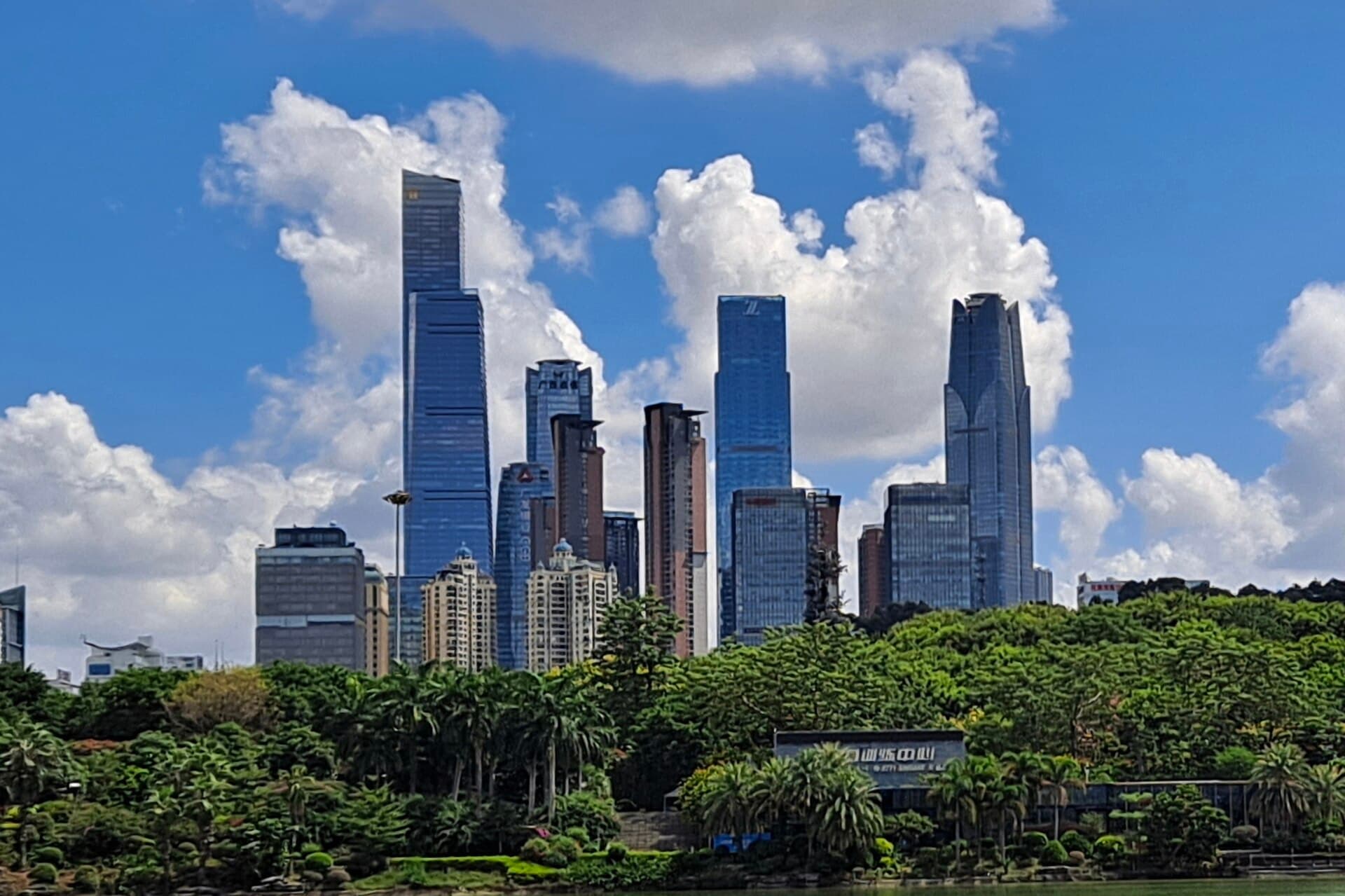
“Nanning: Where subtropical green meets a surprising urban hum.”
Not the postcards. The stories even locals don't know — whispered in your ear, right where they happened.
Before its current name, this city once faced a dramatic siege that nearly erased it from the map.
For a time, Nanning carried a nickname that linked it to one of China's most important historical capitals.
The city's nickname, 'Green City,' is not merely a casual descriptor; it is a deeply ingrained part of its urban planning and official flora.
Discover every secret of Nanning
Every address, every reveal in full — in your ear, right where it happened.
You pick your stops. You walk. The voice reveals what the others miss.
No tours available yet. Check back soon — we're preparing them.
Nanning, the capital of the Guangxi Zhuang Autonomous Region in southern China, is a city where lush subtropical greenery intertwines with a dynamic urban energy. Frequently called the "Green City," it lives up to its name with abundant parks and tree-lined avenues that offer a refreshing contrast to the bustling metropolis. Situated in a hilly basin and bordering Vietnam, Nanning serves as a crucial bridge between southwestern China and Southeast Asia, fostering a unique blend of cultures and traditions.
Beyond its verdant landscapes, Nanning is a city of surprising depth, with a history spanning over 1,700 years. It has evolved from an ancient frontier town to a significant commercial and administrative center. Today, it stands as a growing economic hub, known for its diverse ethnic population, particularly the Zhuang people, China's largest ethnic minority. Whether one is drawn to its natural beauty, historical narratives, or lively modern life, Nanning offers a compelling experience that is both welcoming and unexpectedly engaging.
The history of Nanning stretches back over 1,700 years, with its origins as Jinxing County established in 318 AD during the Eastern Jin Dynasty. This early settlement marked the beginning of Nanning's continuous organizational system. Throughout the centuries, the city underwent several name changes, reflecting its evolving role and significance. During the Tang Dynasty (618–907), it was known as Yongzhou Prefecture, serving as an important military garrison to control border territories.
A pivotal moment in its early history occurred in 1076 during the Lý–Song War when Yongzhou was besieged. The city's garrison, under the leadership of Su Jian, valiantly held out for 42 days before ultimately succumbing. The city was subsequently razed, and its inhabitants faced a tragic massacre. Despite this devastation, Nanning persevered and was renamed in 1324 during the Yuan Dynasty, receiving its current name, which translates to "Pacified South" or "Southern Tranquility."
Historically, Nanning flourished as a trade hub, with permanent business offices from other parts of China established as early as the Song Dynasty. Its strategic location on the Yongjiang River, part of the Pearl River system, facilitated convenient waterways for commerce. During the Ming Dynasty, Nanning's prominence in trade earned it the moniker "Little Nanjing."
In the 20th century, Nanning's administrative importance solidified, becoming the capital of Guangxi province, a status it temporarily held from 1912–1936 and then permanently from 1949. The establishment of the Guangxi Zhuang Autonomous Region in 1958 further cemented Nanning's role as a cultural and political center for the Zhuang people, China's largest ethnic minority. Since 2004, Nanning has hosted the annual China-ASEAN Expo, highlighting its growing international significance as a gateway to Southeast Asia.
Nanning offers a blend of natural beauty and cultural insights. Qingxiu Mountain is a prominent landmark, often called the "Green Lung" of Nanning, featuring pagodas, temples, and sweeping city views. The mountain also contains a cycad garden with trees over a thousand years old. For a relaxing escape, Nanhu Lake Park provides a serene setting for strolls and features subtropical gardening landscapes. In the evenings, one might catch live music from local bands.
To delve into the region's diverse heritage, the Guangxi Museum of Nationalities showcases the cultures of Guangxi's ethnic groups, including traditional costumes, crafts, and ancient copper drums. History enthusiasts can explore Yangmei Ancient Town, a well-preserved historic town dating back to the Ming and Qing dynasties, offering a glimpse into traditional life. For a more modern experience, the bustling Zhongshan Road Night Market is a destination for local delicacies like "old friend noodles" and various tropical fruits.
Nanning experiences a humid subtropical climate, meaning it is generally warm throughout the year. The most comfortable time to visit is during the autumn months, particularly from October to November. During this period, temperatures are pleasant, averaging around 20°C (68°F) during the day and 13°C (55°F) at night, with lower humidity and less rainfall. This also coincides with the Nanning International Folk Song Art Festival and the China-ASEAN Expo, offering rich cultural experiences. While summer (May to September) is hot and humid with frequent rain, and winter (December to February) is mild and relatively dry, the autumn provides the most ideal conditions for exploring the city.
Nanning Wuxu International Airport (NNG) is the primary gateway, located approximately 32 kilometers southwest of the city center. Transportation from the airport to downtown is convenient, with airport shuttle buses and taxis readily available; the journey typically takes around 40 minutes.
Within the city, Nanning offers a modern and efficient Metro system, which is an excellent way to navigate and avoid surface traffic. The Metro features signs in English, making it accessible for international visitors. Public buses also cover extensive routes, with most charging a flat fare, typically CNY 1 or CNY 2 for air-conditioned buses. Taxis are also widely available, with fares starting around CNY 9 during the day. For longer distances, Nanning has two main railway stations: Nanning Railway Station in the downtown area and Nanning East Railway Station, which handles high-speed trains.
Due to the subtropical climate, pack lightweight, breathable fabrics like cotton or linen. An umbrella is essential, offering protection from both sudden downpours and strong sunshine. Insect repellent is also advisable, especially if one plans to visit lush areas like Qingxiu Mountain.