Nanjing City Wall
The Ming City Wall of Nanjing is a monumental structure, but few realize the personal touch etched into its very fabric.
Full story unlocks in the tour
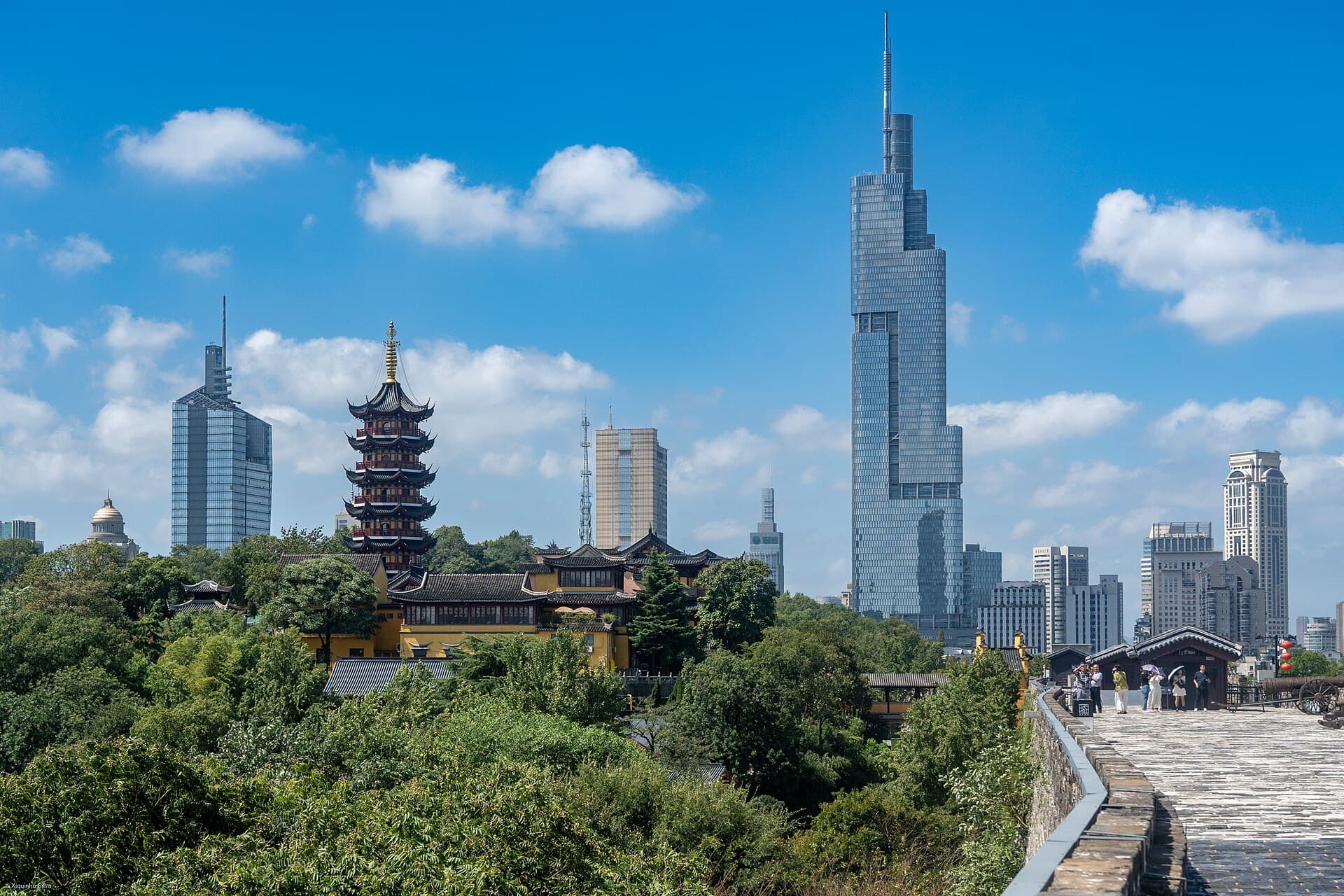 xiquinhosilva / CC BY 2.0, via Wikimedia Commons
“Where ancient walls meet modern whispers, and every duck has a story.”
Not the postcards. The stories even locals don't know — whispered in your ear, right where they happened.
The Ming City Wall of Nanjing is a monumental structure, but few realize the personal touch etched into its very fabric.
The grand mausoleum dedicated to the 'Father of Modern China' holds a subtle architectural secret, visible only from a unique perspective.
Beyond the well-trodden paths, an abandoned railway station across the Yangtze River offers a glimpse into a forgotten era and a connection to northern China.
Discover every secret of Nanjing
Every address, every reveal in full — in your ear, right where it happened.
You pick your stops. You walk. The voice reveals what the others miss.
No tours available yet. Check back soon — we're preparing them.
Nanjing, a city whose name translates to "Southern Capital," holds a profound and often tumultuous place in Chinese history. Situated in the fertile Yangtze River Delta, it has served as the capital for numerous dynasties, kingdoms, and republican governments from the 3rd century to 1949, earning its designation as one of China's Four Great Ancient Capitals alongside Beijing, Luoyang, and Xi'an. Today, Nanjing is a sprawling metropolis, the eighth-largest city in China with an urban population of 8.5 million people, yet it retains an intimate connection to its past, with ancient walls, imperial tombs, and significant historical sites woven into its modern fabric.
The city's geography is defined by its relationship with water and mountains. To the west, the mighty Yangtze River flows, while to the north lies the serene Xuanwu Lake, and to the northeast, the imposing Zijin Shan, or Purple Mountain. This natural setting not only provides scenic beauty but has also played a strategic role in Nanjing's historical importance. From its cuisine, deeply rooted in the sophisticated Jinling culinary tradition, to its lively street life and impressive modern infrastructure, Nanjing offers a multifaceted experience that invites deeper exploration beyond its more famous counterparts like Shanghai and Beijing.
## From Ancient Stronghold to Imperial Seat Nanjing's story stretches back over 500,000 years, with evidence of ancient civilizations developing advanced agricultural tools, ceramics, and jade carvings. The city's recorded history truly begins in 472 BCE, during the Warring States period, with the construction of a castle near Yuhuatai. It gained political and cultural prominence during the Three Kingdoms period (220–280 CE) when Sun Quan, founder of the Eastern Wu dynasty, made it his capital, then known as Jianye. This era saw a significant rise in foreign trade and prosperity.
Renamed Jiankang in 313 CE, Nanjing became a sanctuary for northern families fleeing invaders, and by the mid-sixth century, it was recognized as China's most culturally and economically advanced city. The city's textile, ceramics, and metalworking industries flourished as craftsmen and artists migrated south. Over the centuries, Nanjing served as the capital for various dynasties, including the Southern Tang, Song, and Ming. It was under the Hongwu Emperor, founder of the Ming dynasty, that Nanjing became the capital of a united China in 1368, leading to the construction of a grand imperial palace and the iconic city wall. However, in 1421, the capital was moved to Beijing by the Yongle Emperor, and Nanjing became a subsidiary capital.
## A Tumultuous 20th Century The 20th century brought significant upheaval to Nanjing. Dr. Sun Yat-sen, revered as the 'Father of Modern China,' established the national seat of government here, opening a new chapter in its history. The city served as the internationally recognized capital of the Republic of China from 1927 to 1937 and again from 1946 to 1949. However, this period also witnessed one of the darkest chapters: the Nanjing Massacre in late 1937, when the Japanese army captured the city. This brutal event, which resulted in the deaths of an estimated 300,000 Chinese civilians and soldiers, stands as a somber reminder of the city's resilience. Following the Chinese Civil War, the Communist forces captured Nanjing in 1949, and the capital was moved to Beijing. Despite its complex past, Nanjing has continually rebuilt and reinvented itself, emerging as a major center for culture, education, research, and tourism.
Start your exploration with the Ming City Wall, a 600-year-old marvel that is the largest and best-preserved city wall in mainland China. Walk along sections near Xuanwu Lake and Jiming Temple for expansive views. For a deeper dive into history, Purple Mountain National Park offers two significant sites: the Ming Xiaoling Tomb, the resting place of the Hongwu Emperor, and the Sun Yat-sen Mausoleum, a grand tribute to the 'Father of Modern China,' accessible by 392 steps. The mausoleum's blue-tiled roofs against the dark green pines are particularly striking.
Immerse yourself in local culture at the Confucius Temple (Fuzimiao) area, especially enchanting at night when the buildings are illuminated. This district is a hub for shopping, street food, and offers boat rides along the Qinhuai River. For a poignant reflection on modern history, the Nanjing Massacre Memorial Hall is a necessary, albeit somber, visit. Seek out some lesser-known spots, such as the Jiangsu Green Expo Park Stock Silo Bookstore, a unique bookstore housed inside old coal and grain silos, or the authentic community of Longhu Lane and the nearby Pukou Railway Station across the Yangtze River, offering a glimpse into a different architectural style. Finally, consider a visit to Usnisa Palace and Niushou Mountain Scenic Area, an underground palace with intricate designs and landscaped grounds that offer a serene escape.
The most pleasant times to visit Nanjing are during spring (March to May) and autumn (September to November). Spring brings warm, humid weather and the blossoming of plum and cherry trees, particularly colorful on Purple Mountain. Autumn offers cool, dry weather with crisp temperatures, ideal for exploring, and the ginkgo and maple trees along Zhongshan Road turn golden. Summers (June to September) are long, hot, and humid, with Nanjing often considered one of the "furnace cities" along the Yangtze River. Winters (December to February) are cold and damp, with occasional snow, though the city can be quieter and atmospheric. Avoid national holidays, especially the Golden Week in October, as attractions become exceptionally crowded.
Visitors from many countries, including the United States and Canada, must obtain a visa prior to traveling to Nanjing. A valid passport with at least six months of remaining validity and two blank pages is also required. The local currency is the Chinese Yuan (CNY or RMB). Major credit cards are accepted at hotels and large stores, but carrying cash for smaller shops and local vendors is advisable.
Nanjing is generally considered a safe city for travelers, with violent crime being low. However, it's always wise to be aware of your surroundings and guard against petty crimes like pickpocketing in crowded areas. The city offers an extensive and efficient public transportation system. The Nanjing Metro, with its 14 lines, is the most recommended way to get around, especially during rush hours when traffic can be heavy. Buses are also available, including designated sightseeing lines, though English information might be limited. Taxis are readily available, but be mindful of rush hour congestion. Nanjing Lukou International Airport (NKG) is approximately 50 km from the city center and is connected by a direct subway line (S1).