Wat Phumin
Among the temple's revered murals, one scene captures a secret that resonates deeply with local lore.
Full story unlocks in the tour
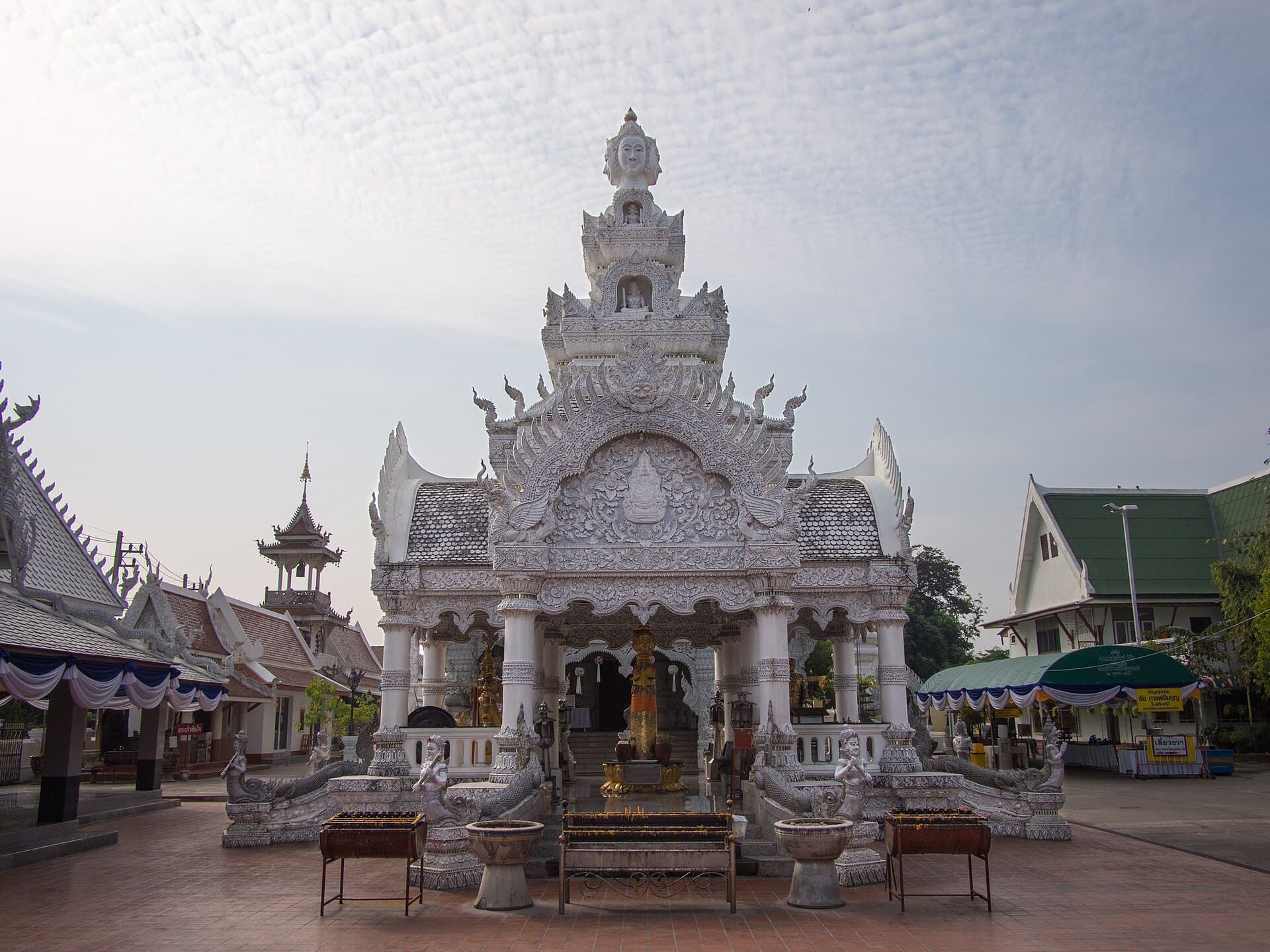 Takeaway / CC BY-SA 3.0, via Wikimedia Commons
“Where ancient whispers meet mountain mist.”
Not the postcards. The stories even locals don't know — whispered in your ear, right where they happened.
Among the temple's revered murals, one scene captures a secret that resonates deeply with local lore.
Beyond its historical artifacts, the museum grounds hold a surprising, miniature architectural marvel.
In the remote mountains of Nan, a centuries-old industry thrives, extracting a vital resource in an unexpected way.
Discover every secret of Nan
Every address, every reveal in full — in your ear, right where it happened.
You pick your stops. You walk. The voice reveals what the others miss.
No tours available yet. Check back soon — we're preparing them.
Nan, a serene province in northern Thailand, offers a tranquil escape from the country's more bustling destinations. Embraced by mountains near the Laotian border, it maintains a slow pace and a distinct cultural identity, influenced by its history as a semi-independent kingdom. The city of Nan itself is a walkable center of ancient temples, traditional wooden houses, and a welcoming local atmosphere.
Often overlooked by international tourists, Nan provides an authentic glimpse into Thai life, where centuries-old traditions are still observed. The surrounding landscapes feature lush valleys, winding mountain roads, and national parks, making it an appealing destination for those seeking both cultural immersion and natural beauty.
The history of Nan dates back to the late 13th century, with its initial capital, Varanagara ('City of Excellent Elephants'), located in the area of modern-day Pua. Due to strategic considerations, the administrative center was later moved south to the site of the present-day city, known in chronicles as Nantaburi. For nearly 700 years, Nan flourished as the 'Kingdom of Nan,' maintaining a degree of independence from larger empires, largely due to its protective mountainous terrain.
In the 14th century, Nan became one of the nine northern Thai-Lao principalities that formed Lan Na Thai, later known as Lanna. The city-state prospered in the 15th century under the name Chiang Klang ('Middle City'), positioned between Chiang Mai and Luang Prabang. However, this period also saw shifting influences, with Nan falling under the rule of the Lanna Kingdom and later Burma in 1558, which led to a period of instability and even a complete desertion of the city. By 1788, the Burmese were driven out, and Nan accepted the suzerainty of Siam (Rattanakosin) during the reign of King Rama I, seeking protection and stability.
The city center was relocated to the western bank of the Nan River in 1817 for better defense and logistics, followed by extensive restoration of city walls and temples in 1857. Despite these changes, Nan retained some independence until 1931, when it officially became a province of Thailand. This long history of autonomy has allowed Nan to preserve its unique identity, including its traditions, language, architecture, and lifestyle, making it a living open-air museum where history breathes in the present day.
Nan's charm lies in its well-preserved cultural sites and natural landscapes. A central point of interest is Wat Phumin, a 16th-century temple renowned for its cruciform ordination hall and exquisite 19th-century murals, including the iconic 'Whispering Lovers.' Nearby, Wat Phra That Chang Kham Worawihan features a large seated Buddha statue and a bell-shaped chedi supported by elephant sculptures. For expansive views of the city and a 9-meter-tall golden Buddha statue, particularly at sunset, visit Wat Phra That Khao Noi.
For a deeper dive into local history and culture, the Nan National Museum, housed in a former palace, showcases artifacts from the Lanna Kingdom and tribal exhibitions. Beyond the city, explore the traditional salt-making process at the Bo Kluea Salt Wells in the mountains. Nature enthusiasts will appreciate Doi Phu Kha National Park, home to the critically endangered Chompoo Pukha tree and offering scenic drives and hiking trails. The scenic Route 1081, also known as the 'floating highway,' provides sweeping mountain views and is a memorable journey for a road trip.
The ideal time to visit Nan is during the cool and dry season, from November to February. During these months, temperatures are pleasant, making it perfect for sightseeing, outdoor activities, and enjoying the clear mountain views. March to May is warmer, with fewer travelers, offering a quieter experience. The rainy season, from June to October, brings lush green landscapes and occasional rainfall, which can be appealing for those who prefer a tranquil countryside experience.
Nan Nakhon Airport (NNT) offers daily flights to and from Bangkok's Don Mueang International Airport (DMK), with airlines like Nok Air and Thai AirAsia. The airport is small and conveniently located about 4 km from the city center, with taxis readily available for approximately 100 THB. While Nan does not have a train station, the nearest one is Den Chai in Phrae Province, about 145 km away. From there, you can take a bus or minivan to Nan. Buses connect Nan to major cities like Bangkok (10-11 hours) and Chiang Mai (6-7 hours), with services from companies like Green Bus.
Within Nan city, many attractions are walkable or easily accessible by bicycle, with dedicated lanes available. Songthaews (pickup trucks) can be chartered, and motorcycle taxis are also an option, though English proficiency among drivers can be limited. The official currency is the Thai Baht (THB).