Naga River
The Naga River, a central artery of the city, holds a secret about pre-colonial trade that goes beyond simple fishing.
Full story unlocks in the tour
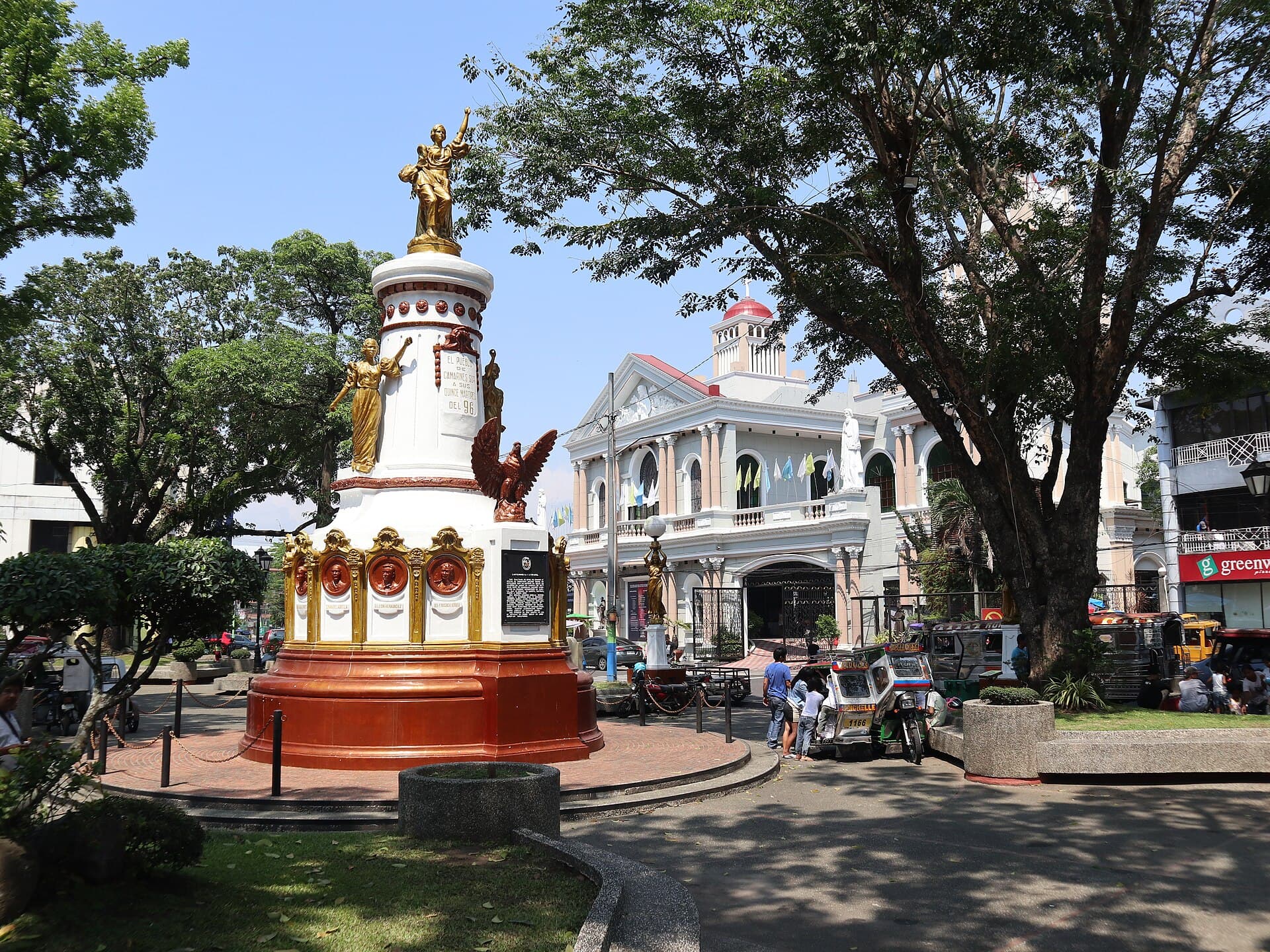 Patrickroque01 / CC BY-SA 4.0, via Wikimedia Commons
“Where ancient faith and modern life converge in the heart of Bicol.”
Not the postcards. The stories even locals don't know — whispered in your ear, right where they happened.
The Naga River, a central artery of the city, holds a secret about pre-colonial trade that goes beyond simple fishing.
This historic institution has a unique distinction that set it apart in the entire Orient.
Many tricycles in Naga bear a curious symbol: a slipper. This isn't just a random decoration.
Discover every secret of Naga
Every address, every reveal in full — in your ear, right where it happened.
You pick your stops. You walk. The voice reveals what the others miss.
No tours available yet. Check back soon — we're preparing them.
Naga, often called the "Heart of Bicol" due to its central location, is a city in the Philippines that harmonizes deep-rooted religious traditions with a dynamic urban energy. At the foot of Mount Isarog and surrounded by fertile agricultural lands, it serves as a bustling hub for trade, education, and culture in the Bicol Region. With a population exceeding 200,000 residents, Naga offers a welcoming atmosphere that draws pilgrims, nature enthusiasts, and food lovers alike.
Beyond its commercial significance, Naga is recognized as the "Pilgrim City" due to its role as the center of one of Asia's largest Marian pilgrimages. Every September, millions of devotees gather here for the Peñafrancia Festival, a lively celebration honoring Our Lady of Peñafrancia, the patroness of Bicol. The city's blend of historical landmarks, natural attractions, and a distinctive culinary scene makes it a compelling destination for those seeking an authentic Philippine experience.
The area now known as Naga was originally a thriving pre-colonial settlement along the banks of the Naga River. Its name is believed to have come from the abundance of naga or narra trees (Pterocarpus indicus) in the area, valued for their wood. In 1573, Spanish conquistador Captain Juan de Salcedo discovered this flourishing community. Just two years later, in 1575, Captain Pedro de Chávez established a Spanish settlement across the river from the native village, naming it "Ciudad de Nueva Cáceres" in honor of Francisco de Sande, the Spanish Governor-General and a native of Cáceres, Spain.
Nueva Cáceres quickly became one of the earliest Spanish royal cities in the Philippines, alongside Manila, Cebu, and Iloilo, and a significant center of Spanish power in the Bicol region. Its strategic location along the Bicol River, a vital transport artery, and its status as a religious capital contributed to its influence. The city was granted a coat of arms by the Spanish Crown, solidifying its importance as a center of power and religion for centuries. In 1595, a papal bull established a diocese here, further cementing Naga's ecclesiastical prominence.
The late 19th century brought revolutionary fervor to Naga. On September 18, 1898, Corporals Elias Angeles and Felix Plazo led a pivotal revolt against Spanish rule, culminating in the surrender of Spanish forces at the San Francisco Church convent. Under American administration, Naga continued its development as a regional center. The Camarines Sur National High School was established in 1902, and infrastructure projects like the Puente de Naga (now Lt. Delfin Rosales Bridge) improved connectivity. In 1919, the city shed its Spanish colonial name and officially became known as Naga.
A significant milestone was reached on December 15, 1948, when Republic Act 305 declared Naga a chartered city, granting it administrative independence. Although the provincial capital relocated to Pili in 1955, Naga maintained its status as the Bicol Region's economic and cultural heart. Today, Naga continues to thrive as a modern metropolis while preserving its unique heritage, evident in its landmarks like the Naga Metropolitan Cathedral, begun in 1816, and the Quince Martires Monument, honoring the 15 Bicolano martyrs executed during the Spanish Revolution.
Naga offers a range of attractions, from spiritual landmarks to natural retreats. The Minor Basilica and National Shrine of Our Lady of Peñafrancia stands as the spiritual heart of the Bicol region, housing the revered image of "Ina," the patroness of Bicol. Its impressive architecture and serene atmosphere draw pilgrims and tourists, especially during the annual Peñafrancia Festival in September. The Naga Metropolitan Cathedral, also known as the Metropolitan Cathedral of Saint John the Evangelist, is another iconic landmark, showcasing Spanish colonial architecture with intricate facades and a massive bell tower.
For those seeking nature, Mount Isarog National Park is a biodiversity hotspot. Here, visitors can trek under a lush canopy, discover cool mountain streams, and experience waterfalls like Malabsay Falls, a serene spot for escaping the city's activity. The Panicuason Hot Spring Resort offers a relaxing experience amidst natural surroundings. In the city, Plaza Quince Martires honors the Bicolano martyrs of the Spanish Revolution, while Plaza Rizal provides a public space for relaxation. For a modern experience, shopping malls like SM City Naga and Robinsons Place Naga offer retail and dining options.
The best time to visit Naga is during the dry season, which runs from November to May. This period offers the most pleasant weather for sightseeing and outdoor activities. Specifically, the months from February to April are driest, with March seeing the least precipitation. Temperatures during the day typically range from 27-29°C in the cooler months (December-February) and can reach above 30°C in April and May. The Peñafrancia Festival, a major cultural event, takes place every September, which falls within the rainy season.
Naga City is approximately 377 kilometers south of Manila. The fastest way to reach Naga is by taking a direct flight from Manila to Naga Airport, located in nearby Pili, Camarines Sur, about 20 minutes from the city. Alternatively, buses from Metro Manila take around 8-10 hours.
Within the city, the dominant modes of transportation are jeepneys and motorized tricycles. Jeepneys are 16 to 22-seater vehicles suitable for the city's mostly two-lane roads, while tricycles are three-wheeled, three-seater vehicles. Taxis are also available. The local language is Bikol, but Filipino (Tagalog) and English are widely spoken and understood, especially in business and government transactions. The local currency is the Philippine Peso (PHP). While major establishments accept credit cards, cash is preferred for smaller vendors and tricycle fares. Tipping is not mandatory but appreciated. Naga is generally safe, but standard precautions like being aware of your belongings are advisable.