Nabeul's Friday Market
Bargaining is expected, but there's a specific time to get the best deals without the usual struggle.
Full story unlocks in the tour
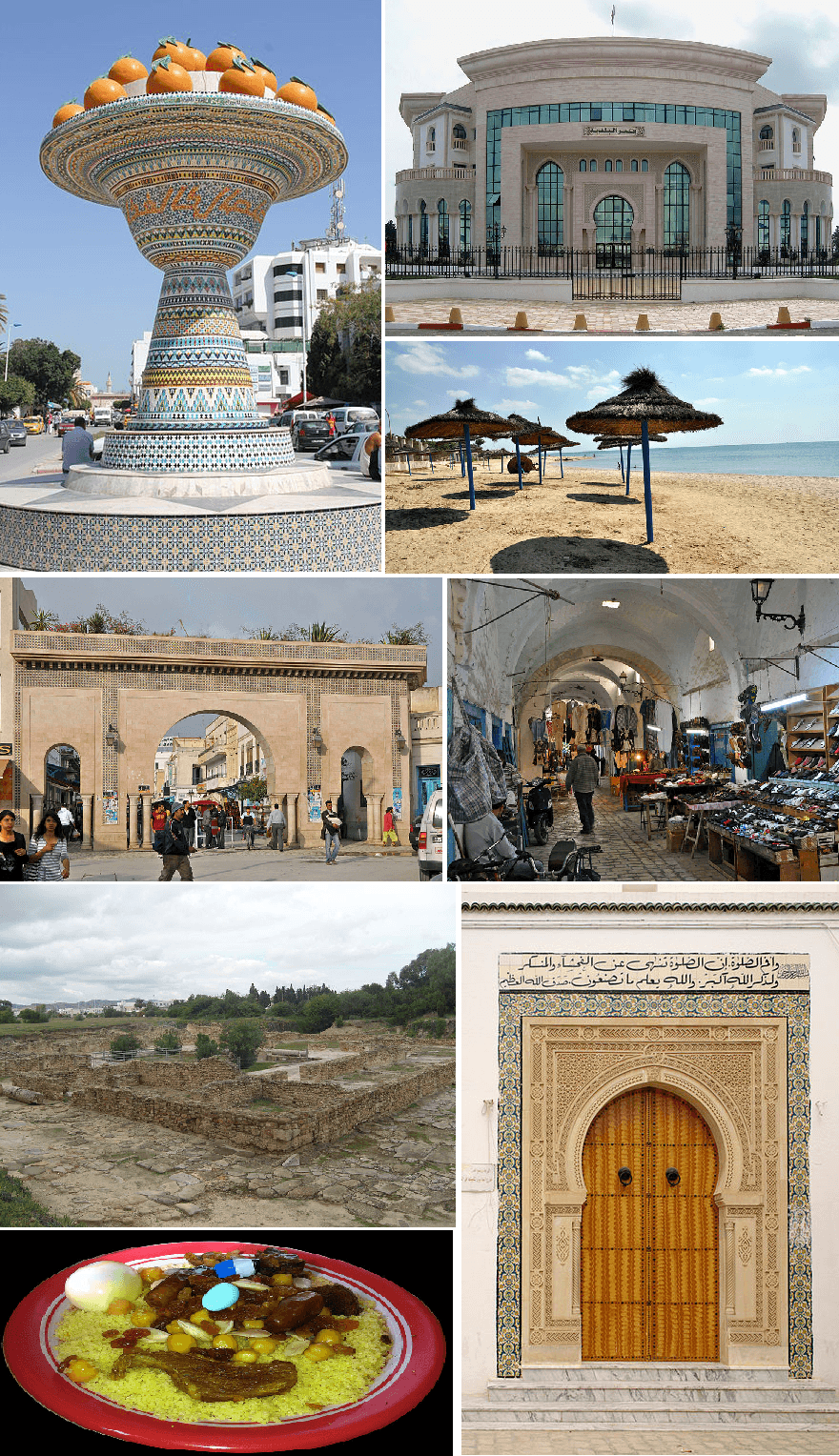 ELEL09, montage / CC BY-SA 3.0, via Wikimedia Commons
“Where ancient crafts meet the scent of orange blossoms.”
Not the postcards. The stories even locals don't know — whispered in your ear, right where they happened.
Bargaining is expected, but there's a specific time to get the best deals without the usual struggle.
A catastrophic event nearly 1,650 years ago left much of this ancient city submerged.
The distinctive "Nabeul-blue" ceramics have roots that stretch far beyond local tradition.
Discover every secret of Nabeul
Every address, every reveal in full — in your ear, right where it happened.
You pick your stops. You walk. The voice reveals what the others miss.
No tours available yet. Check back soon — we're preparing them.
Nabeul, a coastal town on Tunisia's Cap Bon peninsula, offers a more authentic and local experience compared to some of its resort-focused neighbors. Known as the country's capital for pottery and traditional handicrafts, it's a place where the scent of orange blossoms often mingles with the earthy aroma of clay. The town, with a population of approximately 84,291 as of 2022, is surrounded by the Mediterranean Sea and possesses a strong agricultural heritage, particularly its citrus groves.
Life in Nabeul unfolds with a palpable energy, particularly evident in its active markets. Here, the everyday rhythm is punctuated by the calls of vendors and the lively exchange over goods ranging from aromatic spices to handcrafted ceramics. Beyond the souks, Nabeul serves as a gateway to the diverse landscapes of the Cap Bon region, offering everything from fine sandy beaches to historical sites and natural springs.
Nabeul's history stretches back to the 5th century BC when it was founded by Greeks from Cyrene as a trade port, originally named Neapolis, meaning "New City." In Roman times, it evolved into a significant trade hub, particularly for grain destined for Rome, and a major production center for garum, a fermented fish sauce. The city's strategic location on the Cap Bon peninsula, with its fertile land and access to the Mediterranean, contributed to its early prosperity.
A pivotal moment in Neapolis's history occurred on July 21, 365 AD, when a massive tsunami, triggered by a powerful earthquake off Crete, devastated the city, leaving a substantial portion submerged underwater. Despite this catastrophe, the area's ample clay deposits ensured the continuation of its pottery tradition, a craft that predates Roman times and was influenced by Phoenicians. After the Arab conquest, the ancient city declined, but its name persisted, eventually becoming Nabeul.
The rebirth of Nabeul's pottery tradition is often placed in the 15th or 16th century, with potters from Jerba settling near the ruins of Neapolis, drawn by the accessible, high-quality surface clay. A century later, Andalusian emigrants, expelled from Spain, brought new techniques, particularly for enamel application, which further enriched Nabeul's ceramic artistry. During the French Protectorate in the 19th and 20th centuries, the craft diversified to include building materials, decorative tiles, and kitchenware, a demand that continues to grow with tourism. Today, Nabeul's pottery reflects a blend of these diverse cultural and historical influences, making it a significant center for ceramics in Tunisia.
Nabeul's active pulse is best experienced at its markets. The Friday Market is a major draw, transforming downtown into a labyrinth of stalls offering everything from pottery and spices to textiles and leather goods. Beyond Friday, the Medina and Souk El Balgha offer a more intimate glimpse into local life, where you can find traditional leather slippers and other crafts. The Artisanal Village is another excellent spot to witness skilled artisans at work, showcasing ironwork, rush mats, and engraved copper.
For a deeper dive into Nabeul's renowned craft, visit the numerous pottery workshops in the artisan quarter, particularly behind the bus station. Here, you can observe the traditional techniques and even try your hand at shaping clay. The distinctive "Jarre of Nabeul" monument, a large ceramic jar, stands near the train station as a symbol of the city's pottery heritage.
History enthusiasts can explore the small but significant Roman ruins of Neapolis. While much of the ancient city lies submerged, ongoing archaeological efforts continue to reveal its past as a major Roman trade hub. For a scenic outdoor experience, consider a Cap Bon coastal walk, starting from the lighthouse and following a dirt track above limestone cliffs, offering views of sea caves and local fishermen.
Nabeul enjoys a Mediterranean climate, with warm summers and mild winters. The best times to visit are during spring (April to June) and autumn (September to November) when temperatures are comfortable, ranging from 19°C to 26°C, and tourist crowds are smaller. April and May are particularly enchanting as the region's citrus groves are in bloom, filling the air with the scent of orange blossoms. While July and August bring intense heat, they are popular for beach activities, with average daytime temperatures reaching around 30°C.
The official currency in Nabeul, and throughout Tunisia, is the Tunisian Dinar (TND), symbolized as د.ت or DT. It's a closed currency, meaning you cannot import or export it. It's best to bring Euros, US Dollars, or British Pounds in cash to exchange upon arrival, or use a debit/credit card (Visa is widely accepted). Cash is important in Tunisia, especially for smaller businesses and markets, so carrying a range of notes and coins is advisable.
The nearest airport to Nabeul is Tunis-Carthage Airport (TUN), approximately 72 km away. From Tunis, you can reach Nabeul by bus, with services departing every 30 minutes and a journey time of about 1 hour and 2 minutes. Collective taxis, known as louages, are also a common and affordable way to travel between cities, including from Tunis to Nabeul. Within Nabeul and nearby areas, taxis are readily available. When shopping in markets, polite bargaining is expected, especially for tourist-oriented vendors.