Naantali Old Town
Many of the colorful wooden houses in Naantali's Old Town bear unique names, a tradition that hints at a deeper, more personal history.
Full story unlocks in the tour
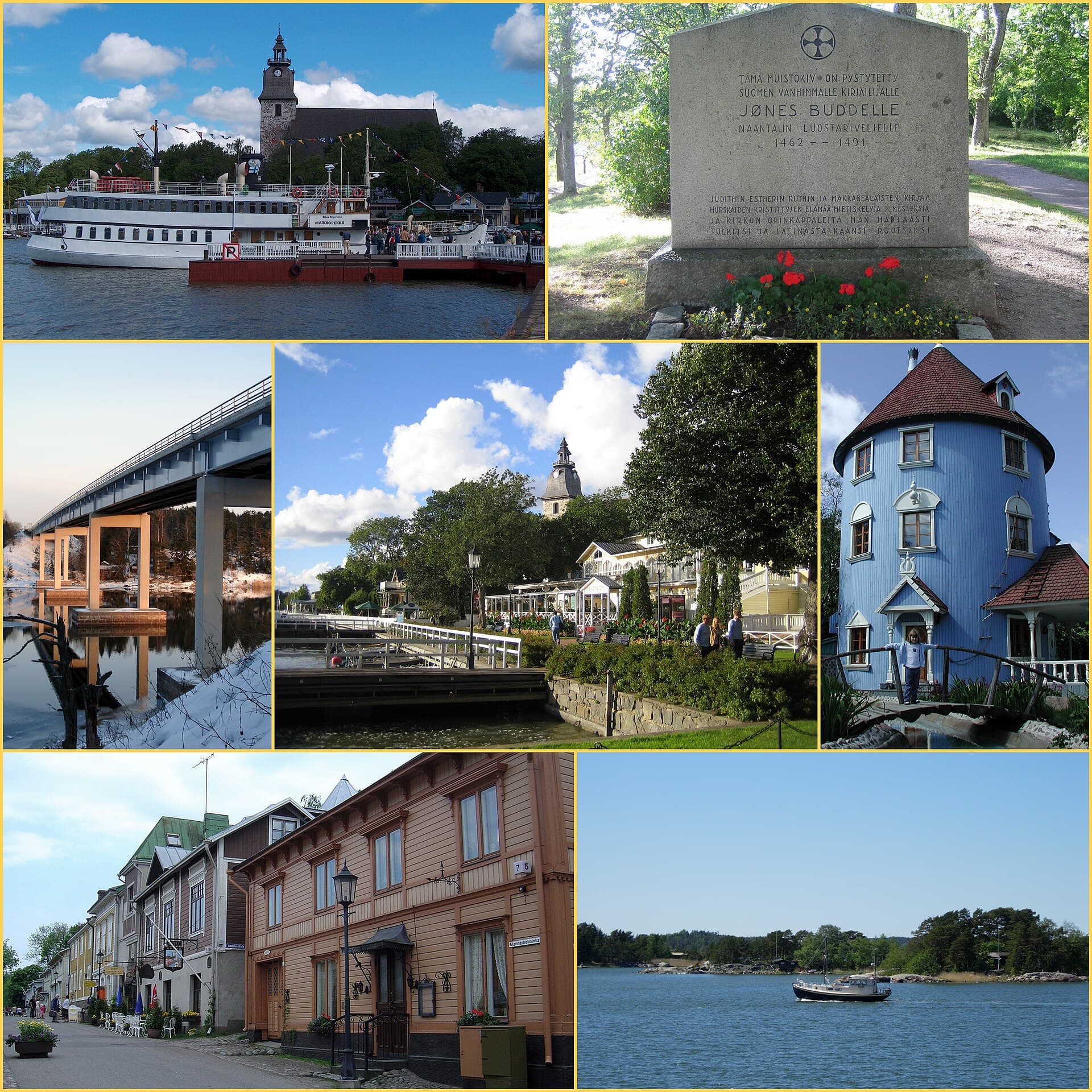 Markus Rantala (Makele-90) / CC BY-SA 3.0, via Wikimedia Commons
“Where the sun lingers, and stories whisper from painted wooden walls.”
Not the postcards. The stories even locals don't know — whispered in your ear, right where they happened.
Many of the colorful wooden houses in Naantali's Old Town bear unique names, a tradition that hints at a deeper, more personal history.
The medieval Naantali Church, once a Brigittine convent, played an unexpected role in a centuries-old Finnish craft.
The official summer residence of the President of Finland, Kultaranta, has a surprising nickname for its meticulously kept gardens.
Discover every secret of Naantali
Every address, every reveal in full — in your ear, right where it happened.
You pick your stops. You walk. The voice reveals what the others miss.
No tours available yet. Check back soon — we're preparing them.
Naantali, often called the 'sunshine town' of Finland, is a captivating coastal destination on the southwestern coast, a mere 14 kilometers west of Turku. Its appeal lies in a compelling blend of historical depth, a tranquil seaside atmosphere, and distinctive cultural traditions. The town, with a population of around 20,000, extends across the mainland and numerous islands, offering a scenic setting where the sea is a constant presence.
Travelers are drawn to Naantali for its well-preserved Old Town, characterized by narrow, winding streets and colorful wooden houses that date back centuries. Beyond its architectural beauty, Naantali is an active hub for summer activities, from classical music festivals to a peculiar annual tradition involving a 'sleepy head' being cast into the sea. It also serves as a portal to the Finnish archipelago, a maze of islands perfect for exploration by boat, bicycle, or on foot.
Naantali's origins trace back to the 15th century, specifically to 1443, when King Christopher of Bavaria granted city rights to a settlement that had formed around the Brigittine convent Vallis Gratiae, meaning 'The Valley of Grace.' The convent, consecrated in 1462, became the spiritual and urban heart of the burgeoning town, attracting pilgrims and fostering trade. The Naantali Church, a medieval stone structure, is the only remaining building from this original monastic complex and continues to define the skyline.
The town experienced a period of decline in the 16th century with the Reformation, which led to the closure of the convent and the confiscation of its properties. For approximately two centuries, Naantali struggled, but during this time, it gained recognition for its knitted stockings, a craft inherited from the former nuns. A new era of prosperity began in 1863 with the establishment of a spa at Cape Kalevanniemi, transforming Naantali into a refined resort that attracted Russian and Scandinavian aristocracy. This development led to the construction of villas, promenades, and restaurants, shaping the elegant coastal architecture.
In 1922, Kultaranta, a grand estate on the island of Luonnonmaa, became the official summer residence of the President of Finland, further solidifying Naantali's status as a prominent holiday destination. The mid-20th century saw further industrial expansion, particularly with the establishment of an oil refinery and power plant, and the strengthening of its position as a port city with car ferry traffic. Today, Naantali is celebrated for its historic center, its spa traditions, and as the home of Moominworld, a cherished theme park.
Begin your exploration in Naantali's Old Town, a scenic area of narrow, winding streets lined with colorful wooden houses, many dating from the 17th and 18th centuries. Each building often carries its own name and history, adding to the area's distinct character. Here, you will find boutiques, art galleries, and inviting cafes.
The Naantali Church, a medieval stone church from the 15th century, stands prominently on a hill, offering views of the archipelago. It is the sole remaining structure of the original Brigittine convent. For families, Moominworld on Kailo Island is a rewarding visit, bringing Tove Jansson's cherished Moomin characters to life in a natural, ride-free theme park. You can explore the five-story Moominhouse and interact with characters.
Just across the bay, Kultaranta, the summer residence of the President of Finland, offers guided tours of its extensive and beautiful gardens, often referred to as 'mini-Versailles.' Take an evening stroll along the harbor for scenic views, or venture to Kuparivuori Hill for expansive vistas of Naantali Bay, the Old Town, Moominworld, and Kultaranta.
The ideal time to visit Naantali is during the summer months, from June to August. During this period, temperatures are pleasantly warm, averaging around +17°C in July, and daylight hours are significantly longer, with the sun setting late into the evening. Most attractions, including Moominworld, restaurants, and other activities, are fully operational. Summer also brings cultural events like the Naantali Music Festival in June and the unique Sleepy Head Day celebration on July 27. While autumn and spring offer milder temperatures and fewer crowds, many seasonal businesses may be closed.
Naantali is readily accessible. From Helsinki, you can take a train to Turku (approximately 2 hours) and then a local bus (lines 6 or 7) to Naantali (about 30-40 minutes). If driving from Helsinki, the journey is about two hours. The town itself is compact and best explored on foot, especially the Old Town with its winding streets. For Moominworld, a pedestrian bridge connects it to the Old Town harbor. Parking for Moominworld is located about 2 km away, with shuttle buses providing transport to the park entrance.
Accommodation options range from hotels in the town center and Old Town to resorts like the Naantali Spa Hotel. The town is part of the Sustainable Travel Finland program, emphasizing environmentally friendly choices. While exploring, be mindful that many Old Town buildings are residential, so respect privacy. It is advisable to book accommodation in advance, especially during the busy summer season.