Kolukkumalai Tea Estate
You can visit the highest organic tea plantation in the world, but getting there is half the adventure.
Full story unlocks in the tour
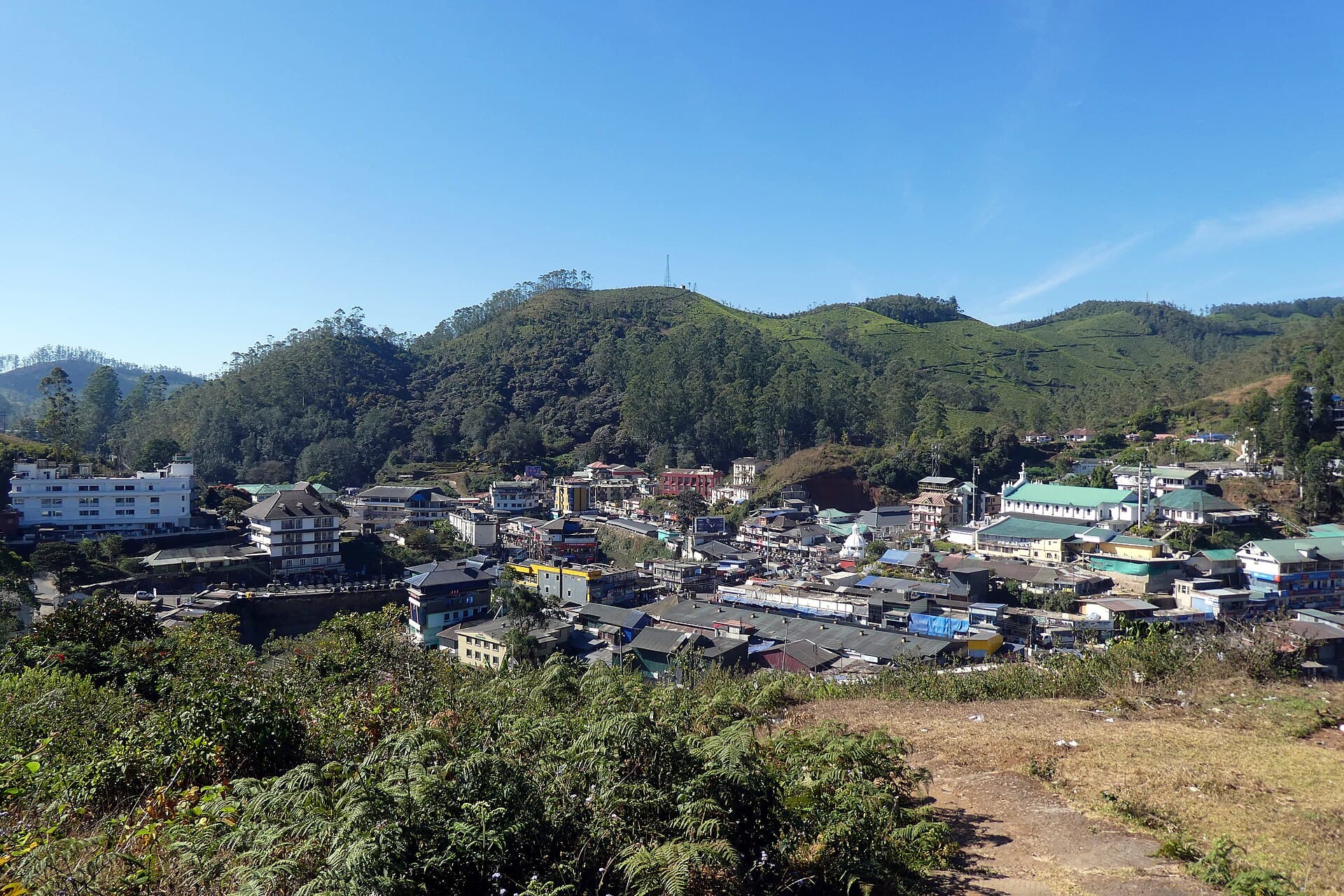 Kondephy / CC BY-SA 4.0, via Wikimedia Commons
“Where emerald hills meet misty skies, and every breeze carries the scent of tea.”
Not the postcards. The stories even locals don't know — whispered in your ear, right where they happened.
You can visit the highest organic tea plantation in the world, but getting there is half the adventure.
Munnar's vast tea estates exist today due to a surprising 19th-century land deal, which involved a mere 3,000 rupees.
Munnar once had a railway line, but a natural disaster erased it from the landscape.
Discover every secret of Munnar
Every address, every reveal in full — in your ear, right where it happened.
You pick your stops. You walk. The voice reveals what the others miss.
No tours available yet. Check back soon — we're preparing them.
Munnar, a captivating hill station in Kerala, India, presents a canvas of rolling emerald hills, misty valleys, and cascading waterfalls. Resting at an elevation of approximately 1,600 meters in the Western Ghats, it offers a refreshing escape from the warmer plains. The name "Munnar" itself, derived from Malayalam/Tamil, means "three rivers," a fitting description for its location at the confluence of the Muthirapuzha, Nallathanni, and Kundaly mountain streams.
This scenic destination is known globally for its sprawling tea plantations, which carpet the hillsides in shades of green. Beyond the tea estates, Munnar's landscape encompasses virgin forests, savannahs, and diverse flora and fauna, including the rare Neelakurinji flower, which blooms once every twelve years, transforming the hills into a blue spectacle. Once a favored summer resort for the British colonial government, Munnar today invites travelers to immerse themselves in its tranquil ambiance and natural splendor.
The early history of Munnar is rooted in the indigenous tribal communities, particularly the Muthuvan people, who were the original inhabitants and caretakers of these forests. Evidence of even older human habitation, such as dolmens (ancient burial chambers), can be found in nearby areas like Marayoor, dating back to the Neolithic and Megalithic ages. For a long period, the Poonjar royal family held custodianship over the untouched hills of Munnar, even though the region fell under the jurisdiction of the Travancore kingdom.
Munnar gained wider recognition in the 1870s with the arrival of British Resident John Daniel Munro, who was captivated by the region's beauty while settling a border dispute. In 1877, Munro secured a lease of approximately 136,600 acres of the Kannan Devan Hills from the Poonjar royal family, marking the beginning of the plantation era. Initially, various crops like coffee, cardamom, cinchona, and sisal were attempted, but tea proved to be the most suitable for the region's climate. A.H. Sharp, a European planter, is credited with planting the first tea in Munnar in 1880, at what is now part of the Sevenmallay estate.
The late 19th and early 20th centuries saw significant development, with companies like Finlay Muir & Company acquiring estates and forming the Kannan Devan Hills Produce Company (KDHP) in 1897 to manage them. This period saw the construction of roads, factories, bungalows, and other infrastructure that define Munnar's colonial character today. However, the region faced a major setback in 1924 with a disastrous monsoon that caused widespread landslides and flooding, destroying railway lines and much of the existing infrastructure. The focus then shifted to road transportation, with a new road completed in 1926.
In 1964, the Tata Group collaborated with Finlay, eventually leading to the formation of Tata Tea Ltd. A significant turning point occurred in 2005 when Tata Tea transferred ownership of its plantations to the Kannan Devan Hills Produce Company Pvt. Ltd. (KDHP), making it India's first and largest employee-owned plantation company, with over 12,500 employees as shareholders. While the plantation industry shaped Munnar in the 19th century, tourism re-discovered it in the latter half of the 20th century, drawing visitors from around the world to its natural beauty.
Munnar offers a wealth of sights, from expansive tea estates to biodiverse national parks. A visit to the Tata Tea Museum at the Nallathanni Estate provides insight into the history and process of tea production in the region, showcasing antique machinery and artifacts. For sweeping vistas of the Western Ghats and the Theni district valley, Top Station is a popular viewpoint, especially at sunrise. Keep in mind that for the best views, it's advisable to visit early in the morning before clouds gather.
Nature enthusiasts should not miss Eravikulam National Park, home to the endangered Nilgiri Tahr, a mountain goat endemic to these hills. The park also offers views of tea gardens and is a prime location to witness the blooming of the Neelakurinji flowers. Anamudi, South India's highest peak, is within the park, though access is restricted for conservation. Other captivating waterfalls include Lakkam Waterfalls, where you can take a refreshing dip, and Attukad Waterfalls. For a serene experience, Mattupetty Dam and its lake offer opportunities for boating amidst forested hills. You can also visit the CSI Christ Church, the oldest church in Munnar, which retains its colonial character.
The ideal time to visit Munnar is during the winter months, from late October to early March. During this period, daytime temperatures range between 20°C and 24°C, with nights cooling to 10°C to 15°C, providing pleasant weather for outdoor activities and sightseeing. The post-monsoon and winter seasons offer clear skies, verdant greenery, and moderate temperatures, perfect for exploring tea gardens and waterfalls. While Munnar remains relatively cool in summer (March to May) compared to other parts of India, it can be warmer, and the monsoon season (June to September) brings heavy rainfall, which can lead to slippery trails and road closures, though it also enhances the lushness of the landscape and the flow of waterfalls.
Munnar is primarily a road destination, with the most common route from Kochi/Aluva taking approximately 4–5 hours. Hiring a taxi or pre-booked transfers is recommended for comfort on the winding mountain roads. Public buses also connect Munnar to nearby towns, though schedules can be less frequent. Within Munnar, auto-rickshaws (tuk-tuks) and taxis are readily available for getting around and for sightseeing trips.
Visitors typically spend two to three days in Munnar to explore its main attractions. It's advisable to carry personal medications and a basic first-aid kit. While digital payments are becoming more common, having some cash on hand is useful for local shops, auto-rickshaws, and entry kiosks. ATMs are available in the town center. Munnar is an eco-sensitive zone, so carrying a reusable water bottle and avoiding single-use plastics is both a local regulation and a shared responsibility. When photographing local community members or inside tea factories, always ask for permission, as some estates may charge a small fee.